

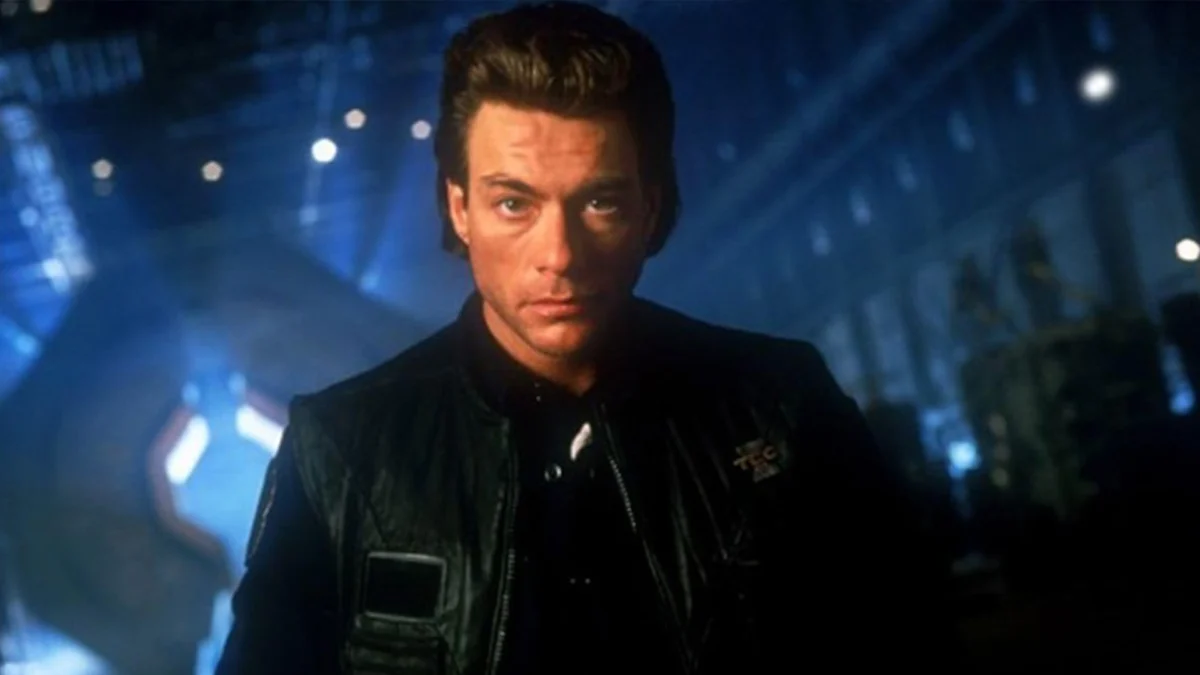
In the landscape of mid-90s action cinema, few films captured the peculiar, high-concept intersection of comic book sensibilities and gritty, grounded direction quite like 1994’s Timecop. Adapted from the Dark Horse comic series, the film served as a career-defining milestone for Jean-Claude Van Damme, propelling him to his highest-grossing solo success. Yet, beyond the high-kicks and the temporal paradoxes, the film possesses a secret weapon that has elevated it from a mere genre flick to a cult classic: a haunting, jagged, and psychologically complex score composed by the Oscar-nominated Mark Isham.
Now, three decades after its release, Varèse Sarabande and Craft Recordings are resurrecting this long out-of-print masterpiece. On July 10, the labels will release a deluxe, expanded edition of Isham’s score through their prestigious CD Club, featuring previously unreleased tracks and comprehensive liner notes from esteemed film music author and podcaster Daniel Schweiger.
The Genesis of a Sci-Fi Pivot
Directed by Peter Hyams, Timecop follows Max Walker, an officer for the Time Enforcement Commission (TEC). His mission is as perilous as it is singular: policing the timeline to prevent criminals from manipulating history for personal gain. The primary antagonist, Senator Aaron McComb (portrayed with malevolent relish by Ron Silver), utilizes a network of time-traveling henchmen to build a massive financial war chest for his presidential campaign. This ruthless pursuit leads to the murder of Max’s wife, Melissa—played with poignant vulnerability by Mia Sara.
For Hyams, the project was an unlikely departure. "When I was approached to do it, I’d never seen a Van Damme movie," Hyams recalls in the upcoming deluxe edition liner notes. "I’d also never made a ‘science fiction’ movie either. I’d made ‘science feasible’ movies. But Timecop’s script was pretty much there."
Hesitant to dive into a genre he wasn’t accustomed to, Hyams sought counsel from director Andrew Davis, the visionary behind the Steven Seagal breakout Above the Law. Davis offered a simple, galvanizing challenge: "Why don’t you just make the best Van Damme movie? Let that be your goal."
Crafting the Aesthetic: A Budget-Conscious Vision
Operating with a $27 million budget, Hyams had to navigate the constraints of a Vancouver-based production while maintaining a grand, world-spanning scale. Through careful fiscal management, he secured enough resources to film his own ambitious opening sequence: a visceral, high-stakes raid on a Civil War-era gold shipment.
Hyams, known for his distinct visual sensibility, assembled a team of industry heavyweights to ensure the film punched above its weight class. He recruited Outland production designer Philip Harrison and 2010 conceptualist Syd Mead—the latter having famously defined the retro-future visual language of Ridley Scott’s Blade Runner.

The result was a production that felt tactile and lived-in. The TEC headquarters featured a stripped-down, industrial brutalism, while the vehicles felt like genuine engineering feats rather than CGI toys. "I like a film to take people someplace that they don’t ordinarily go," Hyams notes. "The more gifted people you surround yourself with, the better your chances are of making a good movie. If I’m the smartest person on my film, I am screwed!"
Mark Isham: Elevating the Action Genre
The true "IQ point" addition to Timecop, as Hyams describes it, was the recruitment of composer Mark Isham. By 1994, Isham was already a genre-defying force. Having emerged from the jazz world as a virtuosic trumpeter, his transition into film scoring was marked by the ethereal, atmospheric textures of Never Cry Wolf.
However, Isham defied the expectations of his Windham Hill label fans by diving into the dark, rhythmic chaos of 1986’s The Hitcher. Throughout the late 80s and early 90s, his resume became a testament to versatility, encompassing the pastoral beauty of A River Runs Through It, the pulse-pounding tension of Point Break, and the noir-drenched detective dread of Romeo Is Bleeding.
"I knew of Mark as a wonderful composer and an absolutely brilliant trumpeter, and I wanted the elegance of a composer at his level," Hyams explains. "To me, film scores can never enhance reality; they can only enhance emotion. And the emotions I wanted from Mark for Timecop were melancholy and the kind of ferocity, suddenness, and jaggedness of physical conflict."
The Anatomy of a Score: Unpredictability and Impact
Isham’s work on Timecop is widely regarded as one of the most hard-hitting soundtracks in the action genre. His main theme, "Time Cop," is a masterclass in tension, blending metallic, percussive strikes with a dark, driving string section. The melody avoids the triumphalism often found in 90s action scores, opting instead for a brooding, symphonic intensity that mirrors Max Walker’s grim, singular determination.
The moral ambiguity inherent in the film’s premise—the idea that even a noble goal can be corrupted by the violence required to achieve it—was a central pillar for Isham. "Brass is always a great tool for a ‘cop’ score, because it lets you hear that Max is going to be doing the right thing for a noble cause," Isham says. "But what means will justify that end? That musical moral ambiguity is always more interesting to me than how many punches a hero can take or give to the kidneys."
The "Erratic" Sound Design
Perhaps the most distinctive element of the score was its intentional unpredictability. Isham leaned into Hyams’ desire for a soundscape that could unsettle the audience. "My attention was on keeping Peter happy with the unpredictability of the music," Isham recalls. "He just wanted sounds that could come out of nowhere and scare the shit out of you."

Isham employed a technique of "erratic and sporadic" placement, frequently syncing loud, aggressive musical stabs with moments of silence or stillness on screen. This forced the audience into a state of hyper-vigilance. To create the unique, organic-yet-alien percussive sounds, Isham took a literal hammer to his instruments. "It had a lot of prepared pianos that were recorded very, how shall we say, aggressively—like slamming piano lids and hitting piano strings," he reveals. "That poor piano! So those percussive sounds have a very organic feeling yet sound a little bit alien at the same time."
Implications: A Lasting Legacy
The release of this deluxe edition is more than a nostalgic cash-in; it is a critical re-evaluation of a score that helped define the "high-concept" action era. By stripping away the dialogue and letting the music breathe in a new, remastered format, listeners can appreciate the technical ingenuity Isham brought to the table.
For film historians, the collaboration between Hyams and Isham remains a case study in how a director’s vision, when combined with a composer’s willingness to experiment, can elevate standard genre tropes into something approaching high art. While Timecop is frequently categorized by its box office performance and Van Damme’s star power, its enduring resonance is inextricably linked to the sonic world Isham constructed.
As fans prepare for the July 10 launch, the conversation around Timecop has shifted from "the movie where Van Damme kicks people across time" to "a masterclass in atmospheric action scoring." It is a reminder that the best action films are not just seen; they are felt, hammered, and composed with the kind of fierce intelligence that refuses to let the audience settle into a comfort zone.
For those interested in the technical nuances of the score, the new release serves as the definitive document of a pivotal moment in Mark Isham’s career—a moment where he proved that even the most "unpredictable" scores are the ones that leave the deepest mark.
 Ammar Sabilarrohman
 Iffa Jayyana
