

Date: September 29, 2026
Industry Report: A deep dive into the current landscape of podcasting, from chart domination to the evolving strategies of Out-of-Home (OOH) marketing.

Main Facts: The Evolving Audio Ecosystem
As of late September 2026, the podcasting industry is experiencing a period of intense consolidation and creative diversification. While the core of the industry remains anchored in the long-form storytelling and commentary formats that defined its explosive growth over the last decade, the platforms themselves are shifting toward a more aggressive, multi-modal approach.

Recent data indicates that the "Big Two"—Apple Podcasts and Spotify—continue to trade blows for supremacy in the United States and the United Kingdom, though their strategies have diverged significantly. While Apple maintains its status as the "purist" directory, dominating in specific niche categories like language learning and historical deep dives, Spotify has leaned heavily into visual integration, leveraging its video-podcast capabilities to bridge the gap between traditional audio listeners and YouTube-native audiences.

The industry is currently defined by a "Toolkit" mentality. Shows are no longer just audio files; they are multimedia brands. Whether it is The Young Turks providing daily political analysis or Betwixt the Sheets pivoting to visual historical storytelling on YouTube, the mandate is clear: go where the audience is, or risk being left behind in the feed.

Chronology: A Snapshot of September 2026
The final week of September has been a whirlwind of activity, reflecting the broader volatility of the media landscape:

- September 25: The Drama Coach Podcast announces the launch of its third series, titled "The Performer’s Toolkit." This marks a strategic shift toward industry-specific professional development, focusing on the practical skills required for actors and agents to thrive in a post-digital-disruption landscape.
- September 27: The OrganizedPreneur Podcast makes waves by announcing a serialized adaptation of host Aldreama Harper’s upcoming book, The Widow, the Ant & the Algorithm. This move underscores a growing trend of "book-to-podcast" pipelines, where authors utilize audio as a primary marketing and educational funnel.
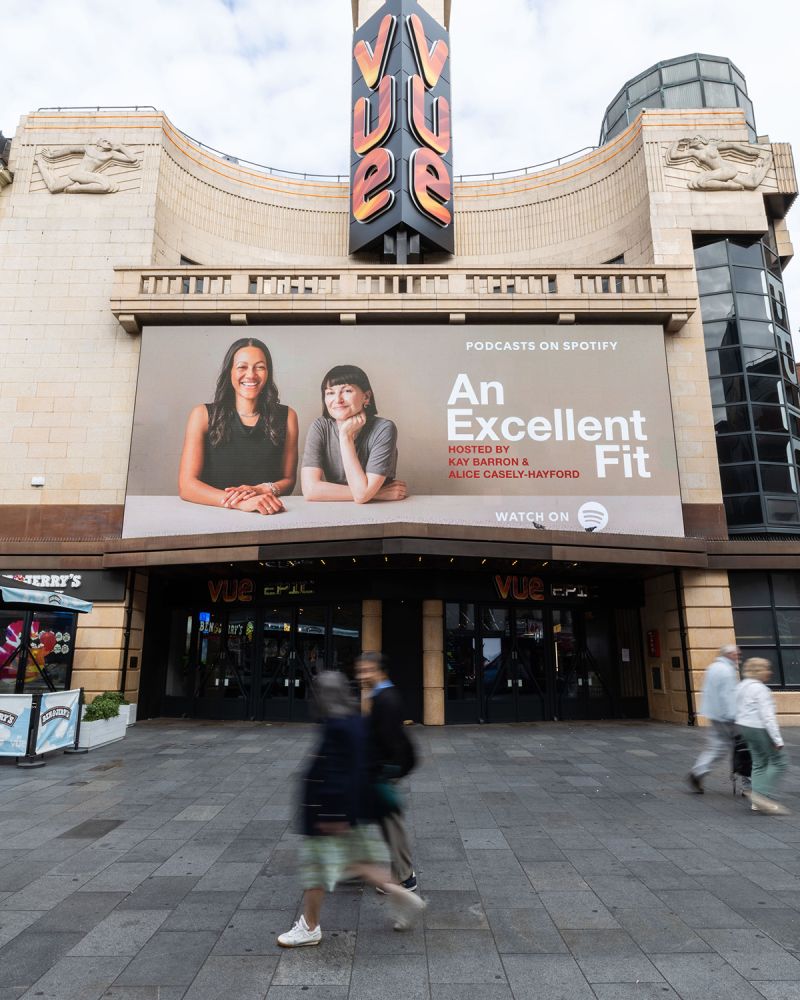
- September 28: A major OOH (Out-of-Home) marketing campaign for the Acast-hosted podcast An Excellent Fit is spotted in London’s Leicester Square. The placement of such high-profile billboards for independent-distributed content highlights the increasing competition for real-world visibility.
- September 29: New chart data confirms Crime Junkie and The Joe Rogan Experience retain their respective top spots in the US markets for Apple and Spotify, respectively, proving that established tentpole shows remain the bedrock of platform traffic.
Supporting Data: Charting the Landscape
The data from the week of September 29, 2026, provides a granular look at listener behavior across key territories.

US Market Dominance
- Apple Podcasts: Crime Junkie continues to command the #1 spot, a testament to the enduring appeal of the True Crime genre.
- Spotify: The Joe Rogan Experience maintains its grip on the #1 position in the United States, illustrating the power of exclusive-adjacent content strategies.
UK and Ireland Trends
- Language Learning: Coffee Break Spanish leads the Language Learning category in the UK, showcasing a resurgence in "utilitarian" podcasting—shows that provide a tangible skill to the listener.
- Historical Narrative: The Rest Is History dominates the History category in the UK, signaling that listeners are increasingly seeking high-production-value, long-form historical analysis.
- Emerging Voices: In Ireland, Bird Hunter Diaries made a notable entry as the #1 show in the Wilderness category, while We Only LOOK Thin saw the week’s biggest gain in the Nutrition category, proving that even micro-niche topics can achieve massive chart velocity with the right engagement strategy.
Implications: The War for Visibility
Perhaps the most significant development of the week is the visible friction between platform marketing and real-world advertising. The billboard for An Excellent Fit in London serves as a case study for the current state of "Podcasts in the Wild."

Historically, podcast advertising was relegated to cross-promotion within other podcasts. However, the move toward massive physical billboards in high-traffic urban areas like Leicester Square represents a shift in capital allocation. Producers are no longer satisfied with digital discovery; they want brand recognition in the physical world.

The snide observation regarding Apple Podcasts’ lack of similar OOH presence compared to its rivals is telling. As platforms like Spotify and Amazon Music pour resources into physical ad space, Apple’s "walled garden" approach—relying on organic search and editorial curation—is being tested. For the independent creator, this implies a dual-track strategy: one must optimize for the algorithm, but one must also build a brand that can exist outside the app.
Official Responses and Strategic Shifts
The shift toward video is no longer an experiment; it is the industry standard. Shows like Betwixt the Sheets with Kate Lister have explicitly moved into the visual space, using YouTube not just as a distribution channel, but as a primary medium for historical "show-and-tell."

"The podcast that roots around in the pants of history," as the show describes itself, has successfully leveraged this transition. By discussing topics ranging from the Debauchery of Roman Orgies to the daily habits of Marie Antoinette through a visual lens, Lister is tapping into a demographic that values aesthetic engagement alongside audio commentary.

Similarly, The OrganizedPreneur Podcast is utilizing the "Bible story" framework to anchor its business strategy content. By framing the widow’s oil story as a guide for modern entrepreneurs, the show demonstrates the power of "thematic storytelling"—using well-known narratives to explain complex systems like AI and business scaling.

The "Performer’s Toolkit" Model
The Drama Coach Podcast represents a shift toward "hyper-vertical" content. By moving away from general advice and into "The Performer’s Toolkit," the show is creating a high-value, high-retention environment. This is a clear signal to advertisers that niche, professional-grade podcasts offer better conversion rates than broad-interest shows, even if the absolute listener numbers are lower.

Future Outlook: What to Watch
As we move into the final quarter of 2026, several key themes are expected to dominate the audio industry:

- The Death of the "Pure" Audio Podcast: The integration of video is expected to reach 75% of top-tier shows by early 2027. If a show is not visual, it will be at a severe disadvantage in the social media discovery funnel.
- Algorithm vs. Curation: The battle between Spotify’s aggressive algorithmic discovery and Apple’s editorial human-led curation will continue to confuse creators. Expect more podcasts to utilize "omni-platform" strategies, where content is tailored specifically for the UX of the host platform.
- The Rise of the "Consultant-Creator": We are seeing more shows like The OrganizedPreneur and Magnify Your Magnificence that act as professional consulting tools. These creators are essentially building agencies that happen to have a podcast, rather than podcasters trying to build a business. This model is highly resilient to ad-market fluctuations.
Conclusion
The state of the industry is robust, but it is moving away from the "wild west" era of audio-only experimentation. We are entering an era of professionalization, where the line between a show, a business, and a brand is dissolving. For creators, the message is clear: diversify your content format, engage with your audience in the physical world, and don’t rely solely on the charts of a single platform to define your success.

As we look toward the 2026 London Podcast Show and beyond, the focus will undoubtedly shift toward sustainable growth, niche authority, and the integration of emerging technologies like AI to manage the back-end complexity of growing a professional podcasting business. The industry is not just surviving; it is evolving into a sophisticated, multi-channel media powerhouse.
 rifanmuazin
 Ali Ikhwan
 Evan Lee Salim
