


In the sprawling, muddy trenches of eastern Ukraine, a linguistically diverse force has emerged that defies traditional geopolitical expectations. Among the thousands of foreign volunteers supporting the Ukrainian Armed Forces, a significant and growing contingent of soldiers hails from Latin America. These men—and some women—have traded the warmth of the Caribbean and the high altitudes of the Andes for the frigid, artillery-scarred plains of Eastern Europe.

The new four-part investigative podcast series, Call Sign Condor (Alias Cóndor), seeks to demystify this phenomenon. Produced through a collaborative effort between DW, LA Times Studios, and Futuro Studios, and hosted by journalist Carolina Chimoy, the series offers an intimate look at the motivations, fears, and profound sense of belonging that drive these individuals to fight for a country thousands of miles from their homes.
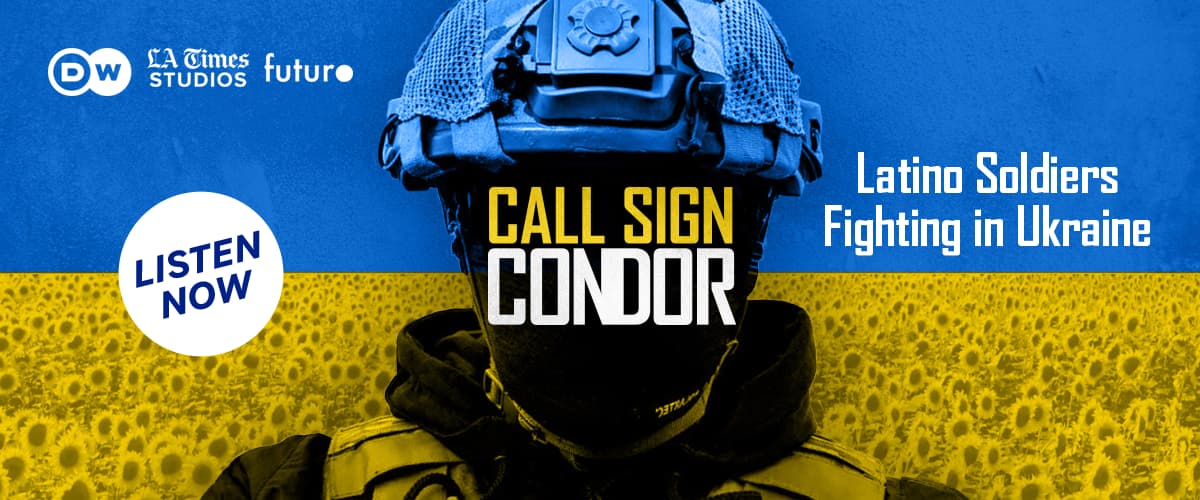
Main Facts: The "Condor" Contingent
The podcast centers on the life of a volunteer known by the call sign "Condor." His story serves as a lens through which the listener can examine the broader reality of the thousands of Latin American volunteers currently embedded in Ukrainian units.

- The Origins of the Force: While the International Legion for the Territorial Defense of Ukraine is globally recognized, the Latin American presence is distinct. These volunteers often arrive with prior military or law enforcement experience from their home countries, drawn by a mixture of financial necessity, ideological alignment, or a search for purpose.
- The Narrative Arc: Over four episodes, the series traverses the emotional landscape of the war. It does not merely document tactical movements; it captures the human experience of combat, the struggle to form bonds under fire, and the complex reality of falling in love in a war zone.
- Accessibility: Recognizing the global nature of the story, the producers have released the podcast in two languages simultaneously: English (Call Sign Condor) and Spanish (Alias Cóndor).
A Chronology of Engagement
To understand why Latin American soldiers are fighting in Ukraine, one must look at the timeline of the conflict and the shifting demographics of the volunteer corps.

Phase 1: The Initial Call (February 2022 – Late 2022)
Following the full-scale Russian invasion, the Ukrainian government issued a global appeal for volunteers. Initial waves were dominated by Western European and North American veterans. During this period, the Latin American presence was sporadic and individualistic, often consisting of former military personnel with specific training in infantry or special operations.

Phase 2: The Professionalization of Volunteers (2023)
As the war turned into a grinding war of attrition, the demand for experienced soldiers increased. Recruitment networks—some formal, others informal—began to consolidate in Latin American countries. Former soldiers from nations like Colombia, which has a long history of internal conflict, found themselves uniquely suited for the type of trench warfare being fought in the Donbas.

Phase 3: The Current Reality (2024–2026)
Today, Latin American volunteers are an established, if often overlooked, element of the defense effort. Many have signed long-term contracts. The focus of the conflict has shifted toward high-intensity artillery duels and drone warfare, and these volunteers have integrated into specialized units, often serving as the backbone of infantry platoons.

Supporting Data: Why They Leave
Why would a professional soldier from South America risk their life for a country they had likely never visited before 2022? The research conducted for Call Sign Condor suggests several converging factors:

- Economic Disparity: In many Latin American nations, the transition from military service to civilian life is fraught with economic instability. The salary offered to volunteers in the Ukrainian Armed Forces, while modest by Western standards, represents a significant income compared to local wages in their countries of origin.
- The "Warrior" Ethos: For those who have spent their lives in uniform, the loss of a clear mission can be disorienting. The war in Ukraine provides a tangible "right vs. wrong" framework that many veterans find compelling.
- Search for Belonging: As noted by host Carolina Chimoy, the podcast uncovers that for many of these soldiers, the trench becomes a surrogate family. The shared trauma and the intensity of combat create bonds that are often stronger than those they left behind.
Official Responses and Geopolitical Implications
The presence of foreign nationals in the Ukrainian Armed Forces has created a complex web of diplomatic and legal challenges.

The Perspective of the Ukrainian Government
Ukraine views these volunteers as essential assets. Their experience in asymmetric warfare—particularly for those from nations with active guerrilla or cartel conflicts—has proven invaluable. Kyiv has worked to formalize these volunteers, bringing them under the legal umbrella of the International Legion to ensure they are treated as combatants under the Geneva Convention, rather than mercenaries.

The Diplomatic Tightrope
For the governments of Latin American nations, the situation is delicate. Most nations maintain a position of neutrality regarding the war. Consequently, the recruitment of their citizens for foreign combat remains a grey area. There is a fear that these soldiers, upon returning home, could bring back combat trauma or, in some cases, specialized tactical skills that could be repurposed by criminal organizations.

However, there has been little appetite for formal crackdowns. The reality is that the volunteer movement is largely decentralized, making it difficult for domestic governments to monitor or restrict the flow of personnel.

The Human Implication: Beyond the Headlines
The true strength of Call Sign Condor lies in its refusal to treat these men and women as mere statistics. By focusing on the personal, the series forces the listener to confront the moral ambiguity of the conflict.

- The Trauma of Loss: The series does not shy away from the reality of death. The loss of fellow soldiers, often referred to as "brothers," is a recurring theme. The emotional toll of watching a comrade fall—a person you may have only known for a few months but with whom you have shared the most terrifying moments of your life—is handled with sensitivity and depth.
- Love in the Time of War: Perhaps most striking is the exploration of personal relationships. In a landscape defined by destruction, the human instinct to connect remains. The podcast documents how these soldiers find small pockets of normalcy, including romantic relationships, amidst the constant threat of drone strikes and shelling.
Podcast Ecosystem: Broader Context
While Call Sign Condor provides a somber look at the front lines, the broader podcast industry continues to diversify its offerings. As seen in the recent landscape of digital audio, listeners are increasingly gravitating toward high-production-value investigative journalism.

Notable Mentions in the Current Audio Landscape:
- Think Fast Talk Smart: A masterclass in communication, this podcast remains a staple for those looking to refine their interpersonal skills. The recent focus on the "4 C’s of communication" underscores a growing demand for actionable, self-improvement content.
- After Dark: Myths, Misdeeds & the Paranormal: Capitalizing on the "spooky season," this series demonstrates the enduring popularity of historical true crime and the supernatural, proving that listeners are as interested in the dark corners of the past as they are in the headlines of today.
- The Vardø Witch Trials: Similar to Call Sign Condor in its commitment to deep-dive documentary storytelling, this series explores the intersection of history and gender, proving that narrative-driven non-fiction is currently the gold standard for podcasting.
- Zero Reject: For those interested in policy and social justice, this investigative look at special education reform in the U.S. highlights the role of podcasting in holding systems accountable.
Conclusion: The Legacy of the Volunteers
The soldiers featured in Call Sign Condor are not heroes in the traditional sense, nor are they villains. They are complex individuals who have found themselves at the center of the defining conflict of the early 21st century.

Whether they are driven by the promise of a paycheck, a search for adventure, or a genuine desire to protect a sovereign nation from invasion, their stories are inextricably linked to the history of Ukraine. As the war continues to unfold, the legacy of these Latin American volunteers will remain a testament to the global nature of modern conflict. They have left their homes to fight for an idea of freedom, and in doing so, they have become an invisible, essential part of the Ukrainian defense effort.

For those looking to understand the "why" behind the headlines, Call Sign Condor / Alias Cóndor is essential listening. It is a stark reminder that behind every geopolitical movement, there are thousands of individual human stories, each marked by fear, longing, and the eternal search for a place to belong.
 Azzam Bilal Chamdy
 Sagoh
Sagoh
 Asep Darmawan
