

The podcasting industry continues to evolve at a breakneck pace, driven by shifting listener habits, technological advancements, and a growing emphasis on data-driven growth strategies. As we move through the fourth quarter, the ecosystem is being defined by a move toward professionalization, audience engagement research, and a heightened focus on the intersection of newsletters and audio. This report synthesizes current industry trends, recent data milestones, and the strategic shifts defining the podcasting landscape.
Main Facts: The New Frontier of Growth
The modern podcasting environment is no longer just about content creation; it is about precision. Recent market analysis highlights a pivot from "growth at all costs" to "growth through intelligence."

The most significant development in recent weeks is the collaborative push by organizations like Point-To-Point Marketing and Strategic Solutions Research to demystify audience expansion. Their upcoming series of free webinars aims to bridge the gap between abstract listenership data and actionable marketing strategies. For creators and network executives alike, the focus has shifted toward understanding the "why" behind listener retention.
Simultaneously, the industry is seeing a consolidation of cross-platform strategies. The integration of newsletter-first platforms like beehiiv into the podcasting space marks a strategic shift. By appointing dedicated leadership to oversee podcasting divisions, newsletter companies are signaling that they view audio not as a secondary medium, but as an essential component of a unified content ecosystem.

Chronology: A Week of Market Movements
The last seven days have been a microcosm of the broader shifts in the audio industry:
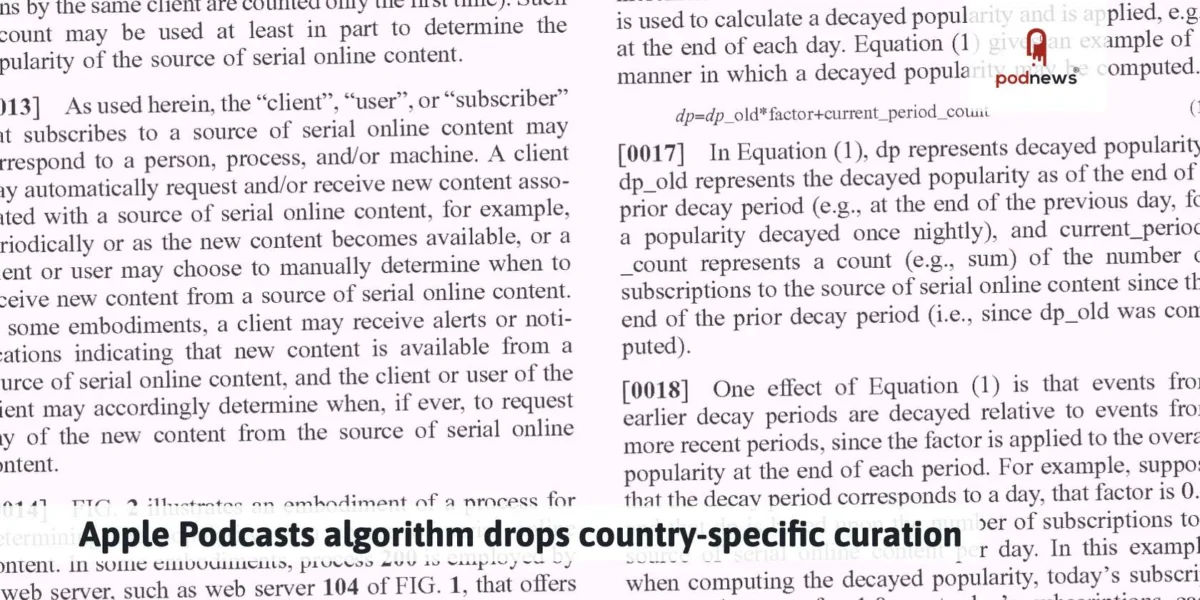
- Early Week: Industry attention turned to the technical side of discovery, with renewed interest in Apple’s patent filings for trending chart algorithms—a technology that has historically dictated the "discovery" phase of the podcast lifecycle.
- Mid-Week: A flurry of activity in the sports-podcast sector as fantasy football analysts, including the team at Fan Girl Football, reacted to the wave of quarterback injuries, proving once again that podcasting remains the primary medium for real-time, niche-specific news.
- Late Week: Strategic moves in the educational and historical content space. Gone Medieval made a high-profile move to YouTube, acknowledging the growing importance of visual podcasting, while History of the Germans kicked off a new season focusing on the Reformation, demonstrating the enduring demand for long-form, deep-dive historical storytelling.
- End of Week: Data releases confirmed that while legacy giants like The Daily and The Joe Rogan Experience retain their top-tier status on Apple and Spotify respectively, there is significant movement in niche categories, particularly in the hobbies and gaming sectors, which are seeing rapid shifts in listener discovery patterns.
Supporting Data: The Charts Reveal the Truth
Data remains the industry’s North Star. A review of current performance metrics across major platforms reveals a nuanced picture of audience behavior.

The Heavyweights
The US charts continue to be anchored by established powerhouses. On Apple Podcasts, The Daily holds the top spot, maintaining a firm grip on daily news consumption. Meanwhile, Spotify’s US rankings are consistently topped by The Joe Rogan Experience, illustrating the platform’s continued success in hosting high-reach, personality-driven content.
Niche Growth and Emerging Trends
Beyond the top ten, however, the data tells a story of diversity:

- Hobbies and DIY: Sew-organised-style has emerged as the "Biggest Gain" in the Irish Hobbies category, proving that niche, interest-based audio is thriving.
- The Rise of Gaming: New entries like Adopt Me in the Irish gaming charts suggest a renewed interest in gaming-focused audio content.
- Regional Dominance: Abroad in Japan continues to lead the travel category in Ireland, highlighting the power of personality-led travelogues.
- The Canadian Market: The Canadian trending charts are currently led by Halford & Brough, demonstrating the strength of sports-talk radio’s transition into the podcasting format.
These data points suggest that while global hits still dominate the top of the charts, the "long tail" of podcasting is becoming increasingly profitable and influential.
Official Responses and Strategic Perspectives
Industry experts are increasingly vocal about the need for better integration between content and community. Ainsley Rossitto, who recently transitioned from Paramount to lead the podcasting division at beehiiv, provided insight into this shift.

"The goal," Rossitto noted in a recent discussion on Podcast Perspectives, "is not to compete with traditional broadcasters but to offer creators a suite of tools that the legacy podcasting world has ignored." Her move signals a belief that newsletter creators—who possess direct lines to their audiences via email—are uniquely positioned to dominate the audio space by converting readers into listeners with higher-than-average conversion rates.
Furthermore, the research from Point-To-Point Marketing emphasizes that the "discovery" phase is broken for many independent creators. Their upcoming webinars are positioned as an intervention, suggesting that the industry must move away from relying solely on platform algorithms and toward owning audience relationships through owned media channels.

Implications: What This Means for the Future
The implications of these developments are twofold:
1. The Death of the "Passive Listener"
The era of the passive listener is ending. As demonstrated by the success of shows like The 1000 Hours Outside Podcast, which actively encourages listeners to change their real-world habits, the most successful podcasts of the future will be those that provide utility. Whether it is improving childhood development through nature time or helping a fantasy football manager win their league, the "value-add" podcast is winning.

2. The Integration of Platforms
The "siloed" era of podcasting—where audio lived only in RSS feeds—is fading. The move of Gone Medieval to YouTube is a precursor to a wider trend. Creators are realizing that "podcast" is a format, not a destination. To grow, shows must exist across audio-first, video-first, and text-first platforms.
3. Data Literacy is the New Skillset
For producers, the challenge is no longer just high-quality audio production. It is data literacy. As charts become more volatile and discovery becomes more competitive, creators must understand how to interpret platform data, optimize for SEO within podcast directories, and leverage secondary platforms (like newsletters) to drive traffic.

4. The Shift Toward Sustainability
The industry is moving toward a more sustainable, if less "hyped," model. The frenzy of venture-backed audio acquisitions has slowed, replaced by a focus on sustainable growth and community-led monetization. This is a positive development for the long-term health of the medium. It allows for a creator-first economy where the focus is on building a loyal audience rather than chasing ephemeral chart positions.
Conclusion
As we look toward the end of the year, the podcasting industry is entering a phase of maturity. The challenges are clear: discovery is difficult, audience attention is fragmented, and monetization requires a multi-pronged approach. However, the opportunities are equally clear. By leveraging the intersection of newsletters, video, and data-backed marketing, creators have more tools than ever to build sustainable, influential, and deeply engaging audio brands.

The path forward is no longer about finding the "next big hit" through luck, but about building the infrastructure—technical, analytical, and communal—that allows great stories to find their audiences reliably and consistently. For those willing to adapt, the next chapter of podcasting promises to be the most rewarding yet.
 Jia Lissa
 Neng Nana
