

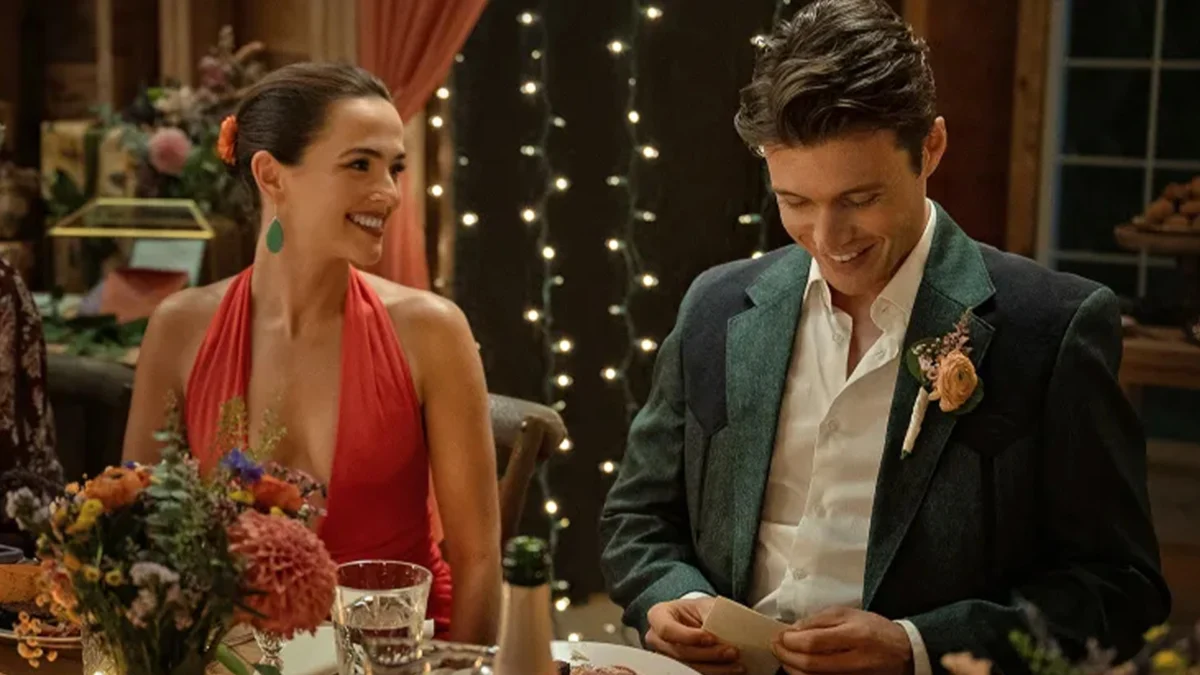
In an age where the cinematic landscape is increasingly fragmented between the "event film" and the direct-to-streaming release, Netflix has secured a rare, undisputed victory with its latest romantic comedy, Voicemails for Isabelle. Written and directed by the visionary Leah McKendrick, the film has bypassed the traditional theatrical bottleneck to capture the zeitgeist, proving that a heartfelt, character-driven story can still dominate the global conversation without the aid of a massive box-office marketing spend.
A Narrative of Connection and Grief
At the heart of the film’s success is a premise that balances profound emotional resonance with the whimsical DNA of classic 1990s rom-coms. The film stars Zoey Deutch as Jill, a young woman navigating the turbulent, often debilitating waters of grief following the untimely death of her sister, Isabelle (played by Ciara Bravo).
In a desperate, cathartic attempt to feel close to the sister she lost, Jill begins leaving deeply intimate, raw, and frequently hilarious voicemails on Isabelle’s old phone number. The conceit—a digital extension of the "letter to the deceased" trope—takes a sharp turn when the number is reassigned. Enter Wes (Nick Robinson), a Texas-based real estate agent who finds his daily life interrupted by these inadvertent confessions. What follows is a slow-burn connection that has drawn immediate, favorable comparisons to the gold standard of the genre: Nora Ephron’s You’ve Got Mail.
Critics and audiences alike have praised the film for its refusal to treat grief as a monolith. Instead, McKendrick explores the "messy" side of loss, utilizing the distance of a telephone line to allow Jill to be vulnerable in ways she cannot be in her physical life.
A Viral Sensation: The Data Behind the Success
Since its release on the platform, Voicemails for Isabelle has shot to the summit of Netflix’s daily charts in dozens of territories. However, the true metric of its success lies in its organic growth. The film has become a social media juggernaut, with platforms like TikTok and X (formerly Twitter) flooded with fan edits, deep-dive analyses of the screenplay’s witticisms, and high praise for the undeniable chemistry between Deutch and Robinson.

The critical consensus has been equally glowing. The film currently holds a staggering 92% audience score on Rotten Tomatoes. To put this in perspective, this score eclipses recent, heavily hyped projects like The Drama and places it in direct competition with high-profile, awards-season heavyweights such as Toy Story 5 and Project Hail Mary. In a crowded marketplace, Voicemails for Isabelle has managed to secure what every streamer craves: the "water cooler" effect.
The Eligibility Paradox: Why the Oscars Are Off the Table
Despite the overwhelming critical acclaim and the fervor of its fanbase, Voicemails for Isabelle is destined to remain a stranger to the Academy Awards. The absence of an Oscar campaign is not a reflection of the film’s quality, but rather a deliberate strategic choice by Netflix regarding distribution.
Under the current rules established by the Academy of Motion Picture Arts and Sciences, a film must meet specific criteria to be considered for Best Picture and other major categories. For the 99th Oscars, the eligibility requirements are stringent: a film must open in a commercial theater in at least one of six designated U.S. metropolitan areas—Los Angeles, New York, the Bay Area, Chicago, Miami, or Atlanta—for a minimum of seven consecutive days, followed by a sustained, expanded theatrical run within 45 days.
Netflix opted to bypass this theatrical rollout entirely, moving for a global, day-one release on its streaming service. While this strategy maximizes immediate viewership and subscriber retention, it effectively disqualifies the film from the cinematic industry’s most prestigious night.
The Emmy Pivot: Redefining "Television"
The inability to pursue an Oscar does not signify the end of the film’s awards potential. In a strategic pivot that has become common practice for streamers, Netflix is positioning Voicemails for Isabelle for a robust run at the 2027 Primetime Emmy Awards.

Industry analysts and pundits, including the team at GoldDerby, have already penciled the film in as the "way-too-early" frontrunner for Outstanding Television Movie. This is a burgeoning trend in the industry: treating high-budget, star-studded features as "limited events" rather than traditional films.
This path mirrors the trajectory of other recent Netflix hits, such as the adaptation of the tear-jerker Remarkably Bright Creatures, featuring Sally Field and Lewis Pullman. By foregoing the theater, these projects trade the prestige of the Academy Awards for the high probability of success in the Emmy ecosystem. For the talent involved, this shift is significant; while Zoey Deutch and Nick Robinson may not be walking the red carpet at the Dolby Theatre, they are all but guaranteed a spotlight on the Emmy stage next year.
Implications for the Future of Distribution
The case of Voicemails for Isabelle serves as a case study for the shifting power dynamics in Hollywood.
1. The Death of the "Theatrical Mandate"
For years, the industry operated under the assumption that "prestige" could only be found in a darkened theater. Voicemails for Isabelle challenges this, proving that a film can command the same level of cultural influence and artistic respect through a purely digital delivery system.
2. The Rise of the "Streaming-First" Talent
Actors and directors are increasingly prioritizing platforms that offer immediate, global accessibility. For a creator like Leah McKendrick, the ability to reach millions of households instantly—without the financial risk of a theatrical box-office run—is a compelling trade-off.

3. A Changing Awards Landscape
The Academy of Motion Picture Arts and Sciences faces a growing dilemma. As more high-quality, mid-budget dramas migrate to streaming services, the Oscars risk losing touch with the movies that people are actually watching. If the Academy continues to prioritize the traditional "theatrical-first" model, they may find themselves increasingly disconnected from the projects that define the modern cultural zeitgeist.
Final Thoughts: A Love Story for the Digital Age
Ultimately, Voicemails for Isabelle is a testament to the power of a well-told story. Whether it is viewed on a massive home cinema screen or a smartphone on a commute, the emotional core of the film—the human need to be heard, to be understood, and to grieve—remains intact.
As fans continue to "swoon and sob" over the burgeoning romance between Jill and Wes, the film’s legacy is already cemented as one of the defining moments of the 2026/2027 streaming cycle. It is a reminder that in an era of algorithms and data-driven content, there is still no replacement for a genuine connection—even if that connection is made via an old, forgotten voicemail.
While the red carpet at the Dolby Theatre may remain elusive, the hearts and minds of the global audience are more than enough of a prize. As we look toward the 2027 Emmy season, all eyes will be on Netflix to see if this digital darling can translate its streaming dominance into the industry’s highest television honors. For now, the message is clear: the era of the direct-to-streaming hit has arrived, and it has never sounded quite this compelling.
 Ammar Sabilarrohman
 Siti Muinah
 Iffa Jayyana
