

By Editorial Staff
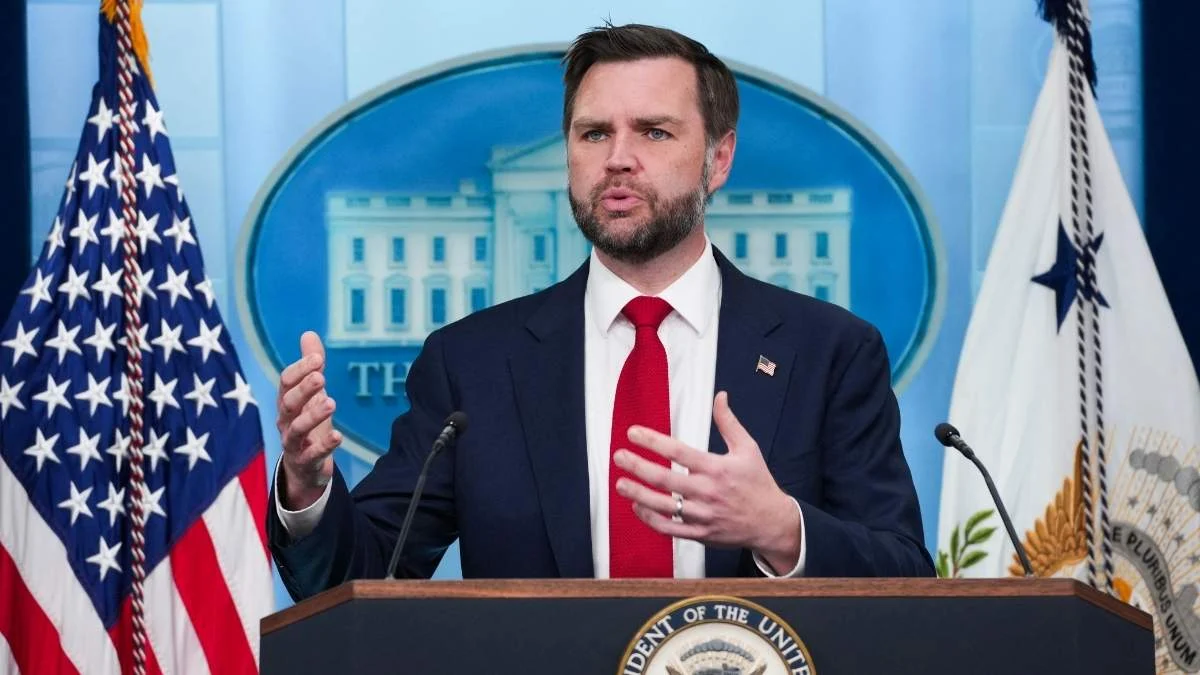
The high-stakes diplomatic maneuverings surrounding the nascent Iran agreement hit a significant roadblock this week as Vice President JD Vance abruptly cancelled a critical trip to Switzerland. The last-minute decision, which surfaced late Thursday evening, has sent shockwaves through international diplomatic circles, casting a shadow of doubt over the timeline and viability of the preliminary nuclear framework.
The cancellation follows a chaotic week of digital signatures, rapid-fire logistical pivots, and escalating regional tensions that have complicated an already precarious geopolitical arrangement. As the White House scrambles to reassure allies and domestic skeptics alike, the future of the 60-day window to finalize nuclear terms remains increasingly opaque.
Main Facts: A Diplomatic Pivot at the Eleventh Hour
The planned mission to Switzerland was intended to be the definitive launchpad for technical negotiations regarding Iran’s nuclear stockpile. Vice President Vance, who has positioned himself as the administration’s lead negotiator on this file, was expected to spearhead discussions aimed at addressing the most contentious aspects of the memorandum of understanding (MOU) signed earlier this week.
However, the White House confirmed on Thursday that the delegation would not be departing as scheduled. The official justification cited "unresolved logistics," with spokespersons emphasizing that while the American team remained "prepared to depart at the first available opportunity," the technical infrastructure required for the talks was simply not ready.
The situation was compounded by a simultaneous announcement from Tehran. Iranian officials confirmed that they had grounded their own delegation, citing the ongoing military escalation between Israel and Hezbollah in Lebanon as an insurmountable barrier to participation. This convergence of logistical delays and regional instability has left the diplomatic process in a state of suspended animation.
Chronology: A Week of Digital Signatures and Real-World Friction
To understand the current impasse, one must look at the rapid, often erratic sequence of events that defined the preceding five days.
Sunday, June 14
The diplomatic process gained momentum when President Donald Trump signed the preliminary memorandum of understanding digitally. This act was intended to signal a breakthrough in U.S.-Iran relations, setting the stage for a 60-day period during which the administration hoped to hammer out the specifics of a comprehensive nuclear non-proliferation agreement.
Wednesday, June 17
The physical realities of the deal began to take shape. Following his return to Washington, President Trump participated in a secondary signing of the document at the Palace of Versailles, a symbolic gesture intended to underscore the gravity of the commitment. Simultaneously, Iran’s Foreign Ministry announced that their president had finalized his signature digitally, effectively rendering a formal, in-person signing ceremony in Geneva—originally scheduled for Friday—superfluous.
Thursday, June 18
The morning began with a sense of optimism. Speaking to reporters, Vice President Vance maintained that the trip was still on the calendar. "My plan is to go to Switzerland," he stated, though he admitted he did not know "exactly when." He expressed an expectation that technical negotiations would commence "sometime this weekend," while acknowledging the volatility of the situation.
By Thursday evening, however, the landscape had shifted. The White House pulled the plug on the travel itinerary, and the Iranian delegation confirmed it would not be attending, citing the security environment in the Middle East.
Supporting Data: The Scope of the Iran Agreement
The agreement currently on the table is a complex, multi-layered document that seeks to balance domestic political concerns in the United States with the strategic requirements of the Iranian state.
Key Provisions
- The 60-Day Window: The agreement provides a strict two-month timeline to finalize the technical parameters of Iran’s nuclear program, including transparency protocols and monitoring.
- Sanctions Relief: The deal hinges on the immediate lifting of the United States’ naval blockade on the Strait of Hormuz, a critical artery for global oil transit.
- The Stockpile Controversy: Perhaps the most significant omission in the current MOU is the status of Iran’s existing uranium stockpile. The current agreement leaves these assets largely untouched, an issue that Vice President Vance was specifically tasked to address during the now-cancelled Swiss summit.
The decision to omit the stockpile from the initial MOU has drawn sharp criticism from national security hawks, who argue that any deal failing to account for enriched material is effectively a "hollow agreement." Vance’s intended trip was designed to bridge this gap, as the administration sought to convert the vague digital MOU into a concrete, enforceable policy.
Official Responses: Navigating the Optics of Delay
The White House has been careful to frame the cancellation not as a failure of policy, but as a minor logistical recalibration.
"The delegation remains fully prepared to engage in these critical discussions at the first available opportunity," a White House spokesperson noted in a statement released Thursday night. "Our commitment to the process remains unwavering, and we are working closely with our international partners to ensure that the technical environment is conducive to the progress we all seek."
When pressed on whether the ongoing Israeli strikes in Lebanon were a factor in the U.S. decision to pull back, officials remained tight-lipped, focusing instead on the "unresolved logistics" of the Geneva venue.
Vice President Vance, for his part, has maintained his role as the point person for the negotiation. Despite the delay, his office has reiterated that he intends to lead the American team whenever the talks are rescheduled. No new date has been offered, and the administration has declined to provide a firm deadline for when the delegation might finally board a plane for Switzerland.
Implications: The Geopolitical Fallout
The cancellation of the Switzerland trip carries heavy implications for both domestic politics and international stability.
1. The Stability of the 60-Day Window
The 60-day clock is already ticking. Every day lost to logistical delays and regional instability is a day lost in the attempt to secure a nuclear framework. If the parties cannot meet within the next week to begin technical discussions, the window may close before a substantive deal can be drafted, potentially leading to the collapse of the entire initiative.
2. The Influence of Regional Conflicts
The explicit link made by the Iranian delegation between the Geneva talks and the conflict in Lebanon suggests that Tehran is unwilling to decouple its nuclear aspirations from its broader regional military posture. This complicates the U.S. strategy, which was predicated on the idea that the nuclear deal could be handled as a distinct, "siloed" diplomatic project.
3. Domestic Political Pressure
For the Trump-Vance administration, the pressure to secure a "win" on the world stage is mounting. Having publicly touted the digital signings earlier in the week, the sudden stall in momentum creates a political vulnerability. Critics are already pointing to the cancellation as evidence of a "rushed" and "unprepared" foreign policy. The upcoming weeks will be a test of the administration’s ability to navigate these cross-currents without appearing to concede too much to a regime that remains at odds with the United States on nearly every other front.
4. The Future of the Strait of Hormuz
The lifting of the naval blockade is a cornerstone of the agreement, but it is also a massive concession. If the nuclear negotiations stall permanently, the administration will face the difficult choice of whether to maintain the blockade—thereby killing the deal—or to proceed with the lifting of sanctions even in the absence of a robust nuclear guarantee.
Conclusion: A Delicate Balancing Act
As the world watches the unfolding situation in Switzerland and the Middle East, the future of the Iran deal hangs in a delicate balance. The transition from digital signatures to on-the-ground diplomacy has proven far more difficult than the White House anticipated.
While the administration insists that the Switzerland trip is merely delayed, the underlying tensions—the untouched uranium stockpiles, the regional volatility, and the deep-seated mistrust between Washington and Tehran—remain as potent as ever. Whether Vice President Vance can successfully lead a delegation to resolve these issues remains the single most important question in international diplomacy this month.
For now, the international community waits, watching for a signal that the "first available opportunity" for these talks will actually arrive. Until then, the Switzerland summit remains a diplomatic ghost—a meeting that was meant to change the world, yet remains trapped in the logistics of a chaotic and uncertain geopolitical era.
 Neng Nana
 Azzam Bilal Chamdy
 Nana
Nana
