

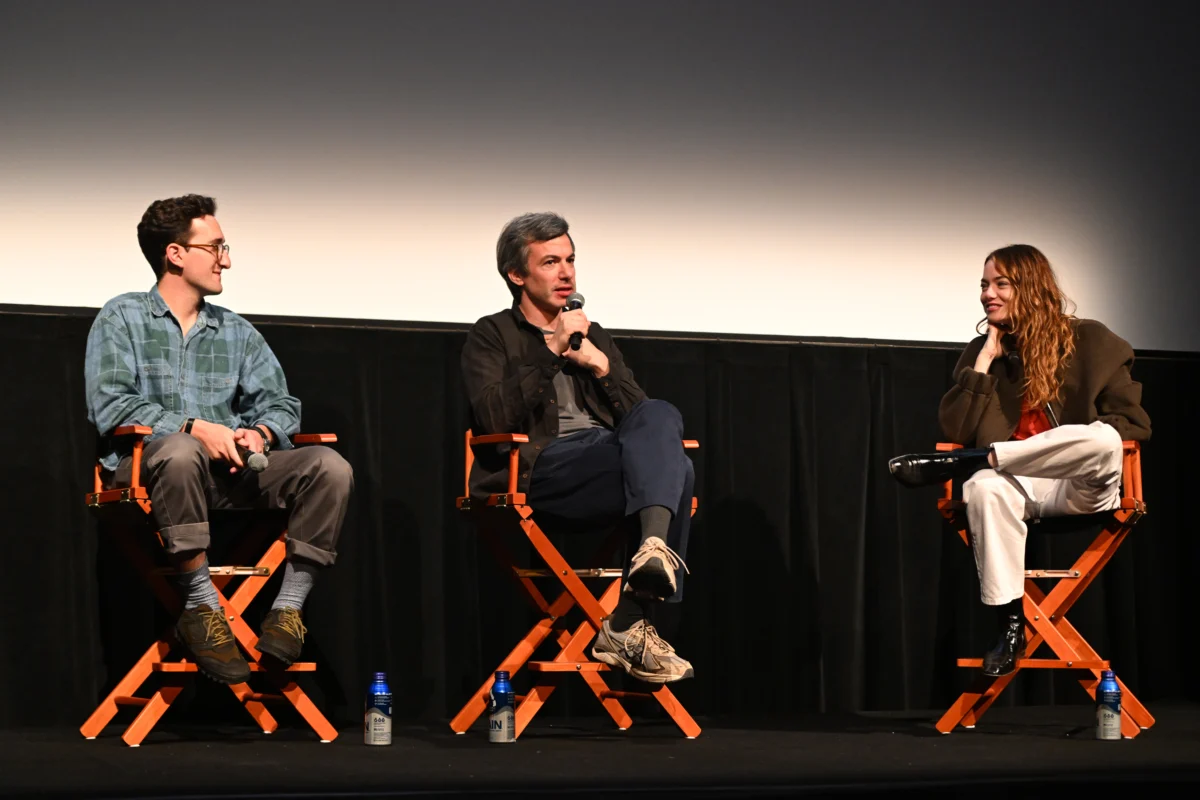
In the high-stakes world of the international film festival circuit, where prestige is measured in red-carpet arrivals and exclusive acquisitions, the 2026 Telluride Film Festival achieved the impossible: it manufactured a genuine, old-school cultural “event.”
The catalyst was a simple, four-word text message sent to Telluride Festival Director Julie Huntsinger: "Can we talk?" The sender was A24, the powerhouse studio behind a clandestine project that would soon become the most discussed film of the year. The subject? A documentary directed by Nathan Fielder and Lance Oppenheim focusing on the disgraced tech mogul Elizabeth Holmes. What followed was a masterclass in strategic secrecy, culminating in a festival experience that left audiences breathless and solidified Telluride’s reputation as the heartbeat of cinematic discovery.
A Chronology of a Secret
The strategy, which involved keeping the film’s existence under wraps from everyone except four members of the festival’s inner circle, was a gamble that paid off in dividends. Even Huntsinger’s closest personal confidantes remained in the dark until the final curtain was pulled back.
- The Initial Contact: Following the success of prior collaborations, A24 reached out to Huntsinger with a request to discuss a “top secret” project.
- The Deliberation: For two days, the logistics were finalized. Given Fielder’s penchant for the meta-narrative and the complex, polarizing nature of the Elizabeth Holmes saga, the team decided a "sneak" was the only appropriate rollout.
- The Reveal: On the festival’s opening weekend, attendees walked into a screening room with no knowledge of the feature. The resulting shock—described by early reviewers as "jaw-dropping" and "triumphant"—created an immediate ripple effect that traveled from the mountain town of Telluride to the global media landscape.
- The Aftermath: With the buzz now at a fever pitch, the film is set to screen at the New York Film Festival, extending the momentum that began in the Werner Herzog Theater.
The Anatomy of the Documentary
The film, titled You Can See Everything, is being hailed not merely as a documentary, but as a chilling, essential artifact of the current cultural zeitgeist. By pairing Fielder’s signature brand of uncomfortable, hyper-analytical humor with the inherently surreal story of Holmes—the former Theranos CEO who promised a revolution in blood testing only to orchestrate one of Silicon Valley’s greatest frauds—the directors have created a polarizing, provocative work of art.
Huntsinger, reflecting on the experience, noted that the film’s impact is cumulative. "With each section, your jaw drops a little more," she explained. "It’s a shocking, horrible portrait of our time." Unlike standard true-crime documentaries that lean on procedural reenactments, You Can See Everything reportedly utilizes Fielder’s unique structural gifts to force the audience to reconsider the very nature of truth, performance, and institutional deception.
Behind the Scenes: A Director’s Perspective
For Julie Huntsinger, the success of the 2026 edition wasn’t just about the A24 reveal; it was about the delicate "alchemy" of programming. The festival faced early-season anxieties regarding the viability of the slate, but those fears were quickly assuaged by the strength of the films presented.

"I was panicked initially," Huntsinger admitted. "I wondered if it was a barren year for cinema. But as the lineup solidified, I realized we had nothing to worry about."
The festival balanced the "90,000-pound gorilla" of the Fielder film with a range of more intimate, humanistic works. From Andrew Haigh’s A Long Winter to the subtle, powerful performances in The Liberation and the old-fashioned adventure of Tenzing, the 2026 program sought to highlight the diversity of contemporary filmmaking.
The Awards Circuit and Industry Implications
The success of the Fielder project has sparked a vigorous debate regarding the "festival strategy" for major studios. In an era where films are often saturated across dozens of events before they even reach the public, the "Telluride Model"—a singular, high-impact premiere followed by a controlled release—is being looked at with newfound envy.
"I encourage larger companies to take a chance," Huntsinger noted. "Not everything has to show at 20 festivals. There is a benefit to finding that perfect window before the release."
Industry analysts are already looking at the Oscar potential of the films showcased at Telluride. The positive reception for performances like those of Carrie Coon, Bella Ramsey, and Odessa Young suggests that the 2026 awards conversation will be heavily influenced by the discoveries made in the Colorado mountains.
Official Responses and Cultural Resonance
The festival was not without its lighter, viral moments. Oprah Winfrey’s presence, specifically her now-famous hug of Andrew Scott, provided a touch of Hollywood glamour that balanced the weightier, experimental tone of the festival’s centerpieces.

However, the most enduring memory for the festival director remained a moment of genuine human connection: actor Kelvin Harrison Jr. performing a karaoke rendition of a country-western standard. "It was a life highlight," Huntsinger said, emphasizing that for all the prestige and strategy, the festival remains, at its core, a celebration of the love of cinema.
The Future: Looking Toward 2027
As the dust settles, the question remains: Can Telluride repeat this feat? Huntsinger remains optimistic and already forward-looking. The success of You Can See Everything has proven that audiences are still hungry for the "unknown"—for the experience of walking into a dark room and having their worldview shifted by a singular, well-crafted narrative.
The lesson learned from 2026 is one of intentionality. By being more rigorous in selecting films and more creative in how they are introduced to the world, festival directors can fight back against the "noise" of the streaming era.
"The power of a well-told humanist tale—a really well-made movie—there’s nothing like it," Huntsinger concluded. As the industry looks toward the upcoming release dates for the films that debuted at Telluride, the hope is that the general public will treat these works with the same level of curiosity and reverence as those who sat in the theater in Colorado, completely unaware of the cinematic history they were about to witness.
The 2026 Telluride Film Festival has set a high bar. It proved that while technology and distribution models continue to evolve, the fundamental need for mystery, surprise, and the shared experience of the big screen remains the bedrock of the film industry. Whether it’s through a secret text message or a meticulously curated lineup, the magic of the festival persists, promising that as long as there are stories to be told, there will be an audience waiting to hear them.
 Ammar Sabilarrohman
 Siti Muinah
 Iffa Jayyana
