

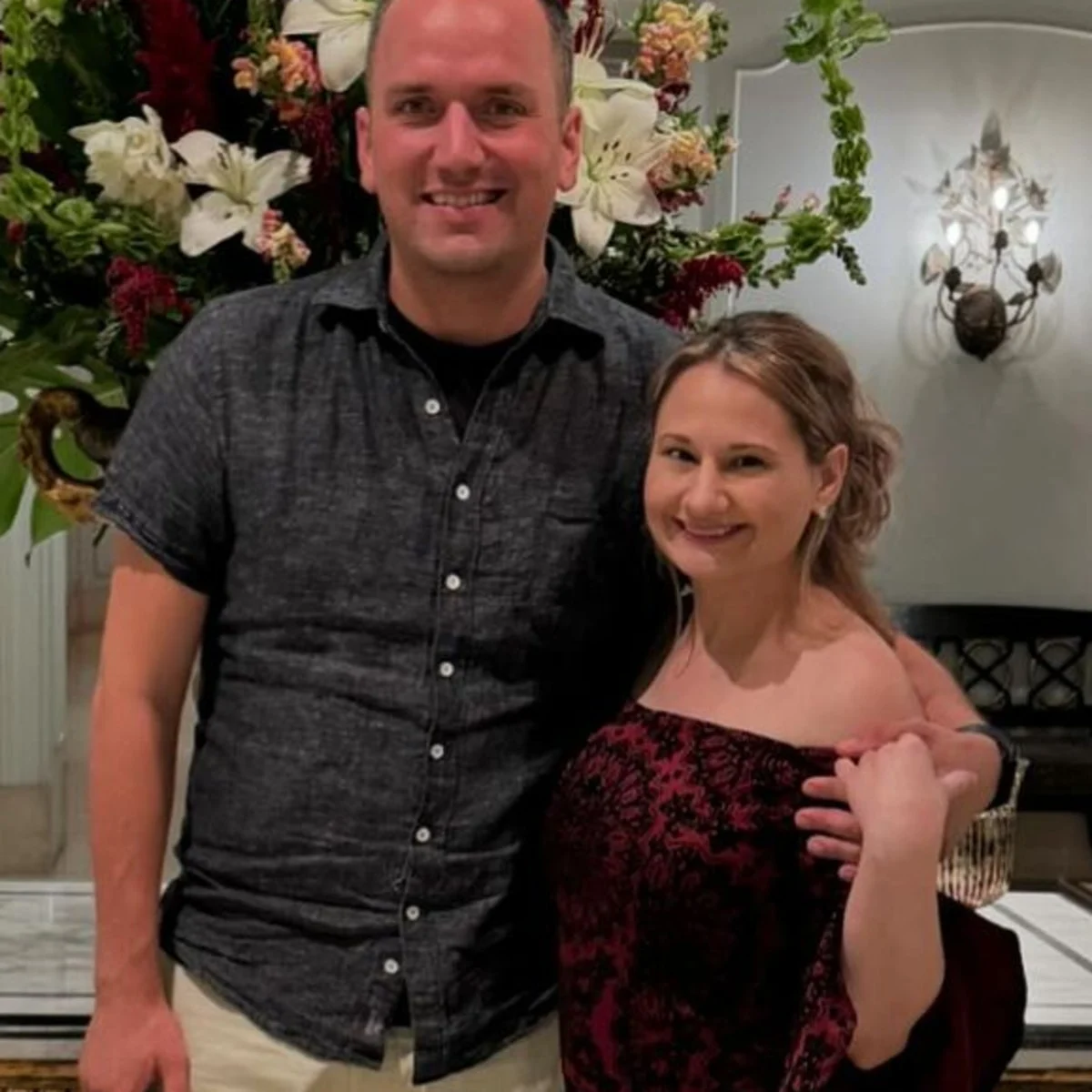
The public’s fascination with the life of Gypsy Rose Blanchard has often bordered on the obsessive, but this week, the narrative took a somber and heartbreaking turn. Ken Urker, 33, a figure long intertwined with Blanchard’s journey through the justice system and her subsequent re-entry into civilian life, was found dead in his home in Raceland, Louisiana, on October 1. The loss has sent shockwaves through the community of those who follow Blanchard’s life, leaving behind a grieving partner and their 21-month-old daughter, Aurora.
As authorities investigate the circumstances surrounding his death, the tragedy has sparked a broader conversation regarding the corrosive impact of digital harassment and the often-hidden mental health struggles faced by those thrust into the unwanted spotlight of public controversy.
The Tragic Discovery and Official Confirmation
The news of Ken Urker’s death emerged shortly after law enforcement officials confirmed the discovery of his body in his Raceland residence, a community located southwest of New Orleans. While the initial reports provided only the barest details, Blanchard soon stepped forward to offer a harrowing, personal account of the final days of her partner’s life.
In an exclusive interview with People, Blanchard confirmed that Urker died as a result of an overdose. She noted that he had been struggling significantly with his mental health in the period leading up to his passing. "I don’t know if it was intentional or not," Blanchard stated, her voice heavy with grief. "He was not in a good state of mind lately."
For Blanchard, the loss is immediate and visceral. She described herself as being in a state of profound disbelief, struggling to process the sudden void left by his death. "I can’t think," she remarked. "I’ve screamed until my throat burns."
Chronology: A Relationship Forged in Unlikely Circumstances
To understand the depth of this loss, one must examine the unconventional, often turbulent, but deeply significant bond shared by Blanchard and Urker. Their story began in 2017, a time when Blanchard was serving a prison sentence for her role in the 2015 murder of her mother, Clauddine "Dee Dee" Blanchard—a case that remains one of the most publicized true-crime sagas of the 21st century.
The Prison Correspondence
The connection between the two was established through a letter. After watching the seminal HBO documentary Mommy Dead and Dearest, which detailed the horrific abuse Blanchard suffered at the hands of her mother, Urker reached out to offer his support.
"It was pretty soon after that that we started talking on the phone," Blanchard told E! News in 2019. "We would spend hours on the phone. I talked to him like I had known him my whole life and vice versa." The relationship quickly deepened, culminating in an engagement while Blanchard was still behind bars. However, like many relationships formed under such extreme duress, the engagement eventually faltered, and the couple parted ways.
Separation and Reconnection
Following their initial breakup, Blanchard went on to marry Ryan Anderson, a special education teacher, in 2020. However, after Blanchard’s release from prison in 2023, her life underwent a dramatic reconfiguration. She filed for divorce from Anderson in 2024, and shortly thereafter, the path led back to Urker.
By the spring of 2024, the couple had rekindled their romance, appearing together in public and signaling a renewed commitment to one another. Blanchard later admitted that she had known Urker was "the one" as far back as 2017, but it was only after the conclusion of her marriage to Anderson that she fully realized the depth of the spark they shared.
The Weight of Public Scrutiny and Cyberbullying
Perhaps the most poignant aspect of Blanchard’s statement following Urker’s death is her pointed criticism of the culture surrounding their relationship. She revealed that Urker had been the target of relentless, "unimaginable" levels of public scrutiny and cyberbullying.
"The cruelty directed toward him was something no human being should have to endure," Blanchard asserted. She expressed a firm belief that the "tremendous weight" of this harassment played a profound role in the decline of his mental state.
This tragic event serves as a stark reminder of the human cost of internet culture. In an era where individuals are often reduced to characters in a social media narrative, the distinction between the person and the public persona is frequently lost. Blanchard’s plea is a call to recognize that "there is a real person behind every screen, every headline, and every comment."
Honoring a Father and a Soulmate
Despite the pain of his death, Blanchard is resolute in ensuring that Urker’s legacy is defined by his love rather than the circumstances of his passing. She spoke of him as an "amazing father" and a man who was, above all else, deeply devoted to their 21-month-old daughter, Aurora.
"He will forever be my soulmate and my red string, a connection that time, distance, and even death can never erase," she said.
Blanchard has committed herself to ensuring that young Aurora grows up with a nuanced understanding of her father—a version of the man that exists outside of the vitriol found on the internet. "She is a beautiful reflection of his enduring spirit, and through her, a part of him will always remain with us," Blanchard added. She has requested privacy for her family and the family of the deceased, emphasizing the need for compassion during this "incredibly painful time."
Implications for Public Figures and Digital Accountability
The death of Ken Urker raises difficult questions about the responsibility of the public and media platforms in the lives of high-profile individuals. When an individual’s life becomes a subject of national discourse, the line between observation and harassment often blurs.
The Psychological Toll
Psychologists have long warned that chronic cyberbullying can lead to feelings of helplessness, severe anxiety, and depression. When this occurs against a backdrop of already fragile mental health—as Blanchard noted was the case for Urker—the results can be devastating. The "weight" mentioned by Blanchard is not merely figurative; it is a clinical factor that can exacerbate underlying psychological issues.
Moving Forward
The tragedy of Ken Urker’s death has, for a brief moment, caused a pause in the relentless cycle of commentary surrounding the lives of those like Gypsy Rose Blanchard. Whether this moment of reflection will lead to a more compassionate digital landscape remains to be seen. However, for those grieving his loss, the focus remains on the personal tragedy: a young man, a dedicated father, and a beloved partner who, in the eyes of those who knew him best, was far more than the headlines suggested.
As the family navigates the coming weeks, the focus will likely shift toward private mourning. Blanchard’s closing words serve as a testament to the life that was lost: "He will be deeply missed, forever loved, and never forgotten."
In the aftermath of this tragedy, the narrative of Gypsy Rose Blanchard is no longer just about survival or the quest for freedom; it is now underscored by the heavy, sobering reality of loss. It is a story that, in its most painful chapter, reminds us all of the fragility of human life and the profound, often irreversible, impact of the words we choose to share.
 Sagoh
Sagoh
 Siti Muinah
 Nana
Nana
