

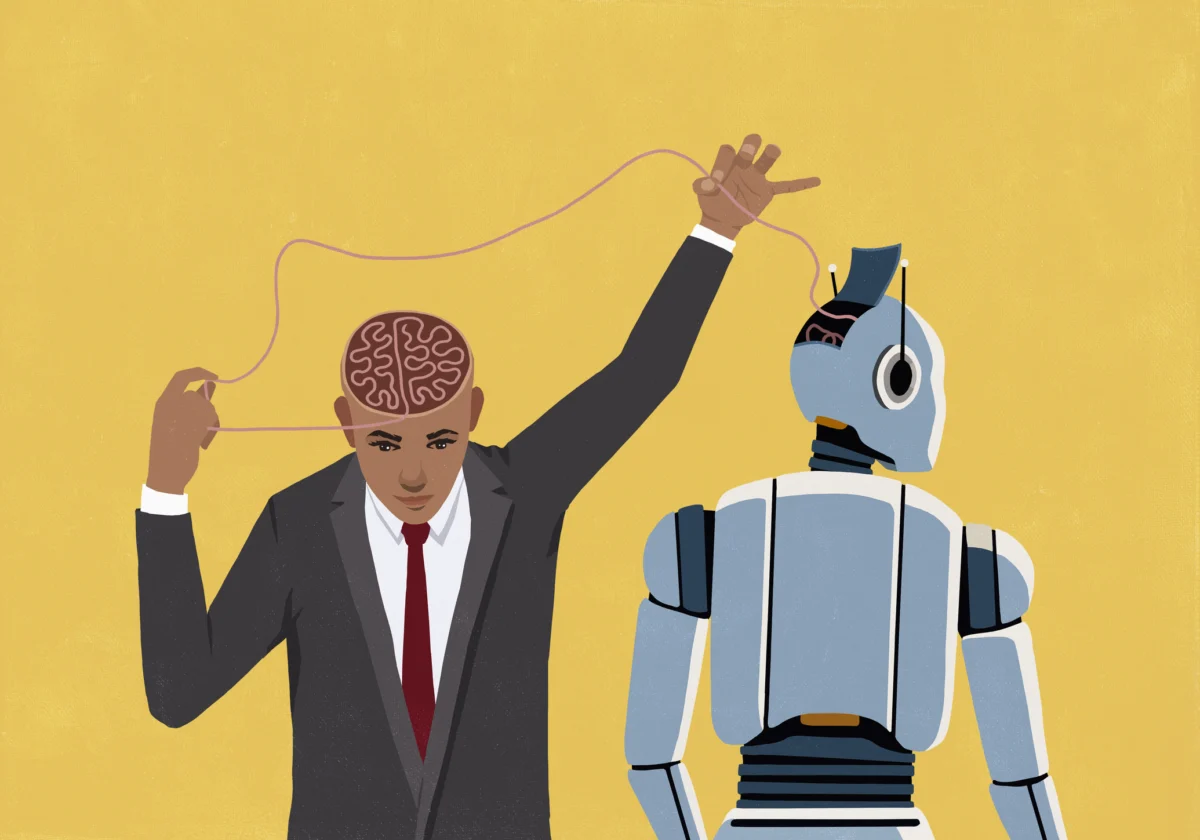
For nearly two decades, Amazon’s Mechanical Turk (MTurk) has served as the digital infrastructure for the "invisible" labor that keeps the internet running. From training neural networks to verifying human identity, it was the go-to marketplace for micro-tasks that remained stubbornly resistant to automation. However, that era is drawing to a close.
In a quiet update to its service documentation, Amazon Web Services (AWS) announced that, effective July 30, 2026, the platform will officially close its doors to new customers. While current users may continue to operate, the service has effectively been placed on permanent life support—no new features, no expansion, and no future. The move marks the sunsetting of one of the most controversial, influential, and paradoxically ironic tools in the history of the modern tech economy.
The Chronology of a Crowdsourcing Pioneer
Launched in 2005, Mechanical Turk was ahead of its time. Named after the 18th-century chess-playing automaton—which was, itself, a hoax powered by a human hidden inside a cabinet—Amazon’s platform turned the concept into a literal business model. It offered a marketplace where "Requesters" could post "Human Intelligence Tasks" (HITs) to a global workforce of "Workers" who would complete these tasks for mere pennies.
- 2005: Amazon launches Mechanical Turk, promising a way for developers to programmatically access human intelligence.
- 2008–2012: The platform hits its stride, becoming the primary hub for academic researchers, data scientists, and companies needing to clean massive datasets or label images.
- 2018: Amazon pivots the platform’s branding, integrating it into its SageMaker AI suite as a primary tool for training machine learning models through data annotation.
- 2023: A turning point arrives as reports emerge that workers are using AI tools to perform the very tasks they were hired to do, effectively "automating the human-in-the-loop."
- 2026: Amazon announces the suspension of new customer sign-ups, signaling the beginning of the end for the platform.
The Paradox of the "Hidden Enabler"
For years, Mechanical Turk operated in the shadows of the AI boom. While Silicon Valley firms marketed their products as "AI-powered," the reality was often far more mundane. Many companies utilized MTurk as a "Potemkin AI"—a façade where behind-the-scenes human workers processed requests that the software was not yet capable of handling.
This "fake-it-till-you-make-it" approach allowed startups to secure funding and market share while the underlying algorithms were still in their infancy. By relying on human labor to bridge the gap between input and output, companies effectively masked the limitations of their technology, creating an illusion of seamless automation. However, as AI models grew more capable, the necessity for a human workforce began to dwindle, leading to a long-term decline in the quality and volume of tasks available on the platform.
The Snake Eating Its Own Tail: The 2023 Crisis
The most ironic chapter in the story of MTurk occurred in 2023, when the relationship between human labor and artificial intelligence reached a breaking point. An extensive analysis revealed that a massive percentage of the platform’s workforce—estimates ranged between 33% and 46%—were using Large Language Models (LLMs) to complete their HITs.
Instead of human cognition being used to train AI, AI was being used to generate responses to be fed back into the training sets. This created a recursive loop of "synthetic" data, which researchers warned would lead to "model collapse"—a scenario where AI models, trained on AI-generated data, become progressively less accurate and more prone to hallucinations. This development fundamentally undermined the value proposition of MTurk: if the "human in the loop" was actually a bot, the reliability of the entire data pipeline was effectively nullified.
Supporting Data and the Erosion of Trust
The decline of MTurk was not merely a result of technological shifts, but also a crisis of trust. Long-time users and researchers have noted for years that the platform had become increasingly difficult to navigate.
The Bot and Fraud Problem
In the final years of its relevance, MTurk became a hotbed for bot-driven fraud. Sophisticated scripts could complete tasks faster than any human, leading to a "race to the bottom" in terms of data quality. As legitimate workers abandoned the platform due to the plummeting pay-per-task and the saturation of automated accounts, researchers found it increasingly difficult to gather high-quality data.
Community Sentiment
On community hubs like Reddit, the reaction to Amazon’s news was one of weary resignation. One prominent user noted, "The platform died years ago. Researchers left because the data was garbage, and the workers left because the pay was stagnant. Amazon pulling the plug is just the final paperwork for a corpse." This sentiment reflects a broader industry shift: the era of cheap, human-powered crowdsourcing is being replaced by automated, synthetic data generation, despite the risks to accuracy.
Official Responses and Corporate Strategy
Amazon’s official stance remains characteristically brief. In a statement provided by AWS, the company noted that the decision was made after "careful consideration."
"Existing customers can continue to use the service as normal," the statement reads. "AWS continues to invest in security and availability improvements for Mechanical Turk, but we do not plan to introduce new features."
Industry analysts interpret this as a classic "maintenance mode" strategy. Amazon is not shutting down the servers today because there are likely long-term contracts and legacy systems still relying on the API. However, the company is clearly signaling that there is no future for the platform in its current form. The lack of new features indicates that resources are being reallocated toward more modern, scalable AI services, such as Bedrock and other generative AI initiatives, which do not rely on the same, fragmented crowdsourcing model.
The Broader Implications for the Future of Work
The end of Mechanical Turk is more than just a software retirement; it is a signal of a paradigm shift in the digital labor market.
1. The Decline of "Micro-Tasking"
The economic model of breaking complex work into infinitesimal, low-paid tasks—often called "digital piecework"—is losing favor. As AI becomes better at handling these tasks, the demand for human intervention at the micro-level is shrinking.
2. The Ethics of AI Training
Mechanical Turk was at the center of the debate regarding the ethics of AI training. It raised uncomfortable questions about how companies source their training data and the conditions under which that data is produced. With the demise of MTurk, the industry is moving toward larger, more centralized, and often more opaque data-labeling operations, which bring their own set of ethical challenges.
3. The End of the "Human-in-the-Loop" Illusion
The reliance on human workers to mask algorithmic failures is becoming unsustainable. As the industry moves toward "agentic" AI, which can self-correct and verify its own output, the need for a low-cost, human safety net is disappearing.
Conclusion: A Legacy of Irony
The story of Mechanical Turk is the story of the modern internet. It began as an ambitious experiment in human-machine collaboration and ends as a cautionary tale about the dangers of relying on synthetic data and the limitations of automated systems.
When it launched in 2005, it promised to unlock the potential of the "global brain." By 2026, it serves as a reminder that the "human" element of the machine is often the first thing to be discarded when it is no longer profitable. Whether or not its absence will be felt by the tech industry remains to be seen, but one thing is certain: the era of the human-powered machine is fading into the digital past. As the final tasks are submitted and the servers are eventually decommissioned, Mechanical Turk will be remembered as the bridge that allowed the AI revolution to cross the chasm—only to be burned behind it.
 Asep Darmawan
 Siti Muinah
 Ali Ikhwan
