

Main Facts: The Enduring Legacy of Charles M. Schulz’s Masterpiece
Seventy-five years after Charles M. Schulz first inked the iconic panels of Peanuts, the comic strip remains a towering pillar of American pop culture. While casual fans might recognize Charlie Brown, Snoopy, and the gang primarily through holiday television specials, licensed merchandise, or greeting cards, dedicated comic historians and enthusiasts know that experiencing the strip as a continuous, unbroken run offers a profoundly different perspective.
For those looking to dive deep into the daily evolution of Schulz’s creation, publisher Fantagraphics’ The Complete Peanuts serves as the gold standard. Spanning 26 comprehensive volumes, the definitive collection maps out roughly two years of strips per book, charting the artistic and narrative growth of a cultural phenomenon. From early, experimental gags featuring minor characters like Violet to the cementing of the legendary core cast, the collection highlights how Schulz built a micro-society of eccentric, philosophically minded children.
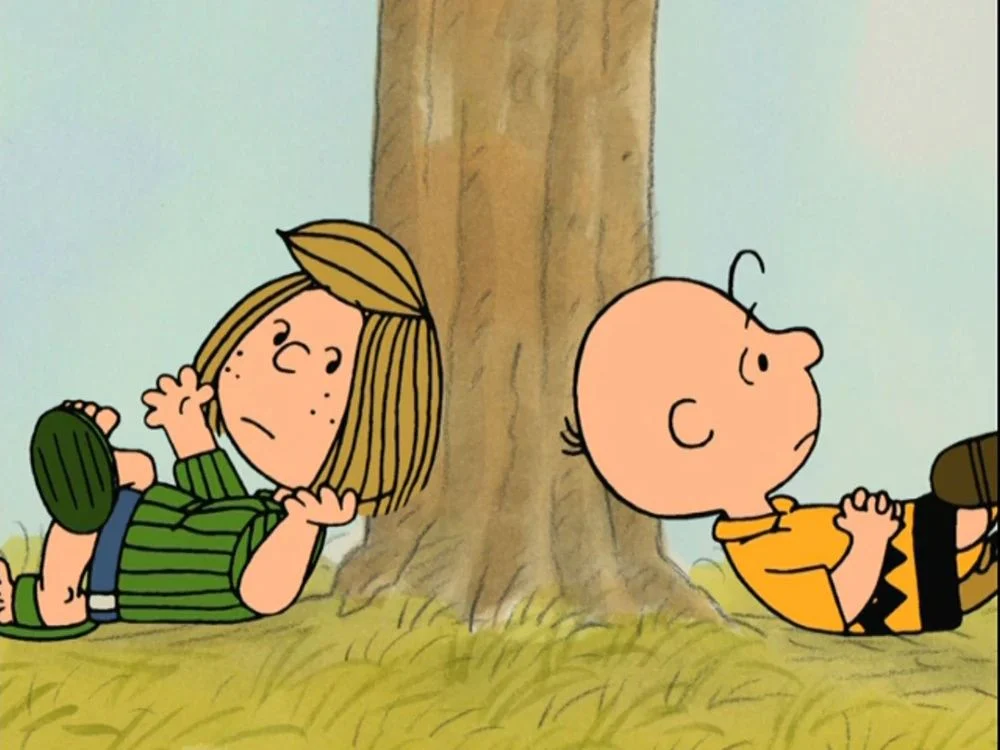
Yet, reading through the decades-long run reveals more than just nostalgia; it invites intense character analysis. Among the sprawling cast of neurotics, philosophers, and cynics, one character consistently stands out for her unwavering loyalty: Patricia "Peppermint" Patty. Often remembered for her academic struggles and her delightfully oblivious, unrequited crush on "Chuck," Peppermint Patty represents the emotional bedrock of Charlie Brown’s social circle. Despite the strip’s fundamental design to keep its protagonist in a state of perpetual melancholy, Peppermint Patty consistently emerges as the best, most dependable friend Charlie Brown ever had.
Chronology: The Evolution of Friendship in Peanuts
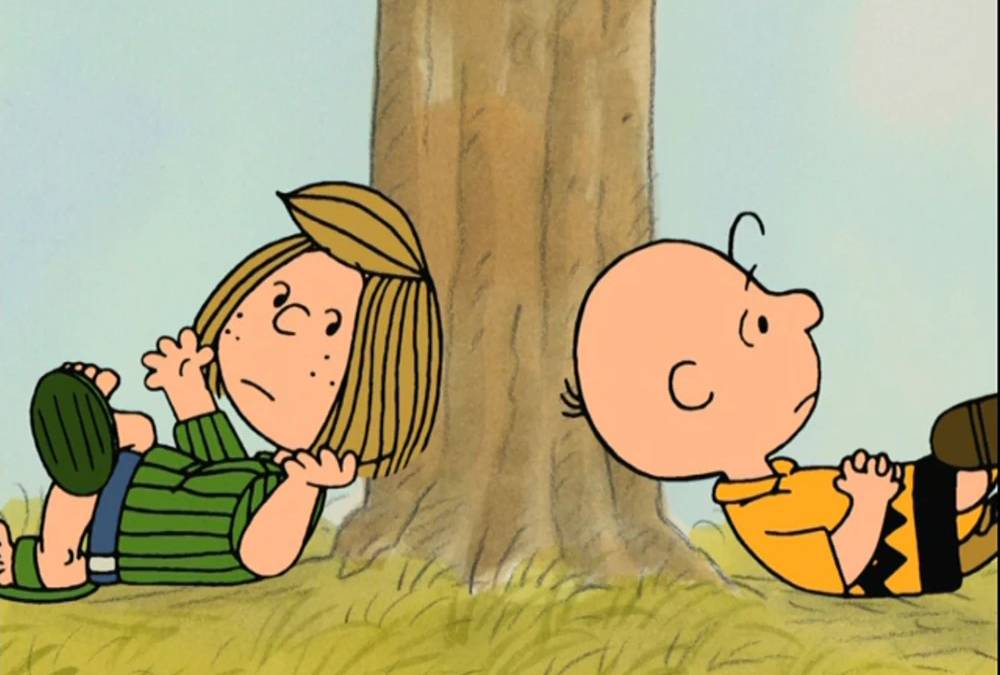
To understand the unique dynamic between Peppermint Patty and Charlie Brown, one must trace the historical chronology of the strip, noting how Schulz evolved his themes of friendship from background subtext to emotionally resonant narrative arcs.
The Formative Years (1950s–1960s)
In the early days of Peanuts, interpersonal relationships were largely transactional, driven by sharp wit, playground hierarchies, and existential angst. Charlie Brown was routinely subjected to psychological torment by Lucy van Pelt, intellectual belittlement by Schroeder, and indifference by the little red-haired girl. Friendship in the early strips was rarely comforting; it was a battleground of childhood anxieties. When Peppermint Patty was introduced in 1966, she brought a fresh energy to the canvas. As a tomboy athlete who didn’t care about traditional school structures, she immediately carved out a distinct space. Her introduction also injected a new dynamic: genuine, albeit aggressively expressed, affection toward Charlie Brown.
The Mature Era and the 1979 Hospital Arc (1970s)
By the 1970s, the characters had settled into their iconic psychological archetypes. The core cast often drove one another to distraction. Lucy continued to pull the football away, Snoopy retreated deeper into his imaginative writer persona, and Charlie Brown remained the quintessential underdog.

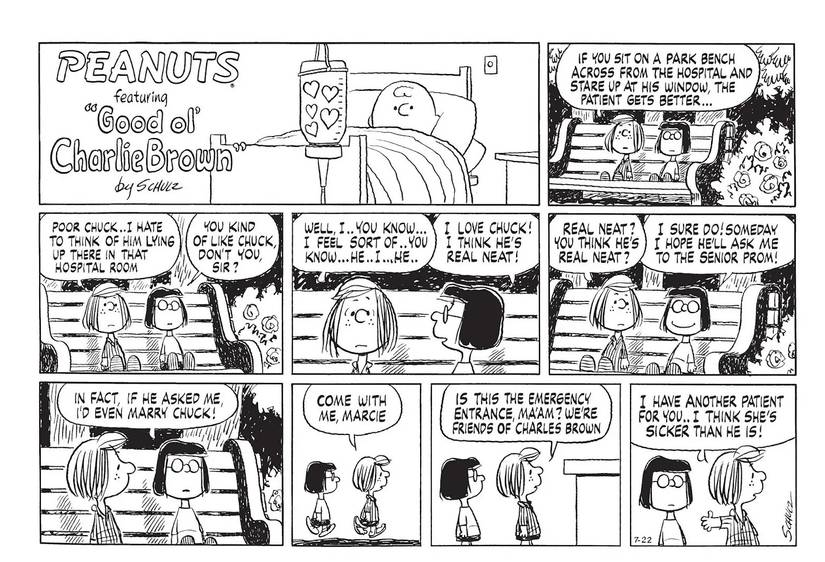
However, it is during a remarkable month-long storyline in July 1979 that the true nature of Peppermint Patty’s loyalty comes to light. In this arc, Charlie Brown is hospitalized for an unspecified illness. The storyline serves as a fascinating character study of how the rest of the neighborhood reacts to his absence. Lucy admits—solely to herself—that she actually considers Charlie Brown a friend. Snoopy, wrapped up in his own ego, belatedly wonders where his owner has wandered off to.
The emotional anchor of the arc, however, belongs to Peppermint Patty and her ever-loyal sidekick, Marcie. Making the journey across town to visit Charlie Brown, the duo is blocked by hospital regulations prohibiting young visitors. Refusing to leave empty-handed, Patty and Marcie take up a vigil on an outdoor park bench, staring up at what they assume is his hospital window until the lights go out. In a classic piece of Peppermint Patty logic, she declares, "It’s a well-known fact, Marcie, that a patient will recover faster if he knows a friend is staring up at his room."
Supporting Data: The Anatomy of a Classic Comic Run
- The Complete Collection: Fantagraphics’ The Complete Peanuts spans 26 volumes, encompassing every daily and Sunday strip published by Charles M. Schulz between October 2, 1950, and February 13, 2000.
- Publication Milestones: Peppermint Patty made her debut appearance in the strip on August 22, 1966, quickly becoming a central figure in sports-related and romantic-misunderstanding storylines.
- Thematic Guides: The enduring nature of the strip’s internal dynamics has spawned various thematic compilations over the decades, including 2016’s The Peanuts Guide to Friendship, which attempts to codify the unspoken social rules governing Schulz’s playground.
- Historical Run Duration: Spanning nearly 50 years of continuous daily publication, Peanuts remains one of the longest-running and most widely syndicated comic strips in history, published in over 2,600 newspapers at its peak.
Official Responses and Critical Reception: How Historians View Schulz’s Work
Literary critics and comic book historians have long debated the philosophical underpinnings of Peanuts. While Schulz himself was famously modest about the profound nature of his work—often describing it simply as a daily job executed with professional discipline—scholars view the strip as a profound mirror of mid-century American anxieties.
Renowned cartoon historians have frequently highlighted how Schulz subverted the traditional tropes of children’s media. Unlike contemporaries who painted childhood as an era of pure, untainted innocence, Schulz portrayed children as miniature adults grappling with loneliness, rejection, and existential dread.
Within this framework, Peppermint Patty’s characterization has drawn high praise from modern analysts. While her romantic pursuit of "Chuck" is played for comedic effect, her underlying motivation is rooted in profound acceptance. In a world where Charlie Brown is constantly told by his peers that he is a "blockhead" who cannot fly a kite, kick a football, or manage a baseball team, Peppermint Patty treats him as a captain, a confidant, and an equal. Critics note that her unwavering support during moments of genuine crisis—such as the 1979 hospital arc—elevates her above the standard "frenemy" dynamic that defines most relationships in the strip.
Implications: What Peanuts Teaches Us About Modern Friendship
The enduring appeal of Peanuts lies in its restraint. In an era where modern media often relies on overt sentimentality and explicit emotional exposition to move audiences, Schulz understood the power of understatement.
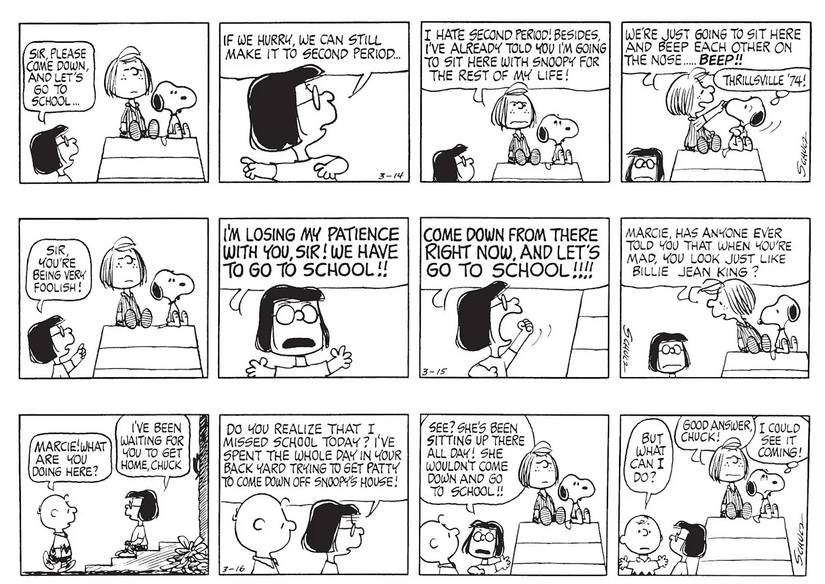
True wholesome moments in Peanuts are remarkably rare within the actual comic strip panels. Schulz reserved overt commercial wholesomeness for licensed merchandise, T-shirts, and animated holiday specials. Within the comic strip itself, emotional vulnerability was hard-earned, fleeting, and all the more impactful because of it.
The implications of the Peppermint Patty dynamic offer a timeless blueprint for interpersonal relationships. While characters like Lucy represent the transactional and often adversarial nature of playground politics, Patty demonstrates a rare form of steadfast loyalty. She possesses her own eccentricities—her academic struggles, her baseball obsession, and her dense refusal to recognize social cues—yet none of these traits are weaponized against Charlie Brown.
Ultimately, the 1979 hospital vigil serves as a masterclass in narrative efficiency and emotional payoff. It reminds readers that despite the relentless cycle of gags designed to keep Charlie Brown down, genuine community and empathy do exist within the Peanuts universe. As readers continue to revisit Fantagraphics’ massive 26-volume retrospective, the legacy of Peppermint Patty stands firm: amidst a lifetime of missed football kicks and flying kites, having a friend willing to sit on a park bench and stare at a hospital window is worth more than all the psychiatric help five cents can buy.
 Basiran
 Nana Muazin
 Layla Zulfa
