

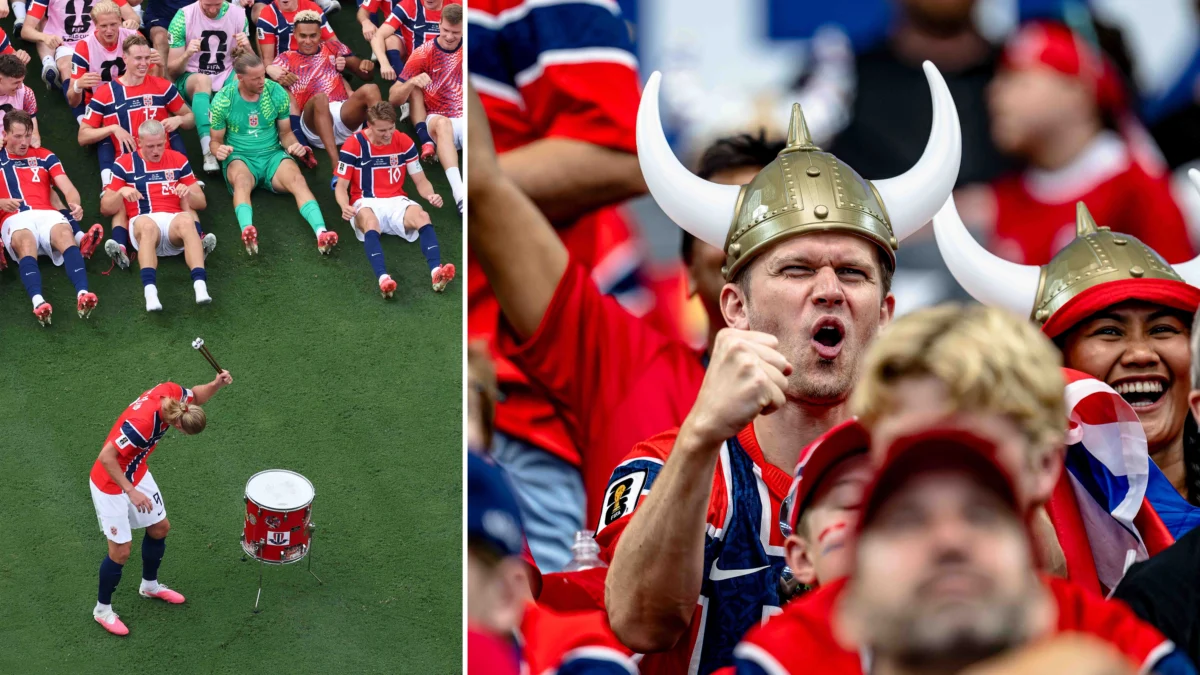
The 2026 FIFA World Cup has been defined by high-stakes drama, astronomical ticket resale prices, and the sheer, unstoppable spectacle of Erling Braut Haaland. At six-foot-four and 207 pounds, the Manchester City striker has transformed into a modern-day mythological figure on the pitch. His terrifying speed and clinical finishing have not only decimated opposing defenses but have also birthed a viral phenomenon: social media feeds are now saturated with memes and reels depicting Haaland “hunting” and “tracking” his prey across the pitch.
Yet, Haaland is merely the tip of the spear for a Norwegian squad that has defied history. A nation of just 5.6 million people, characterized by one of the world’s lowest population densities and a reputation for quiet, wintry reserve, is currently riding a wave of unprecedented footballing success. Having reached the quarterfinals for the first time in their history, Norway has evolved from a perennial tournament outsider into the sentimental favorite of the global sporting public.
A Historical Breakthrough: From the Fjords to the Quarterfinals
Norway’s trajectory in this tournament is nothing short of miraculous. Since the inception of the FIFA World Cup in 1930, Norway has appeared on the global stage only four times. Before this summer, their historical record in the tournament was modest at best. However, the 2026 campaign has rewritten the narrative entirely. With four victories in five matches, Norway has compiled more wins in the last month than in the cumulative century of their footballing federation’s history.
This success is not merely a statistical anomaly; it is a cultural earthquake. When Norway secured their victory against the Ivory Coast, the celebrations in Bergen and Oslo were so intense that they actually registered on seismic sensors. This sudden leap into the elite tier of world football has cast a rare, brilliant spotlight on Norwegian culture, fueled by a “Golden Generation” of talent that includes the cerebral and composed Arsenal captain, Martin Ødegaard.
Chronology of a Cinderella Story
The story of Norway’s 2026 run began with modest expectations but quickly pivoted toward destiny.

- The Group Stage Ascent: Entering the tournament with little historical pedigree, Norway was widely expected to bow out early. Instead, they played with a ferocity that caught heavyweights off guard.
- The Quarterfinal Clincher: The turning point came with a hard-fought 2-1 victory over Brazil. Haaland, showing why he is a contender for the Golden Boot, netted two monstrous goals that cemented his status as a folk hero.
- The Seismic Shift: Following the victory over the Ivory Coast, the sheer volume of collective jumping and cheering in Norwegian cities produced measurable seismic activity, a testament to the pent-up passion of a nation witnessing its own history being written in real-time.
- The Upcoming Crucible: Norway now faces its most daunting task: an encounter with England. As the tournament reaches its fever pitch, the world watches to see if the “Viking Longship” can continue its unlikely voyage against one of the sport’s most seasoned titans.
Supporting Data: The Anatomy of an Underdog
Norway’s success is backed by a blend of individual brilliance and a newfound tactical discipline. Erling Haaland’s seven goals have placed him in direct competition for the Golden Boot, trailing only Kylian Mbappé and Lionel Messi by a narrow margin.
However, the team’s efficiency is supported by a deeper structure. The coordination between Ødegaard’s midfield orchestration and the team’s physical defensive line has allowed them to dismantle champions from other confederations, including Senegal—the reigning Africa Cup of Nations titleholders.
Furthermore, the team’s popularity is reflected in the “bandwagon effect.” With the host nations—the United States, Mexico, and Canada—having been eliminated from the competition, fans in these regions have been searching for a surrogate team. Norway, with its infectious energy and charismatic playing style, has become the natural landing spot for these orphaned fanbases. In Mexico, the enthusiasm has reached such heights that fans are jokingly referring to the team as "Norguey," and practicing the “Viking Row” with as much fervor as their own national anthems.
The Cultural Phenomenon: The Viking Row
Perhaps the most enduring image of this tournament is the “Viking Row.” Fans, whether in small groups in a city park or in massive, unified blocks within a stadium, sit in lines and move in rhythmic, synchronized motion to the beat of a drum, simulating the rowing of a longboat.
The ritual was born in March 2026, during a match against Switzerland in Oslo, spearheaded by social media personality “Mr. Row Row” and Torstein Hamran of the Oljeberget Supporterklubb. While initially met with skepticism, the Row has evolved into a global symbol of unity. Dr. Caroline Malloy, a resident historian for Viking cruises, notes the deep-seated resonance of the gesture: “For centuries, life in Norway has been shaped by the sea, where rowing together required teamwork, coordination, and trust. Those values still resonate today.”

The practice has transcended borders. From Japanese streamers to Ivory Coast supporters and North American casual fans, the Row has become a universal language of camaraderie. The Norwegian tourism board, Visit Norway, has even dedicated a section of their official website to the history and technique of the Row, legitimizing what was once a grassroots fan celebration into a national trademark.
Official Responses and the "Lykkelig" Spirit
The euphoria surrounding the team has been described by locals as lykkelig—a state of profound happiness and contentment. This feeling is physically manifested at hubs like Kabin, a Nordic-inspired bar in New York City, and Skål Beer Hall in Seattle.
Kristine Gutierrez, the manager and partner at Kabin, emphasizes the psychological shift for the Norwegian people. “Norwegians are often known for being a bit reserved,” she explains. “We may not be the people who wear our hearts on our sleeves in everyday life, but what this has shown is that we are every bit as warm-blooded and passionate as Brazilians, Argentinians, and Italians, given the opportunity.”
The diplomatic impact has been equally significant. Norwegian ambassadors have appeared at watch parties, and the influx of attention has served as a masterclass in soft power. For a country better known for its Winter Olympic dominance—boasting an incredible 446 total medals since 1924—this summer has proven that the Norwegian spirit is equally capable of dominating the green turf as it is the snow-covered slopes.
Implications for the Future of Norwegian Football
As Norway prepares for the high-stakes quarterfinal against England, the implications for the future of their footballing federation are immense. The current success has ensured that a new generation of Norwegian children will grow up viewing football with the same reverence previously reserved for cross-country skiing and biathlon.

The “Golden Generation” is not just winning matches; they are cementing a legacy. Whether they overcome the English side or not, the 2026 tournament has fundamentally altered the global perception of Norway. They are no longer just the “northernmost country” or the land of the Midnight Sun; they are now a footballing nation to be reckoned with.
Renate Davanger, co-owner of the legendary Fotballpuben in Bergen, captures the sentiment shared by millions: “We started our pub in 1991, so we’ve been around for a while. But never before have we seen such unison, exhilaration, and enthusiasm. It is a dream we are living, and we don’t want to wake up.”
As the world continues to “row” along with them, Norway stands at the threshold of greatness. Regardless of the final result, the 2026 World Cup will forever be remembered as the summer the Vikings reclaimed the global stage, one synchronized, powerful stroke at a time.
 Siti Muinah
