

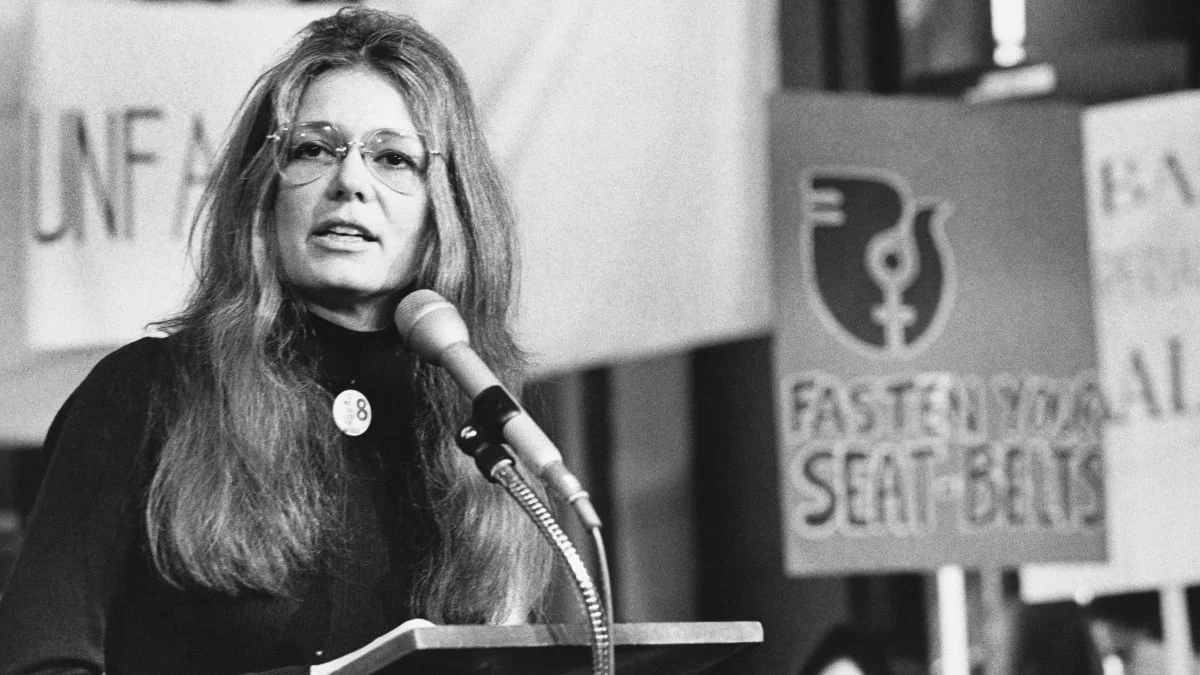
NEW YORK — Gloria Steinem, the pioneering journalist, visionary activist, and foundational architect of second-wave feminism in the United States, passed away peacefully on Wednesday at her home in New York City. She was 92 years old.
Her death was announced early Thursday morning via a statement shared on her official Instagram account, which noted that she was surrounded by loved ones at the time of her passing. No specific cause of death was provided by her family or representatives.
Steinem’s near-century on Earth left an indelible mark on modern society. For more than six decades, she was an unyielding champion of gender equality, reproductive rights, and social justice. From her groundbreaking undercover journalism in the 1960s to her co-founding of Ms. magazine and her continuous, grassroots community-building up until her final days, Steinem reshaped the political and cultural landscape of the world.
As news of her passing broke, tributes poured in from across the globe, with politicians, authors, entertainers, and activists mourning the loss of a titan while celebrating a legacy that fundamentally changed what was possible for women.
Main Facts: A Life Defined by Courage and Conviction
Gloria Steinem’s passing marks the end of an era for the global feminist movement. Throughout her long and extraordinary life, she was more than just a figurehead; she was a strategist, an orator, a writer, and a deeply empathetic listener who made it her mission to ensure women were seen and heard.
According to the statement released by her team, Steinem spent her final years doing the two things she loved most: writing and being in community with others. True to her lifelong commitment to grassroots organizing, she regularly hosted "Talking Circles" in her New York living room, inviting hundreds of guests over the years to engage in open dialogue about politics, equality, and the future. A photo from one such gathering—held just months prior to her death—highlighted her enduring dedication to activism.
Steinem’s official family and foundation representatives noted that she requested no flowers in the event of her death. Instead, she asked that those wishing to honor her memory make donations to Gloria’s Foundation, an organization that provides fellowships and residencies for social justice workers and helps sustain the Talking Circles tradition globally.
Chronology: Tracing Steinem’s Historic Journey
To understand the scope of Gloria Steinem’s impact, one must trace a timeline of activism that spans over half a century, touching pivotal moments in modern American history.
- March 25, 1934: Gloria Steinem is born in Toledo, Ohio. Her early years are marked by an itinerant childhood, traveling across the country with her mother, Ruth, experiences that deeply shaped her understanding of economic instability and women’s lack of societal support.
- 1963: Steinem achieves national prominence as a journalist by going undercover as a waitress at the New York Playboy Club. Her expose, A Bunny’s Tale, published in Show magazine, exposes the exploitative working conditions and objectification women faced, instantly cementing her reputation as a sharp, investigative voice.
- Late 1960s to Early 1970s: Steinem emerges as a leading voice of second-wave feminism. She co-founds the National Women’s Political Caucus alongside prominent leaders like Betty Friedan and Shirley Chisholm in 1971, aiming to increase the number of women in elected office.
- 1972: Steinem co-founds Ms. magazine, the first mainstream feminist magazine created, owned, and operated by women. The publication serves as a revolutionary platform for discussing reproductive freedom, domestic violence, and systemic workplace discrimination.
- 2013: In recognition of her lifelong contributions to civil rights and gender equality, President Barack Obama awards Steinem the Presidential Medal of Freedom, the nation’s highest civilian honor.
- 2020: Her life and legacy are celebrated on the silver screen in Julie Taymor’s biographical film The Glorias, starring Julianne Moore and Alicia Vikander, based on Steinem’s memoir My Life on the Road.
- 2024–2026: Steinem continues her activism well into her nineties, hosting intimate Talking Circles at her home and engaging with younger generations of activists until her peaceful passing in New York City.
Supporting Data and Historical Context
Steinem’s contributions cannot be separated from the historical context of the movements she helped build and sustain. When she began her career, women faced severe, legally sanctioned discrimination across virtually every sector of American life. Women could be legally fired for becoming pregnant, struggled to open independent bank accounts without a male cosigner, and had virtually no legal recourse against workplace sexual harassment.
Through her writing, speeches, and organizing, Steinem helped dismantle these barriers. Ms. magazine, under her editorial guidance, brought issues that were previously relegated to private shame—such as abortion, domestic abuse, and pay disparity—into the national spotlight. In its inaugural issue, the magazine featured a petition titled "We Have Had Abortions," signed by 53 prominent women, including Steinem herself, boldly challenging the criminalization of reproductive healthcare.
Furthermore, Steinem’s intersectional approach evolved over time. While early second-wave feminism faced valid criticisms for centering white, middle-class women, Steinem actively worked to expand the movement, forging alliances with women of color, LGBTQ+ advocates, and labor organizers. Her leadership in founding the Women’s Action Alliance in 1971 helped build a national information center that supported grassroots feminist activism across diverse communities.
Official Responses and Tributes
The global reaction to Steinem’s death was swift and profound, with public figures from all walks of life sharing memories and mourning the loss of a generational leader.
Renowned author Roxane Gay shared her grief on Instagram, writing: "Gloria was one of a kind. Genuine, generous, curious, thoughtful. She lived a staggering life and her passing is a staggering loss tempered only by the ferocity of her legacy."
Comedian and actor Amy Sedaris paid homage to Steinem’s foundational role in modern culture: "She was our leader. We have to be more like her. Carry her fight."
Celebrated television producer Shonda Rhimes remembered her warmth and strength: "She was fierce and kind and full of grace. What a loss for the world."
Music legend Carole King reflected on the generational passage of the feminist torch: "As we elders, our daughters, and our granddaughters continue the fight for power, equality, and respect, we hold you in our hearts with love and gratitude."
Actor and comedian Sandra Bernhard posted a tribute highlighting Steinem’s sharp intellect and uncompromising nature: "It was an honor to have a conversation with the great Gloria Steinem. Classy, funny, she didn’t take any punches, she had no time to suffer fools—and baby, she encountered a whole lot of them! Let’s honor her life & work & rededicate it to reclaiming our reproductive rights!"
Political figures also stepped forward to honor her legacy.
Former House Speaker Nancy Pelosi wrote on X (formerly Twitter): "Gloria Steinem was a fearless trailblazer who transformed the fight for equality in America and inspired generations of women to know their power."
Former Georgia State Representative Stacey Abrams added: "Meeting heroes always risks disappointment, but knowing Gloria was an honor, where her humor and kindness were matched by a relentless belief that we could be better."
CNN anchor Christiane Amanpour summarized her global historical significance: "Gloria Steinem will go down in history as one of the most important activists of all time, leading a movement for the equality of half the world: its women."
Implications: The Enduring Legacy of a Global Icon
The passing of Gloria Steinem arrives at a turbulent and critical juncture for women’s rights globally. With reproductive freedoms facing unprecedented rollbacks in the United States, ongoing battles over equal pay, and systemic inequalities persisting across political and corporate spheres, the absence of Steinem’s steady, guiding voice will be acutely felt.
Yet, the institutional and cultural infrastructure she helped build ensures that her work will endure. Through organizations like Ms. magazine, the Women’s Action Alliance, and Gloria’s Foundation, Steinem institutionalized feminist activism, shifting it from a fleeting cultural moment into a permanent, self-sustaining movement.
Her emphasis on listening, community-building, and intergenerational dialogue—exemplified by her famous Talking Circles—serves as a blueprint for modern activism. As Amanda Litman, president of Run For Something, noted in her tribute regarding the intimate gatherings at Steinem’s home, these spaces fostered resilience, strategic planning, and deep human connection.
Steinem once famously wrote, "The story of women’s struggle for equality belongs to no single feminist nor to any one organization to the exclusion of all others, but to the collective efforts of all women who care about human rights."
As the world mourns the loss of Gloria Steinem at 92, her life stands as proof of what can be accomplished through relentless curiosity, unshakeable courage, and an abiding belief in human equality. Her signal fire on the mountain has gone out, but the countless candles she lit across generations will continue to illuminate the path forward.
 Nana
Nana
 Muslim
