

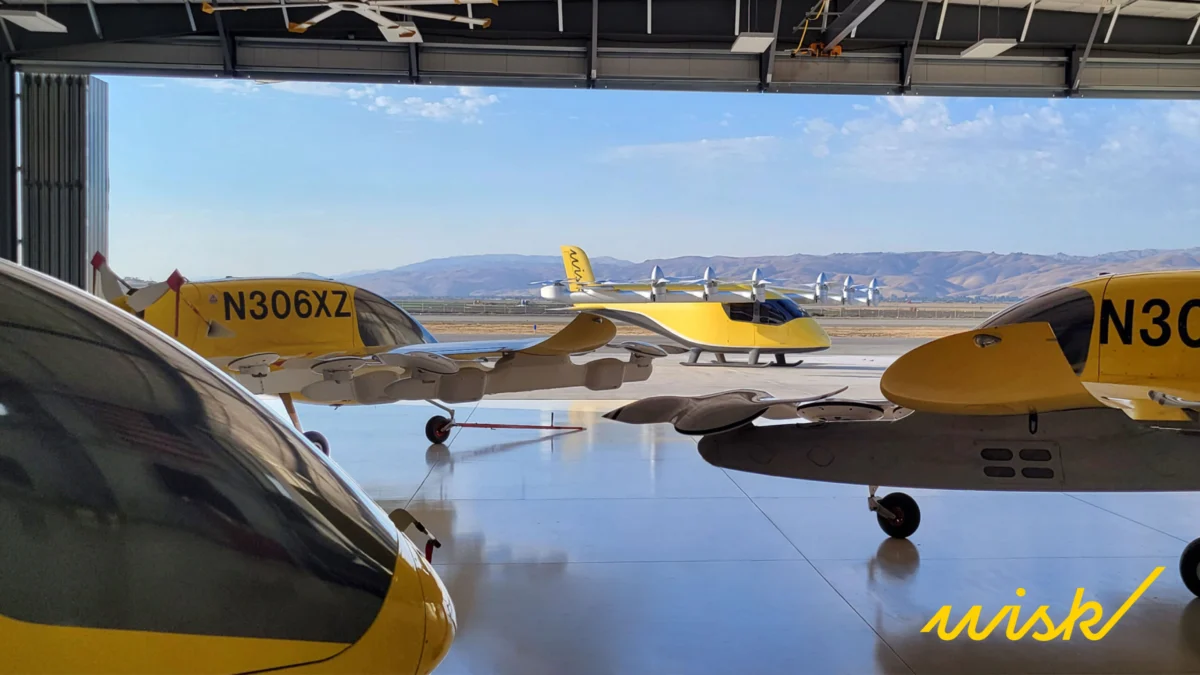
The burgeoning sector of Advanced Air Mobility (AAM)—the industry colloquially known as “air taxis”—has long promised a revolution in urban transportation. However, that promise is now under intense scrutiny following a high-stakes legal battle involving one of the industry’s most prominent players. Wisk Aero, the Boeing-owned electric vertical takeoff and landing (eVTOL) developer, is facing a lawsuit from a former software manager who alleges the company prioritized aggressive timelines over rigorous safety protocols.
The litigation, filed this week in the Santa Clara Superior Court, strikes at the heart of the regulatory trust required for autonomous flight. As the aviation industry watches, the allegations suggest that the pressure to reach commercial milestones may be creating friction between corporate ambitions and the stringent safety standards enforced by the Federal Aviation Administration (FAA).
The Allegations: A Culture of Compromise?
At the center of the dispute is Briahna O’Neill, a former software manager at Wisk Aero. According to the lawsuit, O’Neill was terminated in what she characterizes as a retaliatory act shortly after she raised formal internal concerns regarding the company’s software testing procedures.
O’Neill alleges that Wisk management, in a frantic bid to meet a critical 2025 test flight deadline, systematically pressured engineers to circumvent established software testing protocols. These protocols are not merely internal guidelines; they are essential components of the certification path required by the FAA to ensure that aircraft are safe for public use.
Specifically, the lawsuit claims that O’Neill filed two separate internal reports documenting how testing requirements were being reduced or bypassed to ensure the company could move forward with its testing schedule. The core of the complaint is that the company’s push for speed compromised the integrity of the autonomous systems intended to fly its aircraft.
Chronology of the Conflict
The timeline of events, as laid out in the legal filing, suggests a rapid deterioration of the relationship between O’Neill and Wisk leadership.
- 2019: Wisk Aero is founded, positioning itself as a leader in autonomous, all-electric flight. With significant backing from Boeing and Kitty Hawk (Larry Page’s aerospace venture), the company becomes a darling of the AAM space.
- The Lead-up to 2025: As Wisk targets a 2025 test flight milestone—a pivotal year for the company’s commercial roadmap—internal pressure to accelerate development reaches a fever pitch.
- The First Internal Complaint: O’Neill identifies what she describes as a dangerous reduction in FAA-mandated software testing. She submits an internal report, raising concerns that the current path poses a risk to the aircraft’s future airworthiness.
- The Second Internal Complaint: Despite initial warnings, O’Neill alleges that the company continued to prioritize speed over safety. She submits a second, more urgent report detailing how engineering teams were being directed to bypass critical verification steps.
- The Termination: According to the suit, O’Neill was fired just weeks after the submission of her second safety complaint. The lawsuit argues that the proximity of her firing to her whistleblowing activities is clear evidence of retaliation.
- 2024–2025: The lawsuit enters the discovery phase in the Santa Clara Superior Court, with Wisk Aero and its parent company, Boeing, currently declining to comment on the specifics of the ongoing litigation.
The Context of the eVTOL Industry
To understand the weight of these allegations, one must look at the environment in which Wisk operates. Wisk is not just another startup; it is a heavyweight, backed by the industrial might of Boeing. The company is distinct in the AAM space for its unwavering focus on fully autonomous flight. While competitors are initially planning to include human pilots, Wisk is betting on software to replace the pilot entirely.
This reliance on software makes the allegations particularly chilling. In a conventional aircraft, a human pilot acts as a failsafe. In a Wisk aircraft, the software is the pilot. If the software testing processes are flawed, the entire premise of the company’s safety case for regulators is undermined.
Earlier this year, the industry reached a milestone when the FAA approved eight companies—including Wisk—to participate in a three-year program designed to integrate these new aircraft into the national airspace. This regulatory endorsement was a massive win for the industry, signaling that the FAA believed the technology was moving from the laboratory to the field. The lawsuit now casts a shadow over that progress, raising the question: Did Wisk get ahead of itself?
Supporting Data: The Stakes of Software Validation
In aviation, the "V-model" of software development is the gold standard. Every line of code must be documented, verified, and validated against specific requirements. For safety-critical systems—such as the flight control computers in an eVTOL—the level of scrutiny is intense.
The allegations made by O’Neill suggest that Wisk may have been practicing "testing lite." In the software industry, this is a common temptation: skip the deep-dive regression testing, rely more on simulations, and reduce the number of physical "hardware-in-the-loop" tests to hit a shipping date. However, in aerospace, this can be catastrophic.
If the software fails during a test flight, it is not just a software bug; it is a kinetic event. With the FAA’s eyes on these companies as they navigate the certification process, any evidence that a company is "gaming" the testing process could lead to the revocation of testing privileges, massive fines, and a total loss of public and investor trust.
Official Responses and Corporate Silence
As of the date of this reporting, the corporate response from Wisk Aero has been intentionally muted. In a brief statement provided to media outlets, a spokesperson for the company stated: "Wisk cannot comment on ongoing litigation."
Boeing, which took full control of Wisk Aero in 2023, has similarly declined to comment. This "no comment" stance is standard legal practice for large corporations embroiled in employment litigation. However, for a company that relies on "safety and transparency" as its brand pillars, the silence is deafening. Investors are likely watching closely to see if Boeing chooses to conduct an internal audit of Wisk’s software engineering practices to preempt further regulatory scrutiny.
The Implications: A Industry at a Crossroads
The Wisk lawsuit arrives at a critical juncture for the entire air taxi sector. The industry is currently moving from the "hype" phase to the "certification" phase. The difference between these two phases is the difference between a prototype and a product.
1. Regulatory Scrutiny
The FAA is notoriously cautious. Following the issues surrounding the Boeing 737 MAX, the regulatory agency is under pressure to prove that it is not too cozy with the manufacturers it oversees. If an employee comes forward alleging that safety was sidelined to meet deadlines, the FAA will almost certainly launch a formal investigation into Wisk’s development lifecycle.
2. The Future of Autonomy
If Wisk is found to have cut corners, it may set the entire autonomous air taxi movement back by years. The public is already skeptical of flying in small electric vehicles; the idea that the "brain" of the plane was subjected to rushed, incomplete testing could create a PR crisis that no amount of marketing can fix.
3. Corporate Culture and Whistleblowing
This case will serve as a bellwether for how startups and aerospace giants handle internal dissent. If the court finds that O’Neill was indeed fired for reporting safety risks, it will send a message that the industry needs stronger protections for engineers who act as the final line of defense against corporate negligence.
4. Market Confidence
Boeing’s investment in Wisk was a signal to the market that air taxis were a viable future for aviation. If that investment is now tied to a scandal involving "rushed software," investors may start to re-evaluate the risk profile of the entire sector.
Conclusion: The Long Road to Takeoff
The lawsuit filed by Briahna O’Neill is a reminder that in the race to disrupt the future of transportation, the laws of physics and the requirements of safety cannot be bypassed. The promise of the electric air taxi—a silent, efficient, and autonomous way to navigate the skies—is contingent on the absolute integrity of the software that governs it.
As the litigation proceeds, the court will have to determine whether the actions taken at Wisk were a standard part of iterative development or a dangerous departure from aviation safety norms. For the industry, the implications are clear: the path to 2025 and beyond will not just be measured in flight hours and test logs, but in the company’s ability to foster a culture where safety is never treated as an optional feature.
Until the truth of these allegations is brought to light, Wisk Aero remains grounded in a cloud of uncertainty. The company’s ability to regain the trust of the public, the FAA, and its own employees will depend on how transparently it addresses these claims and whether it can prove that its commitment to safety is as robust as its engineering designs. For now, the "air taxi" remains a promise that is, quite literally, still up in the air.
 Asep Darmawan
 Siti Muinah
 Ali Ikhwan
