

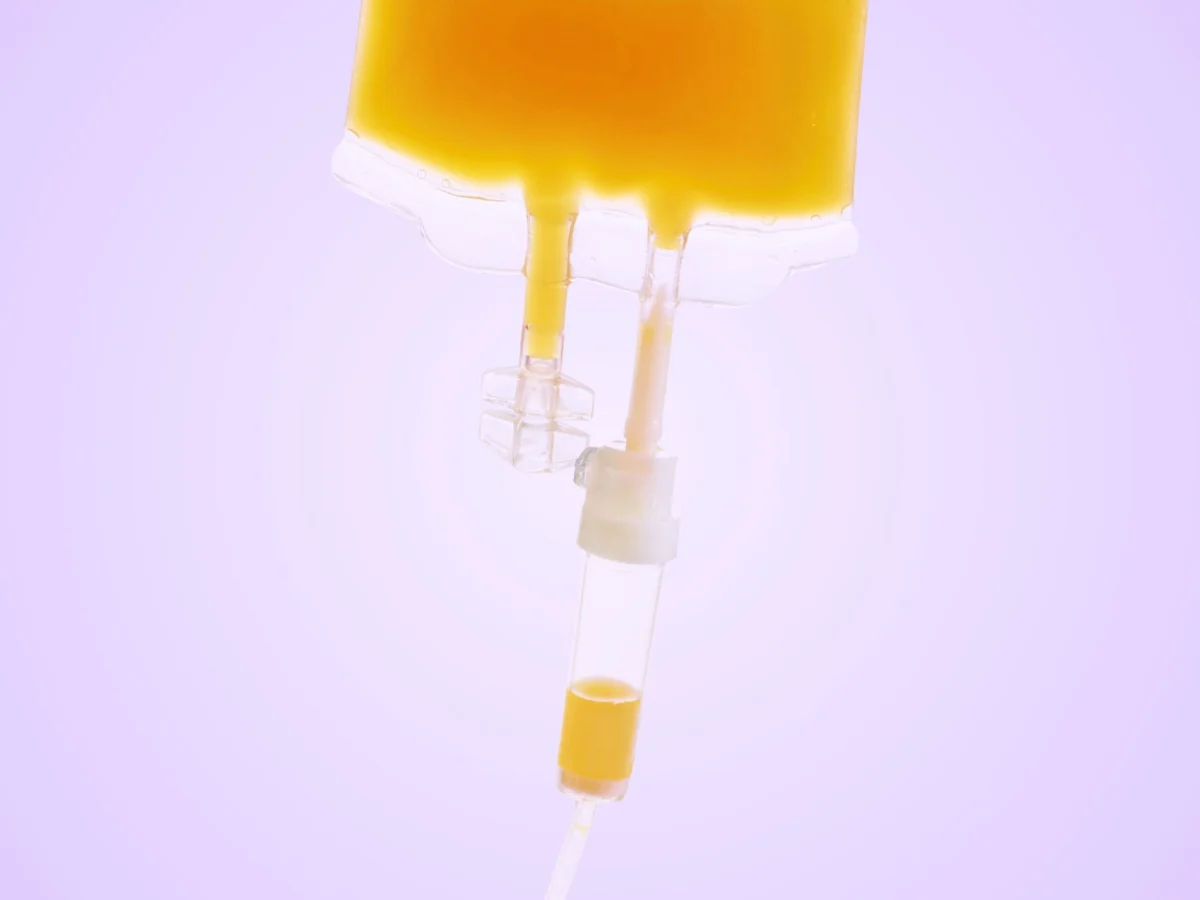
The pursuit of the fountain of youth has driven human innovation for millennia. From ancient alchemical elixirs to modern-day biohacking, the desire to halt or reverse the aging process remains one of science’s most compelling frontiers. Today, that pursuit has zeroed in on a complex biological matrix flowing through our veins: blood plasma.
A headline-grabbing study published in the journal Aging Cell suggests that a clinical procedure known as therapeutic plasma exchange (TPE)—which filters and replaces the liquid portion of human blood—can effectively lower a person’s biological age by approximately two and a half years.
While the prospect of scrubbing away the years via a clinical blood cleanse sounds like science fiction made reality, longevity experts urge a heavy dose of caution. Beneath the exciting initial findings lies a more nuanced reality regarding how our bodies respond to radical circulatory resets, the fleeting nature of these molecular changes, and why rushing out to book a commercial plasma-filtering procedure is currently ill-advised.
Main Facts: What is Therapeutic Plasma Exchange and the 2025 Study?
At its core, therapeutic plasma exchange is an established medical procedure where a patient’s blood is drawn, the plasma is separated from the cellular components (red blood cells, white blood cells, and platelets), and the filtered plasma is replaced with a substitute liquid—typically purified albumin (a human blood protein) and saline. In certain clinical contexts, specialized immune therapies like intravenous immunoglobulin (IVIG) are also integrated.
Historically utilized to treat severe autoimmune conditions, rare neurological disorders, and specific blood cancers, TPE is now being examined through the lens of geroscience.
The recent Aging Cell trial enrolled 42 human participants to evaluate how their bodies responded to plasma exchange at the molecular level. Researchers utilized advanced multi-omic clocks to track biological age before, during, and after the intervention.
Initial measurements indicated a striking outcome: several participants exhibited a reduction in biological age of roughly 2.5 years. However, a deeper examination of the data reveals that this peak rejuvenation occurred at the midpoint of the trial, not at its conclusion. By the end of the study period, the anti-aging effect had largely dissipated, prompting researchers to reevaluate how long-term systemic adjustments actually occur within the human body.
Chronology: From Macabre Mouse Experiments to Human Trials
To understand how scientists arrived at modern plasma-exchange trials, it is necessary to trace a line of research that began over a century ago and accelerated significantly in the last fifteen years.
The Era of Parabiosis (Early to Mid-2010s)
Roughly a decade and a half ago, modern longevity researchers revisited a surgical technique called parabiosis. Dating back to 19th-century physiological experiments, parabiosis involves physically linking the circulatory systems of two distinct organisms.
In groundbreaking 2010s studies, researchers stitched together the circulatory systems of old mice and young mice. The underlying hypothesis was elegantly simple: if an aging organism’s tissues were continuously exposed to the circulating plasma of a youthful organism, the older tissues would regenerate and display enhanced resilience.
The results stunned the scientific community. Older mice subjected to young blood plasma exhibited improved muscle regeneration, enhanced neurogenesis in the brain, and greater resistance to tissue and organ stress.
Transitioning to Humans (Late 2010s to Present)
While parabiosis is neither ethical nor practical in humans, the core question it raised inspired researchers to look for clinical analogs. Scientists asked: Is there something harmful accumulating in our circulation that we can dilute or filter out, or are there youthful circulating factors we can infuse to extend healthspan?
This inquiry led directly to clinical trials investigating therapeutic plasma exchange and specialized plasma dilution protocols in humans. The 2025 Aging Cell study represents one of the latest milestones in this evolutionary chain, marking a transition from animal models to controlled human trials utilizing advanced epigenetic and molecular biological clocks.
Supporting Data: Understanding Biological Age and Plasma Dynamics
To evaluate the validity of these anti-aging claims, it is necessary to examine what plasma actually is and how scientists measure biological age.
What is Plasma?
Plasma accounts for roughly 55% of total human blood volume. While predominantly water, it functions as an extraordinarily complex biochemical transport highway. Dr. Andrea Maier, MD, PhD, a geriatrician and board member of the Academy for Health and Lifespan Research, likens plasma to a global logistics network.
"It’s a transport system like DHL, a vehicle to bring things from your brain to your muscles, from kidney to lungs, and so on. So it’s fluid with lots of information," Dr. Maier tells SELF.
Plasma is rich in circulating proteins, metabolites, hormones, extracellular vesicles, and inflammatory signaling molecules. These components reflect the real-time operational status of nearly every organ system in the body.
Chronological Age vs. Biological Age
Every human possesses a chronological age—the exact number of years they have been alive. However, because lifestyle, genetics, and environmental stressors impact cellular health at varying rates, individuals experience aging differently. This has given rise to the concept of biological age.
Dr. Keenan Walker, PhD, a senior investigator at the National Institute on Aging, notes the complexity of these measurements:
"There’s no one biological age, but people try to estimate it," Dr. Walker explains. "And what studies have found is that people whose biological age is older than their chronological age are at greater risk for chronic conditions, diseases, and mortality."
By tracking thousands of circulating proteins and epigenetic markers within plasma, scientists can construct a wide-angle snapshot of an individual’s internal physiological wear and tear.
Official Responses and Expert Analysis
Despite the initial excitement surrounding the 2025 study’s mid-point data, leading researchers emphasize that the procedure is far from a silver bullet.
The Phenomenon of Biological Rebound
Dr. Maier points out that the heralded "2.5 years younger" metric compares the participants’ midterm biological age to their baseline, rather than comparing the final study measurements to baseline. By the conclusion of the trial, the rejuvenating effect had worn off.
According to Dr. Maier, this occurs because a total plasma exchange places an immense physiological burden on the body. Stripping out a patient’s plasma and introducing a saline-albumin substitute induces a severe systemic shock.
Initially, the sudden shift in circulating proteins creates a temporary illusion of youthfulness on molecular biomarkers. However, as the body works desperately to restore homeostasis, it experiences acute biological stress, causing biomarkers to swing right back to their original baseline levels.
The Patient Profile Matters
Dr. Walker highlights another critical variable observed during the research: participant baseline health.
"Those who were less healthy saw a stronger intervention effect," Dr. Walker notes. "So I think it’ll be important to find out for whom this works."
This suggests that therapeutic plasma exchange may act more like a heavy-duty reset button for pathologically altered or inflamed systems—such as those seen in specific chronic illnesses—rather than a routine tune-up for healthy individuals seeking cosmetic or preventative longevity.
Implications: The Future of Blood-Based Longevity Science
Where does therapeutic plasma exchange stand today in the broader landscape of anti-aging medicine? Experts agree that while the foundational science is legitimate, premature commercial adoption poses real risks.
Current Clinical Verdict: Proceed with Extreme Caution
Both Dr. Maier and Dr. Walker classify current blood-filtering trials as preliminary phase 1 investigations. We now know that the procedure can be performed safely under strict medical supervision, but long-term outcomes remain unproven.
"I would call this a phase 1 study," Dr. Maier summarizes. "We’ve basically learned that we can safely do it, and now we have to see it in much bigger studies and look at the long-term effect. It’s not a crazy idea. It’s absolutely grounded in lots of evidence, but not for everybody."
Dr. Maier firmly advises against implementing general plasma exchange in clinical practice for anti-aging purposes at this stage, emphasizing that the process is currently too traumatic and "rough on the body."
Moving Toward Precision Geroscience
The future of blood-based longevity treatments likely lies away from brute-force filtration and toward highly targeted, personalized molecular interventions. Instead of stripping out all plasma proteins indiscriminately, future therapies may focus on neutralizing specific pro-aging inflammatory factors or replenishing precise depleted proteins tailored to an individual’s unique molecular profile.
For now, individuals tempted to search online for commercial "plasma clinics" would do well to heed the warnings of top geroscientists. While the fountain of youth may eventually be mapped through our circulatory system, unlocking its waters will require far more clinical precision than a simple, blunt-force fluid swap.
 Asro
Asro
 Suro Senen
 Azzam Bilal Chamdy
