

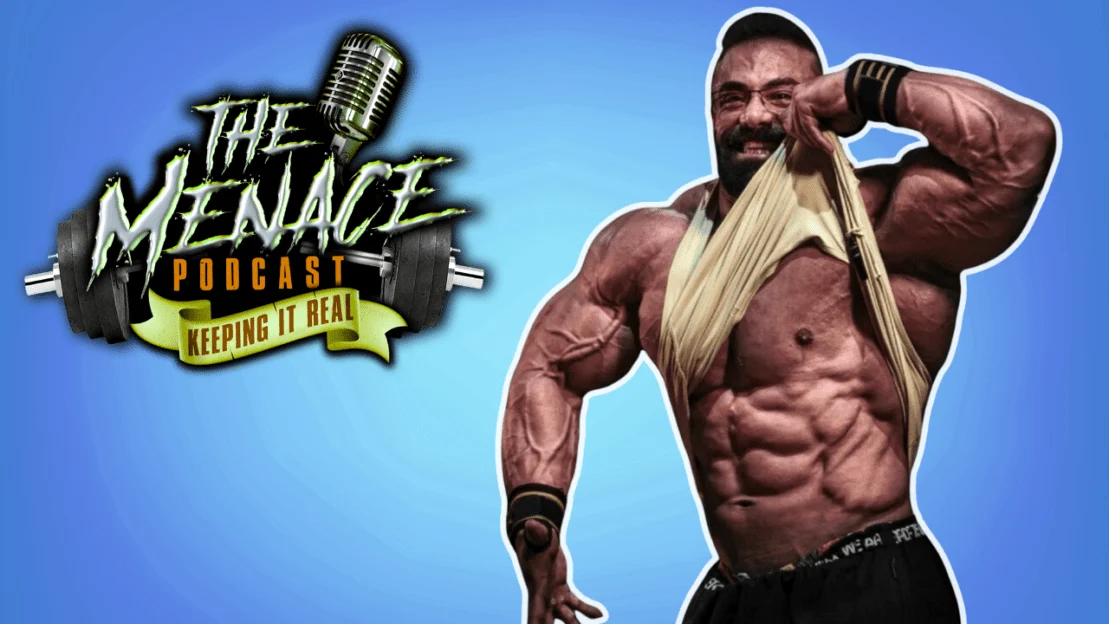
In the high-stakes world of professional bodybuilding, where mass, definition, and symmetry are the primary currencies, athletes often fall into the trap of believing that the iron is the only architect of their success. However, on a recent installment of The Menace Podcast (Episode 289), bodybuilding icon Dennis James offered a candid, retrospective critique of his own illustrious career. Joined by industry veterans Jose Raymond and legendary trainer Milos Sarcev, James shared a revelation that has sent ripples through the bodybuilding community: he believes his relentless pursuit of sheer size may have come at the expense of the one skill that separates a top-tier bodybuilder from a champion—the art of posing.
A Legacy Forged in Iron: The Career of "The Menace"
To understand the weight of James’s admission, one must first appreciate the breadth of his tenure in the sport. Dennis "The Menace" James is a titan of the IFBB Pro League, a man whose competitive career spanned three distinct decades. His rise to prominence began in the 1990s, culminating in a Mr. Universe title, and transitioned seamlessly into the 2000s, where he established himself as a dominant force, including a victory at the Europa Super Show.
James’s resume is nothing short of exhaustive. He stepped onto the prestigious Mr. Olympia stage an astonishing ten times, a feat that requires not only elite genetics but a level of discipline that few humans can sustain. His best finish at the "Super Bowl of Bodybuilding"—a fourth-place showing in 2003—remains a testament to his freakish muscularity and condition. Yet, as he looks back from the vantage point of a mentor and podcast host, James does not dwell on his heavy sets or his contest prep diets. Instead, he laments the time he spent chasing mass at the cost of his stage presentation.
The Paradigm Shift: Quality Over Quantity
During the candid conversation on The Menace Podcast, James addressed the common question: "If you could go back, what would you change?" His answer was immediate and visceral.
"I would pay all the attention on posing," James confessed to his panel. "If I could turn back the time, I would f*****g pose."
This statement represents a significant shift in philosophy for a man known for being one of the most heavily muscled competitors of his era. James explained that his training regimen was notoriously grueling, often involving two hours of intense cardio. In his retrospective analysis, he argues that sacrificing one of those hours for dedicated, disciplined posing practice would have yielded greater dividends than the extra hour of cardiovascular work.
The Physiology of Posing
James recalled the mindset he held during his peak years, influenced by his training sessions with the esteemed Milos Sarcev. Like many bodybuilders of his generation, James viewed posing as an afterthought—something to be done briefly after a punishing lifting session. He admitted that he often felt too "depleted" or exhausted to give the posing the focus it required.
"Melvin Anthony was one of them guys," James noted, citing a peer known for his incredible stage presence. "He couldn’t keep his shirt on long enough. But you can see, on stage, he held his s**t, and it was always perfect."
This observation highlights a fundamental truth in the sport: posing is not just a performance; it is a physical discipline that requires endurance, muscle control, and the ability to highlight one’s best attributes while masking structural deficiencies.
The Technicality of Presentation
Modern bodybuilding has seen an evolution in judging criteria, but the core requirement remains the same: the judges cannot see the work done in the gym; they can only see what is presented on stage.
"No One Asks How Much You Bench"
James’s advice to current competitors is sharp and uncompromising. He emphasizes that the aesthetic impact of a physique is the only metric that matters once the curtain rises. "No one asks you, when you step on stage, how much you bench or how many reps you do," James stated. "They want to see what you look like, and if you don’t practice the posing, how are you going to get on stage?"
This sentiment echoes through the halls of every major training facility. Athletes often get caught in the "training bubble," where the focus is entirely on the numbers on the bar or the circumference of their arms. James argues that this tunnel vision is a critical error. The muscle must not only be built; it must be displayed through the mastery of contractions, transitions, and stage awareness.
Milos Sarcev’s Perspective: The Midsection Factor
Milos Sarcev, a man who has coached some of the most aesthetic and technically sound bodybuilders in history, weighed in on the conversation, providing a technical justification for why posing is non-negotiable.
Sarcev pointed out that posing is the primary tool for developing "control"—specifically, the control of the abdominal wall. In an era of professional bodybuilding often criticized for distended midsections, Sarcev argues that consistent, rigorous posing practice is the remedy.
"For posing, the biggest thing is keeping that midsection," Sarcev explained. "From every angle, that’s it."
When a bodybuilder masters the art of posing, they are essentially training their core muscles to remain tight and vacuumed even under the extreme stress of a contest-day performance. This is not just about aesthetics; it is about the structural integrity of the pose. Without the muscle memory built through hours of practice, a competitor will inevitably lose their "tightness" as the stage lights beat down and fatigue sets in.
Implications for the Next Generation
The dialogue between James, Raymond, and Sarcev serves as a masterclass for up-and-coming bodybuilders. It highlights a common trap in the sport: the assumption that if one simply builds enough muscle, the victory will follow. The reality, as pointed out by James, is that bodybuilding is as much an art form as it is a science of hypertrophy.
The "Posing Deficiency"
Many amateur and even professional athletes suffer from a "posing deficiency." This manifests as shaky transitions, missed shots, and the inability to maintain a consistent core tension. When an athlete reaches the top level, the physical differences between competitors become marginal. At that point, the judge’s decision often comes down to who looks more comfortable, confident, and "put together" under the spotlights.
James’s admission suggests that he feels he left potential trophies on the table—not because he lacked the size or the conditioning, but because he didn’t showcase those assets with the precision that the highest level of competition demands.
Strategic Adjustments: A Blueprint for Success
For athletes looking to apply the wisdom shared on The Menace Podcast, the strategy is clear:
- Treat Posing as a Muscle Group: Do not treat posing as a chore to be done at the end of a workout when the body is depleted. Instead, treat it as a dedicated training session.
- Cardio vs. Posing Balance: While cardiovascular health is vital for conditioning, consider the time-cost-benefit ratio. If one hour of focused, intense posing can improve your stage presentation, it may be more valuable than an additional hour of steady-state cardio that serves only to burn a marginal amount of extra calories.
- Core Control: Use posing practice specifically to master the "vacuum" and abdominal control. As Sarcev noted, this is the most critical element in maintaining an aesthetic, tight silhouette on stage.
- Mental Preparation: Posing is mentally taxing. It requires constant focus on muscle engagement. Practicing under fatigue is essential, as the final callouts at the Olympia are often done when the athlete is at their most exhausted.
Conclusion: The Final Verdict
Dennis James’s reflection on his career is a rare moment of vulnerability from one of the sport’s most intimidating figures. By acknowledging that he would trade some of his "size-chasing" for a more refined approach to presentation, he is providing a roadmap for future champions.
Bodybuilding is a sport of illusion, and the master of that illusion is the athlete who can command every muscle fiber to respond to their will while maintaining the poise of a professional performer. As the industry continues to evolve, the lessons from The Menace Podcast serve as a timely reminder: the weight you lift is merely the tool, but the way you present your physique is the message. To the next generation of bodybuilders, the takeaway is simple—get on stage, peel off the shirt, and start posing. Your trophy count may just depend on it.
 Lina Hope
 rifanmuazin
 Laily UPN
