

For over half a century, the name "Tramp" has been synonymous with the zenith of London’s nightlife—a sanctuary of discretion where the world’s most recognizable faces could shed their public personas. From the cigarette-hazed 1970s, when Mick Jagger and Keith Richards turned the Jermyn Street haunt into a rock-and-roll living room, to the legendary 2015 night where Kate Moss reportedly had patrons swinging from the chandeliers, Tramp was the ultimate playground for the hedonistic elite.
However, the modern era demands a new kind of currency: vitality. As the boundaries between professional ambition, social status, and personal wellness continue to blur, the legendary brand is embarking on its most ambitious chapter yet. Enter Tramp Health, a 16,000-square-foot wellness sanctuary located at 30 Grosvenor Square. Attached to the prestigious Chancery Rosewood hotel, this high-end facility is not merely a gym; it is a declaration that the modern socialite is as focused on their longevity as they are on their guest list.
A Legacy of Hedonism: The Chronology of a London Icon
To understand the weight of the Tramp Health launch, one must first appreciate the cultural gravity of its predecessor. Founded in 1969, Tramp became the bedrock of London’s celebrity culture. It was a place where social hierarchies were flattened by the communal spirit of the night.
- The 1970s Golden Era: During this decade, the club served as the unofficial headquarters for the Rolling Stones. It was a common sight to see Jack Nicholson or Warren Beatty holding court at the bar. The club fostered a "no-questions-asked" atmosphere that appealed to those living life at a breakneck pace.
- The Clash of Titans: The club’s walls have witnessed historic encounters, including the infamous reported square-ups between football legend George Best and screen icon Michael Caine.
- The 2023 Pivot: After decades of service, the original Jermyn Street location shuttered in 2023, leaving a vacuum in London’s social scene. The subsequent $16 million makeover marked the start of a brand renaissance.
- The 2024 Rebirth and Expansion: Following the reopening of the Jermyn Street club, the brand expanded into the wellness space. By moving into the Mayfair district at Grosvenor Square, Tramp is positioning itself at the intersection of high-end hospitality and the global longevity movement.
Bridging the Gap: The Philosophy of "Social Wellness"
Luca Maggiora, the Italian hospitality entrepreneur who acquired the Tramp brand in 2023, views this expansion as a response to a fundamental shift in human behavior. "Tramp Health will bring together people who traditionally lived in separate worlds," Maggiora explains.
The traditional narrative of the "party animal" versus the "fitness enthusiast" is being dismantled. Maggiora suggests that the modern member is "socially intelligent and increasingly conscious about how they live and sustain their energy." By creating an environment that serves both the late-night socialite and the early-morning athlete, the brand is attempting to solve a contemporary dilemma: how to pursue self-mastery without sacrificing the pleasures of a vibrant social life.
The Infrastructure of Longevity: Supporting Data and Facilities
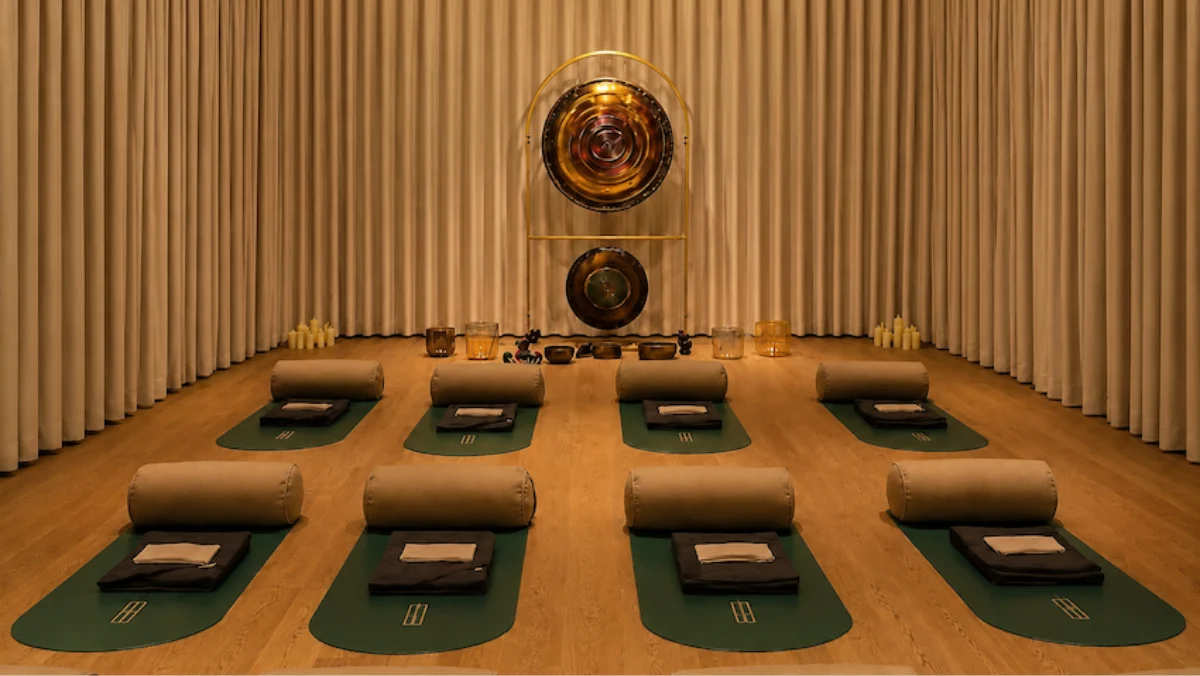
The facility at 30 Grosvenor Square is designed to be an ecosystem rather than a gym. It spans 16,000 square feet and is meticulously engineered to cater to every facet of physical and mental performance.

Core Facilities
- Performance Training: A 3,000-square-foot gym floor equipped with top-tier strength and conditioning apparatus.
- Mind-Body Integration: Dedicated Pilates studios that focus on alignment and functional movement.
- Recovery Suite: A robust recovery wing featuring saunas, steam rooms, and cryotherapy/cold-plunge facilities.
- Advanced Bio-Hacking: Specialized zones for IV therapy, hyperbaric oxygen sessions, and red-light treatment.
The Scientific Approach
The medical and beauty pillars are anchored by industry experts. Diagnostics are overseen by longevity pioneer Dr. Mark Mikhail, ensuring that the health interventions are data-driven rather than trend-based. Meanwhile, the beauty and skincare services are led by expert Libi Roos, bridging the gap between clinical health and aesthetic confidence.
The Economics of Exclusivity
Access to this ecosystem comes at a premium that reflects its status within the London market. Existing Tramp club members receive preferential access, paying approximately $520 per month. For non-members, the entry requirements are rigorous. Each applicant must undergo an interview process with Maggiora himself to ensure they fit the cultural ethos of the community. The cost for these individuals is roughly $13,000 annually, accompanied by a $6,700 joining fee.
This pricing structure serves a dual purpose: it filters for a specific caliber of clientele and ensures that the facility remains a private sanctuary rather than a commercial fitness center.
Official Perspective: The "Human" Touch
In an era where fitness apps and automated coaching dominate the wellness space, Maggiora is doubling down on the "human" element. He argues that the biggest failure of modern wellness centers is their clinical, impersonal nature.
"In a city where wellness can feel clinical or impersonal, Tramp Health will feel human," says Maggiora. "The clientele is defined by one shared decision—to live well without giving up living fully."
He emphasizes that the system is not designed to be a rigid, self-service gym. Instead, it utilizes a bespoke AI app to guide members, but this technology is always mediated by a dedicated team that understands the individual’s habits, professional stressors, and personal lifestyle goals. "Movement, recovery, nutrition, diagnostics, and mental well-being are not separate services," he adds. "Most importantly, clients are not left to navigate it alone."

Implications: A New Cultural Archetype
The emergence of Tramp Health signals a significant shift in how the elite view their health. It is no longer enough to look good; one must optimize their biological output to keep up with the demands of an increasingly globalized and fast-paced professional life.
1. The Dissolution of Boundaries
By housing the club and the health facility under the same brand umbrella, Maggiora is creating a "continuity of identity." A member is no longer a "night person" or a "day person"—they are a high-functioning individual who seamlessly integrates late-night socializing with early-morning discipline.
2. The Rise of the "Third Space"
The facility acts as a third space—distinct from home and work—where the social and the physiological intersect. This reduces the friction of living a balanced life. By providing a place where one can train, recover, and socialize in a non-judgmental, familiar environment, Tramp Health is effectively lowering the barrier to entry for holistic health.
3. The Future of Private Membership
This model suggests that the future of private clubs is not in exclusivity for exclusivity’s sake, but in value-add ecosystems. As members become more discerning about their time, they will gravitate toward institutions that can facilitate their entire life cycle—from the boardroom to the weight room to the dance floor.
Conclusion
Tramp has spent fifty years defining the "London Night." Now, under the guidance of Luca Maggiora, it is attempting to define the "London Life." By marrying the gritty, authentic history of its Jermyn Street origins with the clinical precision of modern longevity science, Tramp Health is not just opening a gym—it is crafting a blueprint for the modern, high-performance individual.
Whether the city’s elite can truly balance the hedonism of the past with the rigorous discipline of the future remains to be seen. However, if any brand has the cultural weight and the audacious history to convince them, it is undoubtedly Tramp. In the heart of Grosvenor Square, the message is clear: you don’t have to choose between living well and living fully. You can, if you have the right membership, do both.
 Evan Lee Salim
 Asep Darmawan
 Laily UPN
