

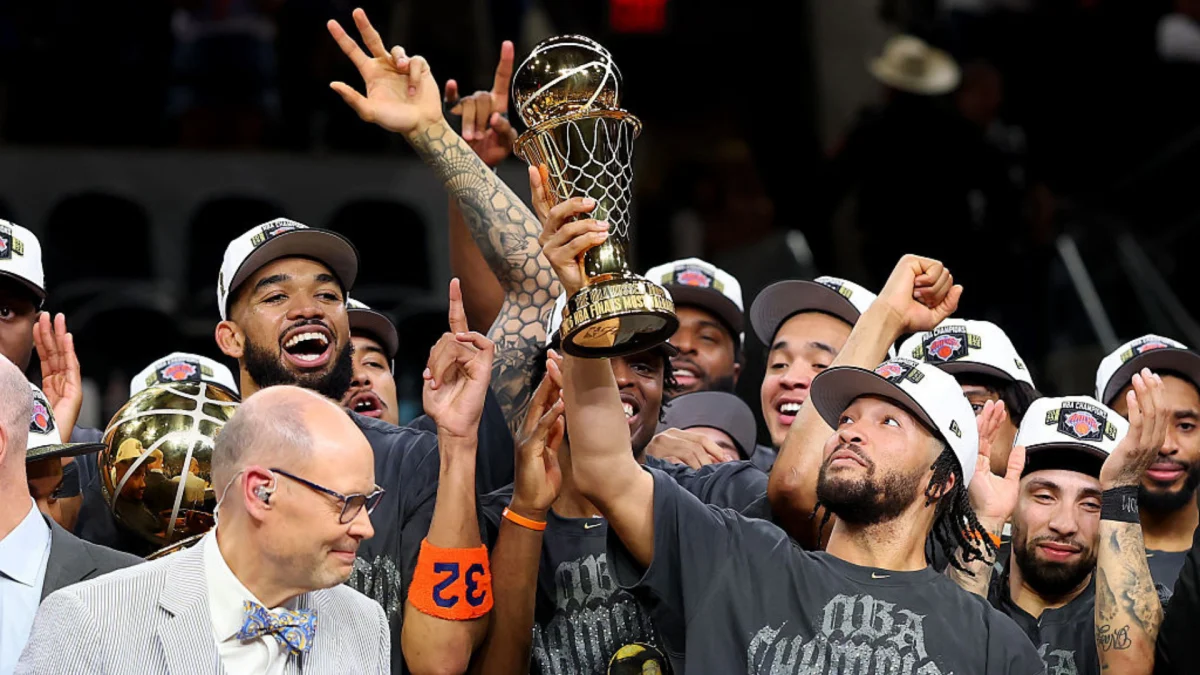
The drought that haunted Madison Square Garden for half a century has officially evaporated. In a feat of sporting destiny that feels ripped from the pages of a Hollywood screenplay, the New York Knicks have captured the 2024 NBA Championship—their first since 1973. This victory does more than just add a banner to the rafters; it recalibrates the narrative of the modern NBA, proving that in an era of superteams and mercenary rosters, culture, brotherhood, and resilience still hold the keys to the kingdom.
For New Yorkers, this is a cultural shift. For the rest of the sporting world, it is a masterclass in roster construction and long-term vision. To understand how the Knicks climbed the mountain, one must look past the final scoreboard and examine the intricate tapestry of decisions, personal redemptions, and collegiate bonds that made this "storybook ending" a reality.
The Nova Connection: A Blueprint for Chemistry
At the heart of the Knicks’ championship run is a story that began on the campus of Villanova University a decade ago. Jalen Brunson, Josh Hart, and Mikal Bridges—three pillars of the 2024 championship roster—were once teammates under the tutelage of Jay Wright. Their chemistry, forged in the crucible of NCAA intensity, became the backbone of the Knicks’ locker room culture.
This was not a coincidence; it was a calculated architectural project. The reunion of these "Nova Knicks" required a level of financial sacrifice that is rarely seen in professional sports. In the summer of 2024, team captain Jalen Brunson made a move described by ESPN’s Adrian Wojnarowski as "largely unprecedented." By taking a staggering $113 million pay cut, Brunson effectively engineered the salary cap flexibility necessary to assemble the supporting cast that would ultimately push the team over the edge.
It was a bet on himself and a bet on his friends. That gamble paid dividends in the Finals, where the intuitive, almost telepathic chemistry between Brunson, Hart, and Bridges dismantled opponents who relied on individual star power. They played with a synchronicity that suggested they were still running the same plays they had mastered in 2016, only now with the stakes elevated to the highest level of professional basketball.
The Redemption of Karl-Anthony Towns
If the "Nova Knicks" provided the team’s heartbeat, Karl-Anthony Towns provided its soul. For years, the narrative surrounding the talented center was one of unrealized potential and perceived fragility. Following the infamous 2018 critique by Jimmy Butler, which branded him "soft," Towns spent years battling not just opposing defenses, but a public perception that questioned his toughness.
The 2024 postseason silenced those critics once and for all. Towns’ performance throughout the series was nothing short of heroic, as he averaged a double-double of 15 points and 11 rebounds per game. Perhaps most impressive was his defensive assignment: guarding the generational talent Victor Wembanyama. To hold the 7’4" "Alien" in check while simultaneously contributing on the offensive end required a level of grit that invalidated the "soft" label entirely.
Yet, the true weight of Towns’ victory lies in his personal journey. In 2020, Towns lost his mother to COVID-19, a tragedy that he spoke about with raw, disarming honesty. By sharing his grief in his documentary, The Toughest Year of My Life, Towns allowed the world to see the man behind the jersey. His post-game reflections—where he described feeling his mother’s presence in the stands—provided the emotional center of this championship run. Winning this title wasn’t just a career achievement; it was a vindication of a man who navigated unimaginable personal loss to reach the summit of his profession.
Chronology of the Rise: From Skepticism to Sovereignty
The road to the 2024 title was not a straight line. It was a calculated ascent that began with the hiring of a front office committed to a specific philosophy.
- 2022-2023: The Skeptic Era. When the Knicks signed Jalen Brunson, the move was met with widespread derision. Critics like Stephen A. Smith famously called the signing "nothing," while analysts suggested that Brunson, at 6’2", was not a "1A" player capable of leading a championship team.
- 2023: The Cultural Shift. The front office began prioritizing high-IQ, high-character players. The acquisition of Josh Hart and later Mikal Bridges signaled a shift toward a cohesive unit rather than a collection of disparate stars.
- 2024 (Off-Season): The Sacrifice. Brunson’s decision to restructure his contract created the "cap space heard ’round the world," allowing the team to solidify their rotation.
- 2024 (Playoffs): The Gauntlet. The Knicks navigated a brutal Eastern Conference bracket, culminating in a Finals performance that saw them close out the series on the road in Game 5.
The Brunson Narrative: Burning the Haters
Jalen Brunson’s ascension to the status of "King of New York" is one of the most satisfying arcs in recent NBA history. He was dismissed as too small, too slow, and not "star" enough to carry the weight of the New York media market. By averaging 32.6 points per game in the Finals and taking home the Finals MVP trophy, he didn’t just win a championship—he systematically dismantled every criticism levied against him over the last three years.
Watching Brunson close out the series with a 45-point masterclass while his father, Rick Brunson—a former Knick himself—watched from the bench as an assistant coach, provided the quintessential "sports movie" moment. It was a narrative of legacy, resilience, and the triumph of skill over physical stereotypes.
Spike Lee and the Cinematic Aesthetic
The final piece of this championship puzzle was the atmosphere. Few teams are as inextricably linked to their city’s cultural identity as the Knicks are to New York, and no one embodies that connection more than Spike Lee. For decades, Lee has been the team’s most visible superfan, a fixture of courtside drama and passion.
The sight of Lee reuniting with Do the Right Thing stars Giancarlo Esposito and John Turturro to celebrate the win in San Antonio felt like a deliberate nod to the city’s artistic heritage. It reminded observers that the Knicks are not just a basketball franchise; they are a New York institution. The fact that the most cinematic title run in recent memory was presided over by the world’s most famous filmmaker-fan felt entirely appropriate.
Implications: A New Era for the NBA
The success of the 2024 New York Knicks holds profound implications for the future of the league. It proves that the "superteam" model—defined by the forced grouping of superstars—is not the only path to a title. Instead, the Knicks have championed a model of organic growth, chemistry, and financial self-sacrifice.
- Salary Cap Discipline: Brunson’s pay cut will likely be studied by front offices for years to come as the gold standard for team-building.
- The "Nova" Effect: Expect other teams to attempt to replicate the Knicks’ strategy of building around core groups of players who already possess established chemistry.
- Redemption as Motivation: The league will likely see a shift in how players are evaluated, with a greater emphasis on the intangible "resilience" that Towns and Brunson demonstrated.
As the ticker tape settles on the streets of Manhattan and the 1973 ghosts finally find their peace, the 2024 Knicks have cemented their place in history. They didn’t just win a trophy; they told a story—one that suggests that if you stay the course, build with integrity, and believe in the people beside you, even the longest droughts can end in a flood of glory.
 Nana Wu
 Neng Nana
 Reynand Wu
