

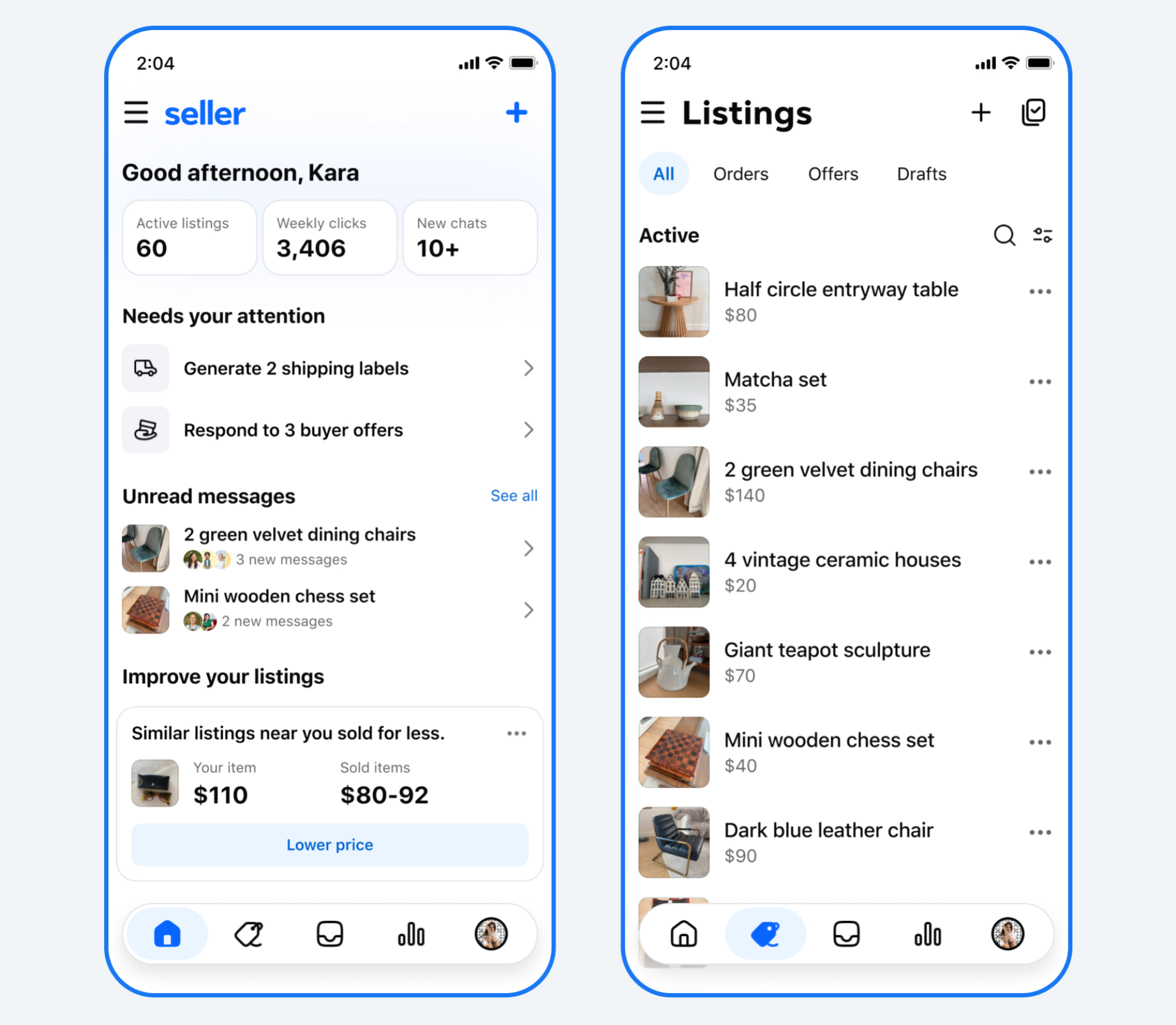
While many casual social media observers have long dismissed Facebook as a relic of the mid-2000s, the platform has quietly undergone a profound metamorphosis. It is no longer just a digital town square for status updates and photo sharing; for millions, it has become the internet’s most robust local commerce engine. With the launch of the standalone "Seller" app this Friday, Meta is doubling down on this pivot, signaling that Facebook’s future may rely less on social networking and more on its role as a modern-day digital bazaar.
Main Facts: A Dedicated Hub for Power Users
The new "Seller" app is a strategic refinement of the existing Facebook Marketplace ecosystem. Designed specifically for the high-volume users who drive the platform’s inventory, the app provides a streamlined interface that strips away the social distractions of the main Facebook experience.
Key features of the Seller app include:
- Centralized Listing Management: A dedicated dashboard that allows users to create, edit, and track active listings with greater efficiency than the standard mobile interface.
- Enhanced Communication: An integrated, specialized inbox designed to filter and manage queries from prospective buyers, ensuring that sales inquiries are separated from personal notifications.
- Comprehensive Analytics: For the first time, sellers gain access to historical data, allowing them to track the performance of past listings and optimize their future sales strategies.
- AI-Powered Automation: Perhaps the most significant technical advancement is the integration of smartphone camera scanning. When a seller photographs an item, Meta’s proprietary AI automatically generates a product description, categorizes the item, and suggests pricing—a feature aimed at drastically reducing the friction of the listing process.
The app is free to download and utilizes existing Facebook credentials, maintaining the seamless integration that has made Marketplace a household name. Consistent with Meta’s long-standing policy, the company does not take a percentage of sales, opting instead to monetize the broader Marketplace ecosystem through targeted advertising.
Chronology: From Social Network to Digital Bazaar
To understand the necessity of the Seller app, one must trace the timeline of Facebook’s transition into a commerce powerhouse.
2007–2015: The Rise of Marketplace Groups
Long before the official Marketplace existed, users naturally gravitated toward Facebook Groups to buy and sell local goods. These "Garage Sale" groups were fragmented and difficult to moderate, but they proved that the platform had a unique advantage: trust. Because users were linked to their real-world identities, the barrier to entry for local trade was significantly lower than on anonymous platforms like Craigslist.
2016: The Official Launch of Facebook Marketplace
Meta officially launched Marketplace, consolidating the disparate group-based trading into a single, cohesive interface. This move effectively challenged local classifieds and cemented Facebook’s role in the local economy.
2020–2024: The Pandemic Acceleration
The COVID-19 pandemic served as an unexpected catalyst. With traditional retail disrupted, the reliance on local, contactless peer-to-peer trade surged. During this period, the volume of listings skyrocketed, turning Marketplace into a critical infrastructure for household commerce.
2026: The Era of Specialization
Recognizing that its user base had diverged—with some users focusing entirely on social interaction while others treated Facebook strictly as a business tool—Meta began a strategy of "unbundling." In May 2026, the company launched "Forum," an app tailored for Facebook Group administrators. The July 2026 launch of "Seller" is the logical conclusion of this strategy, separating the "power user" experience from the casual social feed.
Supporting Data: The Scale of the Marketplace Economy
The numbers behind Facebook Marketplace are staggering, highlighting why Meta is prioritizing this vertical despite the broader decline in general Facebook engagement among younger demographics.
According to data provided by Meta:

- High-Volume Inventory: Every month, more than 420 million items are listed on the Marketplace platform globally.
- Demographic Penetration: One-third of all young adults who use Facebook report that they also utilize Marketplace, proving that the tool has successfully transcended generational divides.
- Efficiency Metrics: The introduction of AI-assisted listing is expected to cut the time-to-market for new items by an estimated 40%, potentially driving the monthly listing count even higher as the barrier to entry for casual sellers lowers.
These figures illustrate that while the "social" aspect of the app may feel stagnant to some, the "utility" aspect is currently in a phase of aggressive growth.
Official Responses and Strategic Vision
In a recent interview with the New York Times, Tom Allison, the head of Facebook, drew a compelling parallel to the content creation industry.
"Think of this as the Marketplace equivalent of a video editing tool for creators," Allison stated. Just as professional video platforms evolved to support the specific needs of influencers and editors, Meta is acknowledging that its most valuable users—those who provide the inventory that keeps the platform alive—require professional-grade software.
Allison emphasized that the Seller app is part of a broader "modular" strategy for the company. "We are seeing that our power users—whether they are managing massive, vibrant communities or moving high volumes of inventory—don’t necessarily want the same experience as someone just checking their feed," he explained. By offering dedicated, standalone products, Meta hopes to retain these users who might otherwise migrate to dedicated niche marketplaces like Vinted, Poshmark, or specialized local apps.
Implications: What This Means for the Future of Meta
The launch of the Seller app carries significant implications for the future of the digital economy and Meta’s corporate strategy.
1. The Death of the "One-Size-Fits-All" App
For years, Facebook’s strategy was to keep every feature contained within a single "super-app." The pivot toward standalone products like Forum and Seller suggests that Meta has realized that fragmentation is not a weakness, but a strength. By unbundling its features, the company can provide a more tailored, high-performance experience without cluttering the primary app, which remains the primary gateway for billions of users.
2. A Challenge to Niche Competitors
By automating the listing process with AI, Meta is attacking the primary pain point of selling online: effort. If it becomes easier to list an item on Facebook than on eBay or a dedicated consignment app, the platform will likely see an increase in the quality and volume of inventory. This poses a direct threat to vertical-specific marketplaces that rely on their superior user experience to justify their platform fees.
3. The Future of AI Integration
The use of smartphone scanning to automate product descriptions is a preview of Meta’s broader AI roadmap. If successful, this technology will likely be rolled out across other facets of the Meta ecosystem, including Instagram Shopping and WhatsApp Business. It marks a transition from AI being a "chatbot" feature to being a "utility" feature that works in the background to handle the mundane labor of digital commerce.
4. Retention in an Era of Competition
As social media attention is increasingly cannibalized by short-form video platforms like TikTok, Facebook’s "defensive" strategy has been to lean into utility. By making the platform indispensable for local commerce, Meta ensures that even if users spend less time scrolling through their newsfeeds, they remain tethered to the Facebook ecosystem for their daily financial and local needs.
Conclusion
The release of the Seller app is more than a simple feature update; it is a declaration of intent. Facebook is moving away from its identity as a singular social network and toward a role as a modular service provider. By empowering the individuals who facilitate the trade of 420 million items a month, Meta is ensuring that even as the nature of social connection changes, the platform remains an essential utility in the lives of its users. For the power sellers of the digital age, the "modern-day Craigslist" has finally been given the tools it needs to scale, compete, and evolve.
 Siti Muinah
 Suro Senen
