

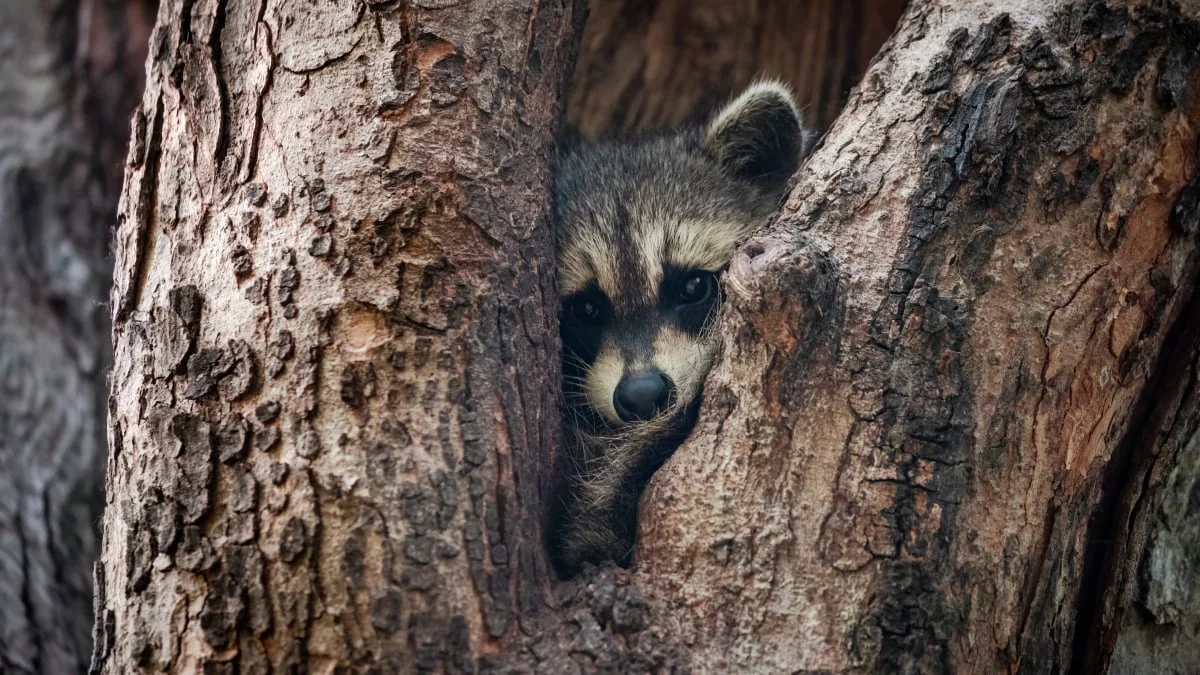
In the quiet corners of Seattle’s Ballard neighborhood, an unlikely cultural phenomenon began on July 13, 2026. What started as a casual observation by local resident Kiana Hall has evolved into a global internet obsession, bridging the gap between urban wildlife and the highest echelons of the gaming industry. Jimothy, a raccoon distinguished by a unique congenital spinal condition that gives him a compact, upright silhouette, has transcended his humble origins to become the most recognizable mascot in digital media.
What began as a fleeting viral video of a raccoon foraging near a parked car has morphed into a multi-platform crusade. Today, Jimothy is no longer just a wild animal; he is a burgeoning gaming icon, appearing in the landscapes of World of Warcraft, the blocky wilderness of Minecraft, and the rulebooks of Dungeons & Dragons.
The Genesis: A Chance Encounter in Ballard
On that fateful July afternoon, Kiana Hall was traversing Ballard when she spotted an animal shuffling beneath a vehicle. Initially mistaking the creature for a stray cat, Hall hit record on her phone, only to realize that the animal possessed the distinct, masked face of a North American raccoon. However, its anatomy was strikingly different from the typical scavengers of the Pacific Northwest.
With a compressed torso, a rounded, arched back, and elongated limbs, the raccoon moved with a gait that immediately captured the imagination of viewers. Hall dubbed him "Jimothy," a name that struck a chord with the internet’s penchant for anthropomorphizing animals. The video, which has since accrued millions of views, sparked an immediate investigation into the creature’s health. Veterinary experts and wildlife biologists suggest that Jimothy likely suffers from a form of congenital spinal deformity, potentially related to short-spine syndrome.
Despite his anatomical challenges, the footage revealed a resilient survivor. Jimothy was observed navigating urban obstacles, climbing staircases, and foraging for food with a level of independence that defied his physical limitations. This resilience, combined with his distinct visual "brand," provided the perfect catalyst for his transformation into a digital legend.
Chronology of a Viral Sensation
The trajectory of Jimothy’s fame followed a rapid, almost breathless timeline:
- July 13, 2026: Kiana Hall films and posts the initial encounter in Ballard, Seattle.
- July 15-18, 2026: Jimothy trends globally on X (formerly Twitter) and TikTok. Fan art and memes begin to saturate social media feeds.
- July 20, 2026: The first wave of "crossover" memes appears, with digital artists placing Jimothy into screenshots of Old School RuneScape and Halo.
- July 22, 2026: Independent developers release the first wave of mods for titles like Skyrim and Stardew Valley, allowing players to interact with a digital Jimothy.
- July 24, 2026: Blizzard Entertainment officially announces Jimothy’s inclusion in World of Warcraft, marking his transition from a fan-made meme to an officially licensed gaming character.
- July 25, 2026: Dungeons & Dragons releases an official stat block, cementing his status as a legendary creature within the tabletop community.
The Gaming Industry Embraces the "Beloved Cryptid"
The gaming industry is notoriously difficult to predict, yet Jimothy managed to penetrate the ecosystem with surgical precision. Major studios and indie developers alike saw an opportunity to engage with their communities by acknowledging the trend.
The approach taken by these studios varied wildly. Some opted for simple image overlays, while others engaged in deep, mechanical integration. For instance, the team at Halo utilized existing engine assets to bend a Spartan character into Jimothy’s signature posture, placing him near iconic crash sites. This display of "creative engineering" highlighted a broader trend: developers were willing to break their established lore to accommodate the internet’s newest favorite character.
The most significant validation came on July 24, when the official World of Warcraft social media account teased his arrival in Azeroth. For a game defined by high fantasy and epic scale, the inclusion of a Seattle-based raccoon represents a seismic shift in how developers interact with internet culture. It is an acknowledgment that the "meta-narrative" of the internet is now as important as the game world itself.
Supporting Data: Why Jimothy Resonates
Why has Jimothy captured the collective consciousness of gamers? Psychologists suggest that the "underdog" nature of his physical appearance triggers a protective response. Unlike standard, idealized animal mascots, Jimothy is "real," flawed, and undeniably expressive.
From a design perspective, his silhouette is a masterclass in simplicity. Because his body is compressed, his shape is instantly recognizable even when reduced to a handful of pixels—a quality known as "visual iconicism." This is why he translates so perfectly into the low-poly style of Old School RuneScape and the rubber-hose aesthetic of Mouse: P.I. For Hire. He is essentially a "plug-and-play" character; he brings his own personality to any environment he enters.
Fan-Driven Development and Modding Culture
While official studios have provided the "blessing" for Jimothy’s inclusion, it is the modding community that has given him life. Chris Pirillo’s browser-based arcade game, which pays homage to Frogger and Donkey Kong, serves as a testament to the agility of fan creators. Within days of his virality, programmers had mapped out the mechanics of a "Jimothy simulation," complete with garbage-raiding levels and paparazzi-avoidance puzzles.
The modding efforts in Stardew Valley and Minecraft further emphasize this point. By making Jimothy a functional companion or livestock, players are no longer just looking at a meme—they are integrating him into their personal gaming experience. This "democratization of content" ensures that Jimothy remains relevant long after the initial viral wave would have naturally receded.
Implications for Future Digital Mascots
The Jimothy phenomenon sets a precedent for how future viral moments might be handled by corporations. We are witnessing the birth of the "Participatory Meme Era," where the gap between real-world events and digital content is collapsing.
Traditionally, gaming studios were protective of their intellectual property, wary of unauthorized mods or characters. The embrace of Jimothy, however, suggests a new strategy: radical inclusion. By welcoming a fan-driven phenomenon into their worlds, studios like Blizzard and Wizards of the Coast have fostered immense goodwill within their player bases.
However, this also raises questions about digital rights and the ethics of capturing a real, living animal’s likeness for corporate gain. While Jimothy is a wild animal—and wildlife officials in Seattle continue to advise residents to maintain a safe distance—his digital twin is becoming a commodity.
The Dual Existence of Jimothy
There is a profound, almost philosophical contrast between the two Jimothys. The real Jimothy remains in Ballard, a creature of the night, driven by biological imperatives and survival. He knows nothing of the Dungeons & Dragons stat block that grants him "Compact Frame" abilities or the World of Warcraft expansion that promises him a digital home in Azeroth.
His digital counterparts, meanwhile, are immortal. They are immune to the dangers of traffic, the scarcity of food, and the frailty of the physical form. As developers continue to iterate on his character, we are likely to see Jimothy appear in even more unexpected places—perhaps as a skin in a battle royale or an NPC in a narrative-driven RPG.
As the dust settles on his sudden rise to fame, Jimothy stands as a symbol of the modern digital landscape. He proves that in an era of hyper-curated, expensive marketing campaigns, a grainy video of a raccoon in a parking lot can still change the face of the industry. Whether he is scurrying across a Seattle street or questing through the digital plains of Azeroth, Jimothy has proven that greatness doesn’t always come in the expected form. Sometimes, it comes in the form of a raccoon who simply looks like a "Jimothy."
 Nana Wu
 Neng Nana
 Reynand Wu
