

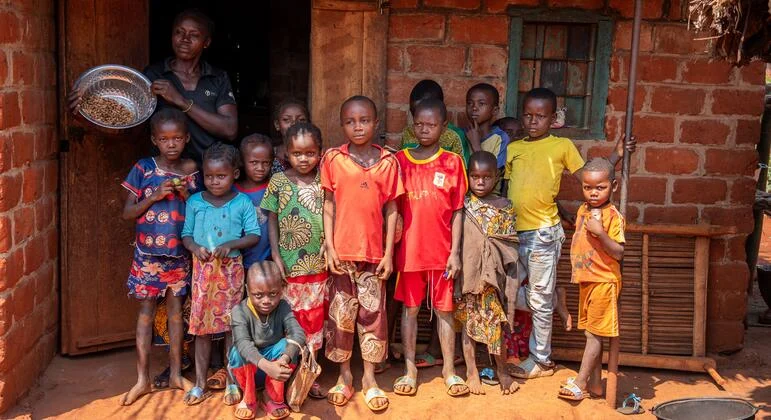
In the northwestern reaches of the Central African Republic (CAR), where the echoes of a decade-long conflict still rattle the foundations of daily life, a quiet revolution is taking root. In the town of Batangafo, once a vibrant tapestry of ethnic and religious diversity, the scars of 2013 remain visible. It was in this crucible of fear, displacement, and mistrust that Nina Mireille Yankinon found her calling. Today, as the founder of the NGO Londo E Lekere (ILEL)—meaning “Let us rise up and build”—Yankinon is not merely facilitating aid; she is reweaving the social fabric of a nation fractured by sectarian violence.
The Anatomy of a Fractured State: Main Facts
The Central African Republic has been locked in a volatile cycle of instability since 2013, when the Séléka—a coalition of predominantly Muslim rebels—seized power in Bangui. The subsequent collapse of state authority triggered a brutal retaliatory wave from anti-Balaka militias, largely composed of Christian and animist fighters.
The conflict transformed the country’s demographic landscape, turning neighbors into enemies and forcing hundreds of thousands to flee their homes. Batangafo, specifically, became a microcosm of this national tragedy. What was once a celebrated model of peaceful coexistence became a hotbed of territorial control, where religious affiliation often dictated one’s safety.
For Nina Mireille Yankinon, these were not just political headlines; they were personal traumas. Like thousands of her compatriots, she was forced into the harrowing life of a refugee, fleeing to neighboring Cameroon to escape the systematic destruction of her community. This period of displacement, however, became the catalyst for her transformation from a victim of circumstance into a vanguard of peace.
A Chronology of Conflict and Resilience
- 2013: The Seleka coalition seizes power; the onset of widespread sectarian violence begins.
- 2013–2015: Peak of the crisis. Nina and her family are displaced, fleeing to Cameroon as refugees.
- Post-2015: Nina returns to CAR, witnessing the lingering devastation of her homeland. She shifts her focus from personal survival to community reconstruction.
- 2021–2022: A concerning spike in Gender-Based Violence (GBV) is reported across the region, further complicating the humanitarian landscape and threatening the progress of women’s empowerment.
- Present Day: Through ILEL, supported by the UN Alliance of Civilizations (UNAOC), Nina continues to lead initiatives that bridge the gap between divided religious and ethnic groups, utilizing education as a primary tool for stability.
Challenging the Patriarchal Status Quo: Supporting Data and Observations
The challenges facing peacebuilders in the CAR are structural and deeply ingrained. In a society that remains heavily patriarchal, the inclusion of women in decision-making processes is often met with systemic resistance.
Yankinon’s work through ILEL faces two primary hurdles: the residual mistrust between religious groups and the cultural marginalization of young women. Data from local humanitarian assessments highlights that while women bear the brunt of the conflict—particularly through the sharp rise in GBV observed in recent years—they are frequently excluded from formal peace negotiations.
Yankinon notes that her youth, rather than being a hindrance, has become her greatest asset. "My youth allows me to connect with vulnerable adolescents and young people who are often excluded from dialogue," she explains. By positioning herself as a bridge-builder, she disrupts the traditional narrative that leadership is the sole province of elder males, instead offering a model of "dynamic female leadership" that is essential for long-term reconciliation.
Official Perspectives: The Role of International Support
The work of local grassroots organizations like ILEL has gained significant traction among international stakeholders, particularly the UN Alliance of Civilizations (UNAOC). International bodies have increasingly recognized that top-down peace accords often fail to translate into peace at the village level.
By supporting initiatives like those led by Yankinon, the UNAOC acknowledges that sustainable peace must be nurtured through:
- Inclusive Forums: Creating spaces where Muslims and Christians can dialogue without the fear of retaliation.
- Educational Integration: Training teachers and distributing learning materials to ensure that the next generation is equipped with the tools of conflict resolution rather than the ideology of division.
- Community-Led Decision Making: Ensuring that programs are not imposed from above but reflect the specific priorities of local farmers, families, and youth.
The Humanitarian Crisis: A Closer Look at GBV
The surge in Gender-Based Violence between 2021 and 2022 remains a somber point of concern. For women like Nina, this is not just a statistical increase; it is a direct assault on the peace process. Stigmatization often prevents survivors from coming forward, which in turn fuels the cycle of impunity.
Yankinon’s strategy involves integrating protection services within her peacebuilding mission. By creating safe spaces for women to document their stories and access support, she is effectively challenging the culture of silence. Her community blog, which archives these experiences, serves as a crucial piece of historical record-keeping, ensuring that the victims’ voices are not erased by the fog of war.
Implications for the Future: Peace Beyond the Conference Room
The vision held by Nina Mireille Yankinon challenges the conventional wisdom that peace is a product of international treaties and high-level summits. Her philosophy is grounded in the belief that true, lasting stability is nurtured in the mundane spaces of society: the classrooms, the market stalls, and the village squares.
1. Education as a Security Strategy
For Yankinon, education is the ultimate antidote to radicalization. By ensuring that children understand their fundamental rights and the importance of cross-cultural empathy, she is building a psychological barrier against future violence. The involvement of parents and teachers in these projects ensures that the values taught in school are reinforced at home.
2. The Power of "Londo E Lekere"
The success of her NGO is measured in the small, incremental victories: a village that decides to resolve a dispute through mediation rather than violence, or a young girl who chooses to attend school despite the prevailing cultural pressures. These acts of defiance against the "status quo of conflict" are the building blocks of a new, resilient Central African Republic.
3. A Model for Other Conflict Zones
The CAR is not the only nation struggling with the intersection of religious tension and youth marginalization. Yankinon’s methodology—combining radio awareness campaigns, school-based dialogue, and digital storytelling—provides a scalable blueprint for other regions in sub-Saharan Africa. Her ability to navigate patriarchal structures while maintaining a focus on youth empowerment provides a roadmap for activists worldwide.
Conclusion: A Call for Persistent Hope
As the Central African Republic looks toward a future that remains uncertain, the persistence of leaders like Nina Mireille Yankinon serves as a vital beacon. Her journey from a refugee in Cameroon to a recognized peacebuilder is a testament to the capacity of the human spirit to overcome trauma.
"Peace, equality, and resilience," she says, are not just abstract concepts; they are the daily labor of those who refuse to surrender to hopelessness. Her story highlights that while the conflict in the CAR was ignited by politics and power, its resolution will be found in the courage of ordinary people who dare to imagine a different kind of existence.
In the final assessment, the transformation of the Central African Republic will not be determined solely by the outcome of elections or the movement of militias, but by the strength of the communities that choose to rise up and build. Through her advocacy, education, and unwavering commitment, Nina Mireille Yankinon is ensuring that for the youth of Batangafo, the future is defined not by the violence of 2013, but by the collaborative efforts of today.
 Lina Hope
 Asro
Asro
 Layla Zulfa
