

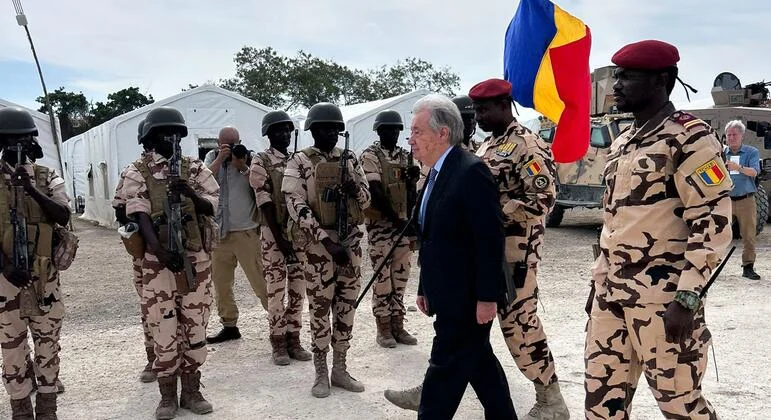
For years, the bustling thoroughfares of Port-au-Prince—once vibrant arteries of commerce and community—have been silenced by the rhythmic terror of gunfire. In many neighborhoods, the simple act of selling fruit or walking to a market has become an act of defiance against the criminal syndicates that have tightened their grip on the nation. Today, however, a shift is underway. With the deployment of a UN-backed security force, Haiti stands at a precarious, yet potentially transformative, crossroads.
The Reality of Gang Rule: A State Under Siege
The scale of the crisis in Haiti is difficult to overstate. Estimates suggest that approximately 26 heavily armed gangs effectively control nearly 90 percent of Port-au-Prince and its surrounding suburbs. These groups operate not merely as criminal enterprises, but as shadow governments, imposing their will through a brutal regimen of summary executions, systemic extortion, and large-scale kidnappings for ransom.
The economic cost is equally devastating. By controlling key transit corridors, these gangs have choked the free flow of goods, driving up the cost of basic necessities and pushing an already impoverished population to the brink of starvation. Since the dawn of this year alone, the violence has claimed over 2,300 lives, with more than 1,100 others sustaining serious injuries. The atmosphere of fear has forced approximately 1.5 million Haitians to flee their homes, creating a humanitarian catastrophe that has left millions reliant on external aid.
A Chronology of Instability: From Assassination to Anarchy
Haiti’s current descent into chaos did not happen in a vacuum; it is the result of years of mounting political instability and the erosion of state authority.
- July 2021: The assassination of President Jovenel Moïse serves as the definitive turning point in the country’s modern history. With the vacuum of power left by his death, state institutions began to crumble, allowing criminal elements to consolidate power.
- 2022–2024: Gangs evolve from localized turf-warring factions into sophisticated networks, taking control of critical infrastructure, including fuel terminals and major ports.
- 2025 (Present): Following repeated calls for international assistance, the UN Security Council authorizes the deployment of the Gang Suppression Force (GSF). This marks the first major concerted effort to reclaim territorial control from armed groups in the post-Moïse era.
The Gang Suppression Force: A New Strategic Paradigm
The cornerstone of this new security architecture is the Gang Suppression Force (GSF), headquartered at Camp Vertières, located just a few blocks from the Boulevard du 15 Octobre. The base serves as a tactical hub, currently being expanded to house the full mandate of 5,550 personnel.
Unlike previous international interventions, the GSF is designed to be a scalpel rather than a blunt instrument. Supported by the UN Support Office in Haiti (UNSOH), the force receives essential logistical, medical, and transport support, allowing it to move rapidly across the capital. According to Jack Christofides, head of the GSF, the mandate is clear: to systematically degrade the operational capacity of the gangs to a point where Haitian national institutions—the police and the judiciary—can once again assume control and manage security sustainably.
The strategy involves a multi-pronged approach:
- Tactical Neutralization: Conducting foot patrols and establishing forward operating bases to create "safe zones" where citizens can reclaim their daily lives.
- Logistical Interdiction: Partnering with regional neighbors to choke the inflow of illicit firearms, ammunition, and funding. By securing maritime smuggling routes and monitoring land border crossings, the GSF aims to starve the gangs of the resources required to sustain prolonged warfare.
- Humanitarian Access: Protecting vulnerable communities and ensuring that aid organizations can reach those displaced by the violence.
Official Responses and the UN Mandate
UN Secretary-General António Guterres, during a high-profile visit to the GSF base this past Tuesday, underscored the gravity of the mission. Touring the facility—where soldiers from various nations now work alongside local counterparts—Guterres offered a stark assessment of the opportunity at hand.
"Their deployment offers a real opportunity to curb violence and restore the authority of the State," Guterres stated. "We have no right to waste this opportunity."
However, the Secretary-General was careful to temper expectations, emphasizing that military force is not a panacea. "Gangs must be disarmed and dismantled and their members reintegrated—in a Haitian-led process," he noted. "Security alone is not enough; it must be accompanied by political progress."
Guterres’ words resonate with the millions of Haitians who remain trapped in temporary camps, having lost their homes and livelihoods. During his visit, he spoke with survivors of the violence, noting their resilience. "I met families who have lost everything and yet are holding on, together, with a courage and a dignity that command admiration," he reflected. "These families did not ask for my sympathy. They are waiting for action."
The Weight of Indifference: A Global Moral Failure
Perhaps the most stinging critique delivered by the UN chief was directed not at the gangs, but at the international community. For years, Haiti has been treated as a peripheral concern, with global powers frequently looking away as the country spiraled into anarchy.
"The biggest disgrace is indifference, the indifference of a world that has looked away," Guterres remarked. He argued that the success of the GSF is contingent upon the international community assuming its responsibilities, not just in providing military personnel, but in providing the long-term political and economic support necessary to rebuild state institutions.
The "light at the end of the tunnel" that Guterres described is fragile. It depends on a delicate three-way partnership: the Haitian government, the international security forces, and the Haitian people. If this partnership holds, the sight of people returning to the Boulevard du 15 Octobre to trade, socialize, and live without the shadow of a firearm may become the new, permanent reality.
Implications for the Future
The implications of the GSF’s success extend far beyond the borders of Port-au-Prince. If the mission succeeds in dismantling the gang hegemony, it will provide a blueprint for how the international community can combat non-state armed groups in fragile states. Conversely, failure could signal the end of effective statehood in Haiti for the foreseeable future, likely triggering a massive migration crisis that would affect the wider Caribbean and North America.
As the troops at Camp Vertières continue to organize, establishing offices in shipping containers and coordinating patrols, the urgency of the mission is palpable. The transition from a state dominated by fear to one governed by law is a long road. Yet, for the people of Port-au-Prince, the mere presence of the GSF provides something that has been absent for years: the hope that they may one day reclaim their city.
The coming months will be decisive. As the GSF reaches its full operational capacity, the international community will be watching to see if this "turning point" results in lasting peace or if it is merely a temporary reprieve. For now, the people of Haiti, with their characteristic resilience, continue to wait—not for empty promises, but for the tangible, daily security that will allow them to rebuild their lives.
 Lina Hope
 Asro
Asro
 Layla Zulfa
