

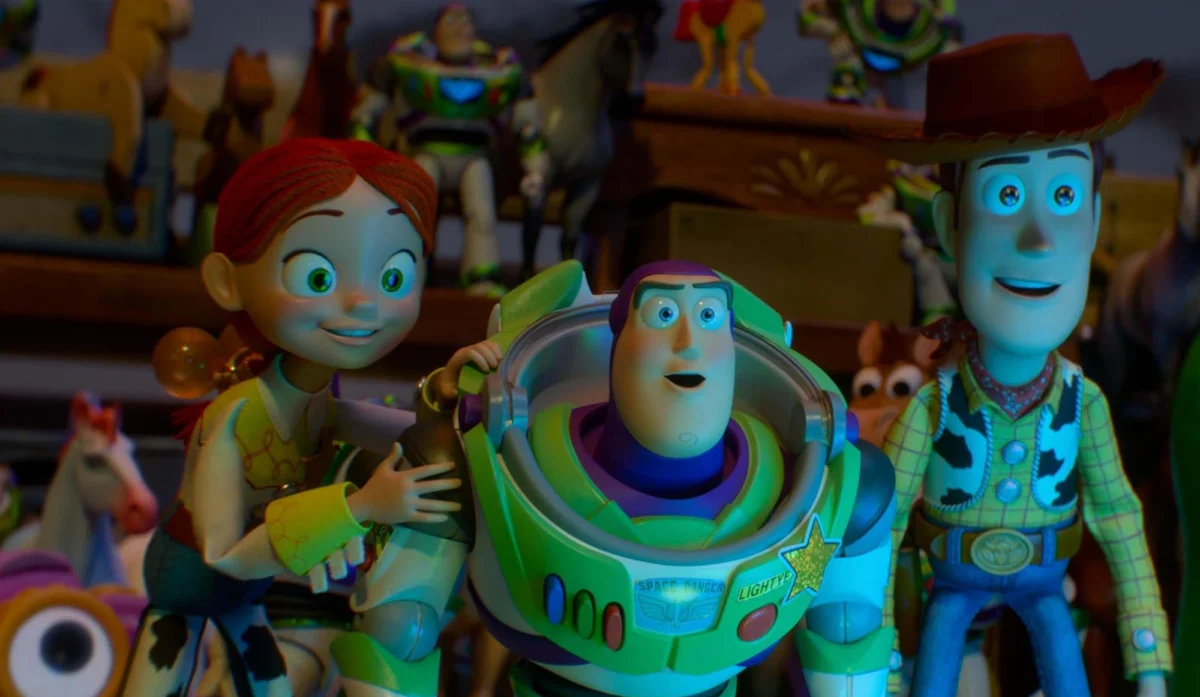
Seven years after Woody took his final bow, tipping his hat to Buzz, Jessie, and the rest of the gang in the emotional finale of Toy Story 4, the world’s most storied animation franchise has returned to the big screen. Toy Story 5, which held its glitzy world premiere at the Dolby Theatre in Los Angeles on June 9, 2026, arrives at a pivotal moment for Pixar Animation Studios. With a "Certified Fresh" 93 percent rating on Rotten Tomatoes, the film has largely succeeded in sticking the landing, proving that even after three decades, these plastic icons still have plenty of stories left to tell.
While a 93 percent score would be the crown jewel for most productions, in the context of the Toy Story legacy, it technically stands as the lowest-rated entry in the series. Its predecessors—Toy Story, Toy Story 2, Toy Story 3, and Toy Story 4—all boasted critical acclaim ranging from 97 to a perfect 100 percent. Yet, for a franchise that has never delivered a true misstep, being the "lowest-rated" is merely a statistical quirk rather than a mark of failure. Critics have lauded the film for its narrative ingenuity, specifically noting how it breathes new life into a world that many fans thought was already perfectly concluded.
A New Perspective: Shifting the Emotional Anchor
Under the stewardship of Pixar mainstay Andrew Stanton—the visionary behind Finding Nemo and WALL-E, making his directorial debut for the Toy Story franchise—and co-director Kenna Harris, the film makes a bold structural pivot. The narrative focus shifts away from the long-standing dynamic between Woody and Buzz Lightyear, instead placing Joan Cusack’s Jessie at the center of the emotional arc.
The conflict arises when the toys find their relevance in Bonnie’s life threatened by "Lilypad," a sophisticated frog-shaped tablet voiced by Greta Lee. The film’s screenplay has been praised by critics for its nuanced, mature approach to the "screen time" dilemma. Rather than offering a heavy-handed, Luddite-inspired lecture on the evils of technology, the film explores the existential dread of becoming obsolete in a rapidly digitizing world. This shift allows for a more introspective character study, with many outlets identifying Jessie’s arc as the "unexpected heart" of the feature.

While the story pushes new boundaries, it retains the familiar comfort of the ensemble cast. Tim Allen and Tom Hanks return as the quintessential duo, Buzz and Woody, while the supporting cast is bolstered by new additions including Conan O’Brien, Bad Bunny, and Keanu Reeves. The auditory landscape of the film remains in the safe, familiar hands of Randy Newman, who returns to score his fifth Toy Story feature, providing the warm, Americana-infused musical foundation that fans have come to associate with the series.
Chronology of a Franchise: From 1995 to 2026
To understand the weight of Toy Story 5, one must look at the timeline of its evolution. When the original Toy Story premiered in 1995, it was a technological revolution—the first feature-length computer-animated film. It set a bar for quality that the studio spent the next three decades chasing.
- 1995: Toy Story introduces the world to the secret life of toys.
- 1999: Toy Story 2 expands the lore, introducing Jessie and cementing the series as a rare sequel that surpasses the original.
- 2010: Toy Story 3 arrives, providing an emotional gut-punch as Andy leaves for college, resulting in a Best Picture nomination and a Best Animated Feature win.
- 2019: Toy Story 4 redefines the franchise’s boundaries, exploring the independence of toys outside the domestic sphere.
- 2026: Toy Story 5 attempts to modernize the series for a generation raised on tablets and interactive digital media.
Each entry has served as a mirror for the era in which it was released, tracking the evolution of childhood play and the inevitable progression of technology.
Supporting Data: The Oscar Conversation
As the 2027 Academy Awards cycle begins to take shape, Toy Story 5 finds itself in a crowded, high-stakes lane. Pixar, in a display of creative abundance, is juggling two major contenders this year: Toy Story 5 and Hoppers, the studio’s March release about a girl who transfers her consciousness into a robotic beaver. Hoppers has already grossed over $370 million and holds a 94 percent Rotten Tomatoes score, setting the stage for an internal clash within the studio’s campaign.

The Academy has a long history with this franchise, though the history is complicated by the late introduction of the "Best Animated Feature" category in 2001. Consequently, the first two Toy Story films were ineligible for the award. However, the track record since then is flawless: Toy Story 3 won in 2011, and Toy Story 4 took home the trophy in 2020. No other franchise in history can match this level of consistency.
The Taylor Swift Factor: A New Contender
One of the most discussed aspects of this campaign is the inclusion of Taylor Swift, who contributed the film’s standout original song, "I Knew It, I Knew You." The song has already achieved No. 1 status across multiple formats, including pop and adult contemporary, making it a cultural juggernaut.
Historically, Randy Newman has been the primary vehicle for the franchise’s musical recognition. He secured Oscar nominations for "You’ve Got a Friend in Me" (1995), "When She Loved Me" (1999), and "I Can’t Let You Throw Yourself Away" (2019), and won for "We Belong Together" (2010). Swift, despite being one of the most successful songwriters in history, has yet to receive an Oscar nomination, despite four previous nods at the Golden Globes. Her participation in Toy Story 5 may finally break that streak. The question remains: will the Academy favor the established legacy of Newman, or the unprecedented cultural impact of a Swift-penned ballad?
Official Responses and Creative Direction
In recent interviews, director Andrew Stanton has addressed the necessity of returning to a franchise that many felt was complete. "We didn’t want to just make another movie for the sake of the brand," Stanton remarked at the premiere. "The question was: what is the one thing we haven’t asked these characters? And the answer was about their purpose in an era where the definition of ‘toy’ is constantly shifting."

The collaboration between Stanton and co-director Kenna Harris has been described by insiders as a "creative collision," with Harris bringing a more contemporary, tech-literate perspective to balance Stanton’s nostalgic sensibilities. The decision to elevate Jessie was a deliberate choice to provide a fresh emotional anchor, moving away from the "Andy’s Room" dynamic that had dominated the first three films.
Implications for the Industry
The success of Toy Story 5 has broader implications for Hollywood’s reliance on intellectual property (IP). As studios struggle to find original content that resonates with global audiences, Pixar is attempting to prove that a legacy franchise can evolve without losing its soul. If the film continues to perform well at the box office and maintains its critical standing, it will likely serve as a blueprint for how to handle long-running, multi-generational series.
Furthermore, the film’s performance in the upcoming awards season will indicate whether the Academy is willing to recognize the "middle-of-the-road" success of a massive franchise or if it will lean toward smaller, more experimental animation. With Toy Story 5, Pixar is playing a high-stakes game of keeping the past alive while attempting to define the future of the medium.
As the curtains close on the latest chapter of this odyssey, one thing remains clear: whether or not the Academy rewards this specific entry with gold statues, the toys have once again proven that they are more than just merchandise. They are, and perhaps always will be, the definitive icons of modern animation, capable of reflecting our changing world back at us with humor, empathy, and just enough digital-age anxiety to feel relevant. Whether this is the final curtain for Woody and the gang, or merely a transition into a new, more tech-integrated phase, Toy Story 5 has managed to justify its existence—a feat that, in the current landscape of Hollywood sequels, is no small victory.
 Ammar Sabilarrohman
 Siti Muinah
 Iffa Jayyana
