

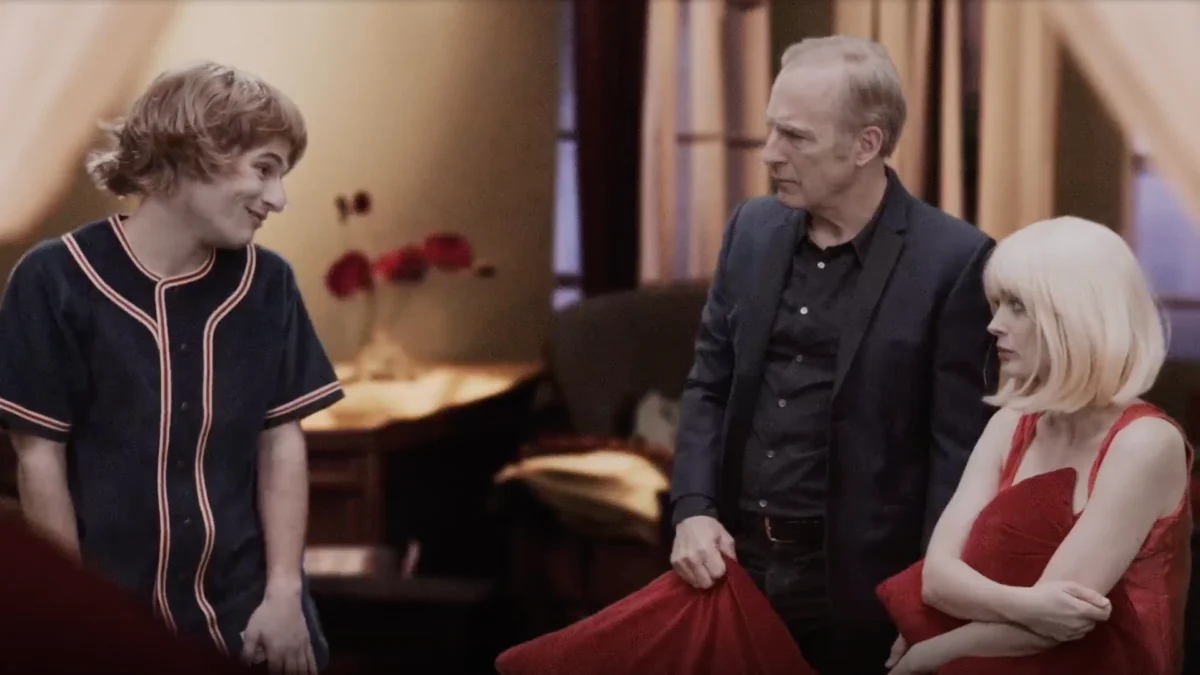
In an era of high-budget reboots and meticulously polished franchises, an unconventional project is poised to capture the cultural zeitgeist by leaning into the beauty of imperfection. Two decades after the release of what is widely considered the "worst movie ever made," Tommy Wiseau’s The Room is receiving a star-studded, charitable reimagining. Titled The Room Returns, the project features Emmy-winning actor Bob Odenkirk stepping into the lead role of Johnny, a character originally made famous by Wiseau’s idiosyncratic performance.
The production, spearheaded by the volunteer organization Acting For a Cause, represents a unique intersection of Hollywood prestige, cult-classic fandom, and high-impact philanthropy. By utilizing the original script against a backdrop of green-screened locations from the 2003 film, The Room Returns seeks to honor a legacy of "authentic failure" while raising significant funds for medical research and the independent arts.
I. Main Facts: A "So Bad It’s Good" Landmark Reimagined
The Room Returns is not a traditional remake. Instead, it is a meticulously staged tribute film designed to benefit three major charitable organizations: amfAR (The Foundation for AIDS Research), and the Blue Collaborative, a non-profit production company dedicated to supporting independent artists.
The Ensemble Cast
The project’s most striking feature is its cast, which contrasts sharply with the original film’s roster of unknown actors.
- Bob Odenkirk: The Better Call Saul and Breaking Bad star takes on the role of Johnny, bringing a level of dramatic gravitas to a script notorious for its non-sequiturs and illogical dialogue.
- Greg Sestero: In a nod to the original’s enduring legacy, Sestero—who played "Mark" in the 2003 version and authored the memoir The Disaster Artist—returns to the world that defined his career.
- Mike Flanagan and Kate Siegel: The powerhouse duo behind modern horror hits like The Haunting of Hill House and Midnight Mass join the ensemble, further cementing the project’s appeal to cinephiles.
- Bella Heathcote, Cameron Kasky, and Brando Crawford: This mix of established talent and rising stars rounds out a cast that aims to draw diverse audiences to the charity premiere.
Production and Premiere Details
Produced and directed by Brando Crawford, the film was shot in a single day—a feat that stands in stark contrast to the original’s chaotic year-long production. The visual style relies on green screens that display the actual locations from the 2003 movie, creating a surreal, "meta" experience for viewers.
The world premiere is scheduled for June 26 at the Hollywood Forever Cemetery, a venue synonymous with Los Angeles film history and high-profile outdoor screenings. All proceeds from the event will be directed toward the aforementioned charities.
II. Chronology: From Box Office Disaster to Cultural Phenomenon
To understand the significance of The Room Returns, one must trace the improbable 20-year journey of its source material.
2003: The Genesis of an Enigma
In June 2003, a mysterious, affluent figure named Tommy Wiseau released The Room in a limited two-theater run in Los Angeles. Wiseau wrote, directed, produced, and starred in the film, reportedly spending $6 million of his own money on production and a massive billboard on Highland Avenue. The film was an immediate critical disaster, lambasted for its disjointed plot, bizarre acting, and technical errors.
2004–2012: The Rise of the Midnight Movie
Despite its initial failure, The Room did not disappear. It found a second life in the midnight movie circuit. Audiences began attending screenings not to watch a drama, but to participate in a communal ritual involving shouting at the screen, throwing plastic spoons (a reference to a recurring prop in the film), and reciting lines in unison. It became the Rocky Horror Picture Show of the 21st century.

2013–2017: Mainstream Validation
The film’s mythos was expanded in 2013 when Greg Sestero published The Disaster Artist, a candid and often touching account of the film’s troubled production. The book’s success led to a 2017 feature film adaptation directed by and starring James Franco. The Disaster Artist was a critical darling, earning an Academy Award nomination for Best Adapted Screenplay and bringing the story of Wiseau and Sestero to a global mainstream audience.
2023–Present: The 20th Anniversary and the Odenkirk Era
As the film reached its 20th anniversary in 2023, the announcement of The Room Returns signaled a new chapter. No longer just a joke, the film is now treated as a piece of "outsider art" worthy of deconstruction by some of the industry’s most respected professionals.
III. Supporting Data: The Economics of Outsider Art
The contrast between the 2003 original and the 2024 tribute highlights the shifting economics of cult cinema.
Production Efficiency
- The Original (2003): Budgeted at roughly $6 million, with a production schedule that spanned over a year due to Wiseau’s insistence on using both 35mm film and HD cameras simultaneously, along with frequent cast and crew replacements.
- The Tribute (2024): Shot in 24 hours with zero budget (as an all-volunteer effort), leveraging modern digital technology and a singular, focused vision.
Charitable Impact
Acting For a Cause has a track record of using high-profile scripts to drive donations. By choosing a property as viral as The Room, the organization maximizes its "engagement-to-donation" ratio. The choice of amfAR as a primary beneficiary aligns the project with long-standing Hollywood traditions of supporting HIV/AIDS research, while the Blue Collaborative ensures that the "impact" of the film extends back into the independent filmmaking community.
Audience Engagement
The trailer for The Room Returns, released as an IndieWire exclusive, garnered immediate social media traction. Data suggests that Bob Odenkirk’s involvement specifically targeted the "Prestige TV" demographic, bridging the gap between high-brow television fans and the ironic subculture of cult film enthusiasts.
IV. Official Responses: Sincerity in the Absurd
The creators of The Room Returns have been vocal about their intentions, emphasizing that the project is a labor of love rather than a mockery.
Brando Crawford, the director and producer, articulated the philosophy behind the project in a recent statement:
"‘The Room’ has spent twenty years proving that audiences don’t fall in love with perfection… authenticity is what brings them back time and time again. ‘The Room Returns’ is our attempt to honor that legacy while raising money for causes we care deeply about. We are flipping the myth on its head: shot in a day, with no budget, and a cast and crew that puts butts in seats like Emmy winner Bob Odenkirk. It’s an experiment that we made for art and impact."
Bob Odenkirk, though known for his wit, has approached the role with a surprising degree of commitment. Early reports from the set suggest that Odenkirk did not play the role for laughs, but rather performed the script with the same intensity he would bring to a David Mamet play. This "straight-man" approach to absurd dialogue is expected to be the film’s comedic and artistic engine.

Greg Sestero has also expressed his support for the project, noting that seeing his life’s work reinterpreted by actors of Odenkirk’s caliber is a testament to the film’s strange, enduring power. Sestero’s presence provides a "seal of approval" from the original production, ensuring fans that the tribute is respectful of its roots.
V. Implications: The Evolution of Cult Status
The existence of The Room Returns points toward several broader trends in the media landscape.
1. The "A-List" Validation of Internet Culture
Ten years ago, it would have been unthinkable for a serious dramatic actor like Bob Odenkirk to participate in a remake of a "bad" movie. However, in the age of internet memes and digital archiving, the barriers between "high art" and "trash culture" have collapsed. Actors now recognize that engaging with internet-famous properties can be a savvy way to connect with younger, digitally-native audiences.
2. The Power of "Low-Fi" Philanthropy
The "Acting For a Cause" model—using a green screen and a one-day shoot—suggests a new way forward for charitable fundraising in Hollywood. It proves that you don’t need a $100 million budget to create a viral, must-see event. In a world of "content fatigue," the novelty of seeing famous actors perform a "bad" script is more compelling than many traditional blockbusters.
3. The Redefinition of Authenticity
As Brando Crawford noted, The Room succeeded because it was authentically Wiseau’s vision, however flawed. The Room Returns tests whether that authenticity can be captured through a lens of irony and charity. It raises the question: Can a "bad" movie become "good" simply by changing the intent of the performers?
4. Legacy and Longevity
By premiering at the Hollywood Forever Cemetery, The Room Returns stakes a claim for The Room’s place in the pantheon of Hollywood history. It suggests that Wiseau’s work, despite its technical failures, has achieved a level of immortality usually reserved for classics like Casablanca or Sunset Boulevard.
As the sun sets over the gravestones of Hollywood legends on June 26, audiences will gather not just to laugh at a banker’s tragic love triangle, but to celebrate the chaotic, unpredictable, and ultimately human spirit of independent cinema. In doing so, they will contribute to life-saving research, proving that even the "worst" movie can do a world of good.
 Jia Lissa
 Lina Irawan
 Iffa Jayyana
