

The "Star Trek" franchise has served as a cornerstone of science fiction for nearly six decades, evolving from a low-budget 1960s television experiment into a sprawling multi-media empire. As the franchise prepares to launch its latest iteration, Star Trek: Starfleet Academy, the creative team faces the perennial challenge of the "Trek" legacy: how to honor the visual and spiritual continuity established by Gene Roddenberry while carving out a distinct identity for a new generation.
At the heart of this aesthetic transition is cinematographer Tommy Maddox-Upshaw. In a recent craft roundtable, Maddox-Upshaw detailed his mission to redefine the "look" of the Federation. By pivoting away from the cold, detached tropes of modern sci-fi and embracing a warmer, more intimate visual language, Starfleet Academy aims to capture the vulnerability and camaraderie of young cadets as they prepare to inherit the stars.
Main Facts: A New Visual Philosophy for a New Generation
Star Trek: Starfleet Academy represents a significant shift in the franchise’s target demographic and narrative focus. Set primarily in the 32nd century—an era established in the later seasons of Star Trek: Discovery—the series follows a group of young cadets as they navigate the rigors of the Federation’s most prestigious training ground.
Cinematographer Tommy Maddox-Upshaw, known for his dynamic work on projects like Snowfall and The Man Who Fell to Earth, was tasked with establishing the show’s visual grammar. His approach is rooted in the concept of "warm incubation." Unlike the high-stakes, bridge-centered cinematography of Discovery or the cinematic, lens-flare-heavy style of the J.J. Abrams films, Starfleet Academy prioritizes the human element through specific technical choices:
- Lens Selection: Moving away from the traditional anamorphic, long-lens approach that creates a sense of isolation and "coolness," Maddox-Upshaw opted for wider, more intimate lenses.
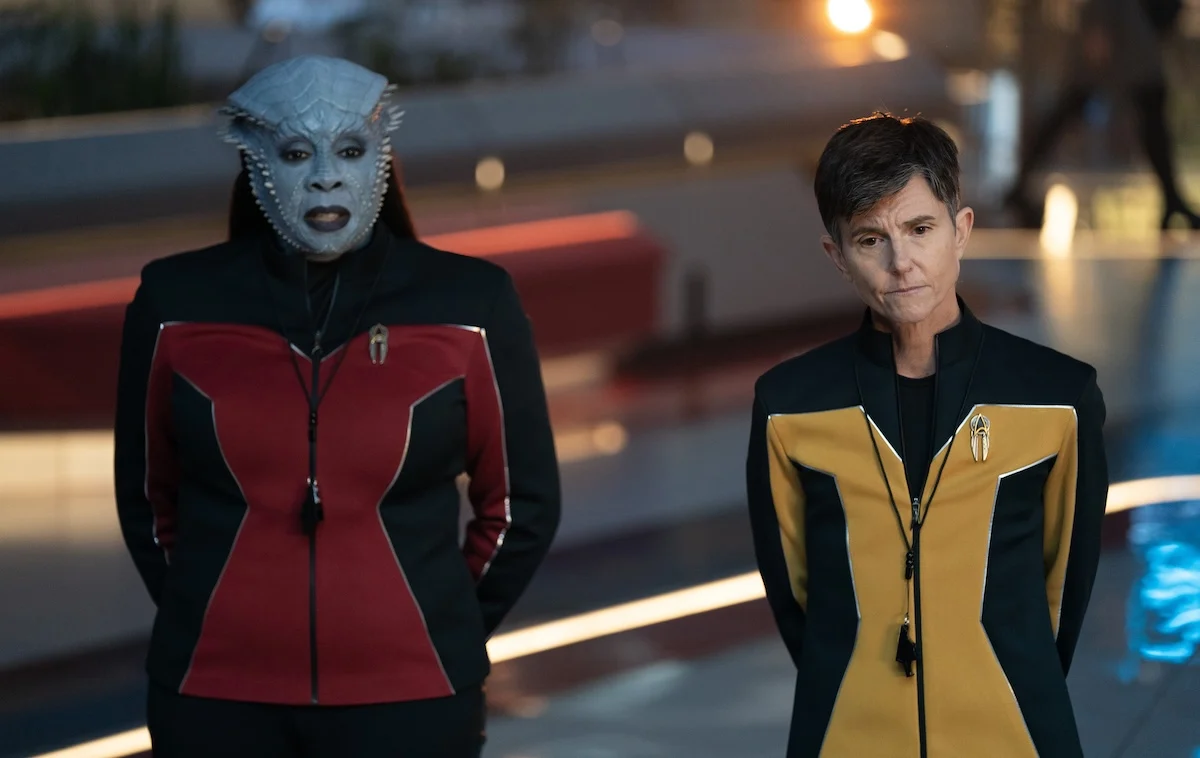
- Color Theory: The Academy environment is bathed in warmer tones to simulate a protective, educational "nest," which contrasts sharply with the cooler, more dangerous palettes used during away missions.
- Character Framing: The cinematography emphasizes "camaraderie," placing multiple characters within the same frame to highlight their burgeoning relationships rather than focusing on the solitary hero.
Chronology: The Visual Evolution of the Final Frontier
To understand the significance of Maddox-Upshaw’s choices, one must look at the visual history of the franchise. Since 1966, "Star Trek" has undergone several radical aesthetic transformations, often dictated by the technology of the era and the prevailing tastes of cinema.
The Original Series (1966–1969)
The original voyages of the Enterprise were defined by high-contrast primary colors (the famous "command gold," "science blue," and "operations red"). Because the show was filmed for 1960s television sets, the lighting was often flat and bright, though it utilized "theatrical" spot-lighting for dramatic close-ups of icons like William Shatner’s Captain Kirk and Leonard Nimoy’s Spock.
The Movie Era and the 90s Renaissance (1979–2005)
With Star Trek: The Motion Picture and its sequels, the franchise embraced anamorphic widescreen formats. This era introduced a more "military" aesthetic—darker bridges, more complex lighting, and a cinematic scale. This transitioned into the "Berman Era" (The Next Generation, Deep Space Nine, Voyager), which favored a clean, functional, and somewhat sterile look that emphasized the utopian nature of the Federation.
The Modern "Nu-Trek" Era (2009–Present)
The 2009 reboot directed by J.J. Abrams introduced the "Kelvin Timeline," characterized by anamorphic lens flares, shaky-cam energy, and a sleek, Apple-store-inspired aesthetic. This influence bled into the streaming era with Star Trek: Discovery, which utilized ultra-wide aspect ratios and a moody, high-contrast color palette that signaled a more "prestige" television approach.

Starfleet Academy marks the next step in this timeline, seeking to bridge the gap between the sleekness of modern "Trek" and the character-driven warmth of the earlier series.
Supporting Data: The Technical Mechanics of Intimacy
The decision to move away from "clean, cold, long-lens" cinematography is not merely a stylistic preference; it is a narrative tool. In cinematography, a "long lens" (such as a 300mm) compresses space and blurs the background, effectively isolating the subject from their environment. While this is effective for highlighting a captain’s internal struggle, Maddox-Upshaw argued it was the wrong fit for a show about students.
Breaking the Anamorphic Mold
"Everybody, in this sci-fi space especially, is anamorphic, clean, cold," Maddox-Upshaw noted. Anamorphic lenses often create a sense of grand, epic distance. By choosing a different format—likely spherical lenses with wider focal lengths—Maddox-Upshaw allows the environment of the Academy to remain visible and "present" around the actors. This grounds the characters in their world, making the Academy feel like a real place of learning rather than a sterile set.
The "Incubation" Palette
The use of a "warm" palette for the Academy scenes serves as a psychological cue for the audience. In color theory, warmer tones (yellows, soft oranges, natural skin tones) evoke feelings of safety and comfort. By designing a "warm incubation" for the cadets, the production creates a visual "home base."
When the cadets eventually leave the safety of the Academy on missions, the cinematography shifts. Maddox-Upshaw described "cooling it off" and mixing tonalities. This visual "handoff" alerts the viewer that the characters have left the nest and are now facing the cold, unforgiving reality of deep space.
Official Responses: Insights from the Creative Frontline
The development of Starfleet Academy comes at a time when Paramount+ is consolidating its "Star Trek" brand. During the IndieWire Craft Roundtables, Maddox-Upshaw spoke extensively about the pressure of maintaining "spiritual continuity" while innovating.
"Spock and everybody’s up on the wall," Maddox-Upshaw said, referring to the literal and figurative presence of "Trek" legends within the Academy. Even as the show focuses on new faces, the instructors continue to wear the classic blue, yellow, and red shirts—a visual anchor for long-time fans.
Showrunners Alex Kurtzman and Noga Landau have previously emphasized that Starfleet Academy is intended to be a story about "hope and the future." Maddox-Upshaw’s cinematography is the visual manifestation of that mission statement. By focusing on "camaraderie" and "fitting people in the frames with each other," the camera work reinforces the show’s core theme: that the future of the Federation depends on the ability of different species and personalities to work together.

Implications: A Strategic Shift for the Franchise
The visual and narrative direction of Starfleet Academy has broader implications for the "Star Trek" franchise and the streaming landscape at large.
1. The "Young Adult" Pivot
By focusing on a younger cast and a more intimate, "warm" visual style, Starfleet Academy is clearly positioning itself to capture a younger demographic. This is a strategic move to ensure the longevity of the franchise. While Star Trek: Picard leaned heavily into nostalgia for older fans, Academy is looking forward, attempting to create new icons for Gen Z and Alpha.
2. The 32nd Century Expansion
Setting the show in the 32nd century—a time when the Federation is rebuilding after a period of collapse—allows the writers and cinematographers more creative freedom. The "warm incubation" of the Academy serves as a symbol of the Federation’s rebirth. Visually, this era allows for a blend of futuristic technology and a more "grounded" feel, as seen in Maddox-Upshaw’s choice of lenses.
3. Paramount+ and the Future of Sci-Fi
As the streaming wars continue, the "look" of a show becomes a vital part of its branding. By moving away from the "clean and cold" sci-fi aesthetic that has become somewhat of a cliché in recent years, Starfleet Academy distinguishes itself from competitors like Star Wars or Foundation. It offers a more "human" version of the future, one that feels accessible and emotionally resonant.
Conclusion: A New Way to Boldly Go
Star Trek: Starfleet Academy represents a calculated risk for the franchise. It attempts to marry the grand tradition of the Federation with a contemporary, intimate visual style. Through the lens of Tommy Maddox-Upshaw, the series promises to be more than just a space adventure; it aims to be a visual study of growth, friendship, and the enduring warmth of the human (and alien) spirit.
As the show prepares for its debut on Paramount+, the "warm incubation" of these new cadets will be put to the test. If Maddox-Upshaw’s visual strategy succeeds, it may provide a new blueprint for how "Star Trek" can continue to evolve for another sixty years—proving that sometimes, the best way to see the stars is to focus on the people standing next to you.
 Jia Lissa
 Lina Irawan
 Iffa Jayyana
