

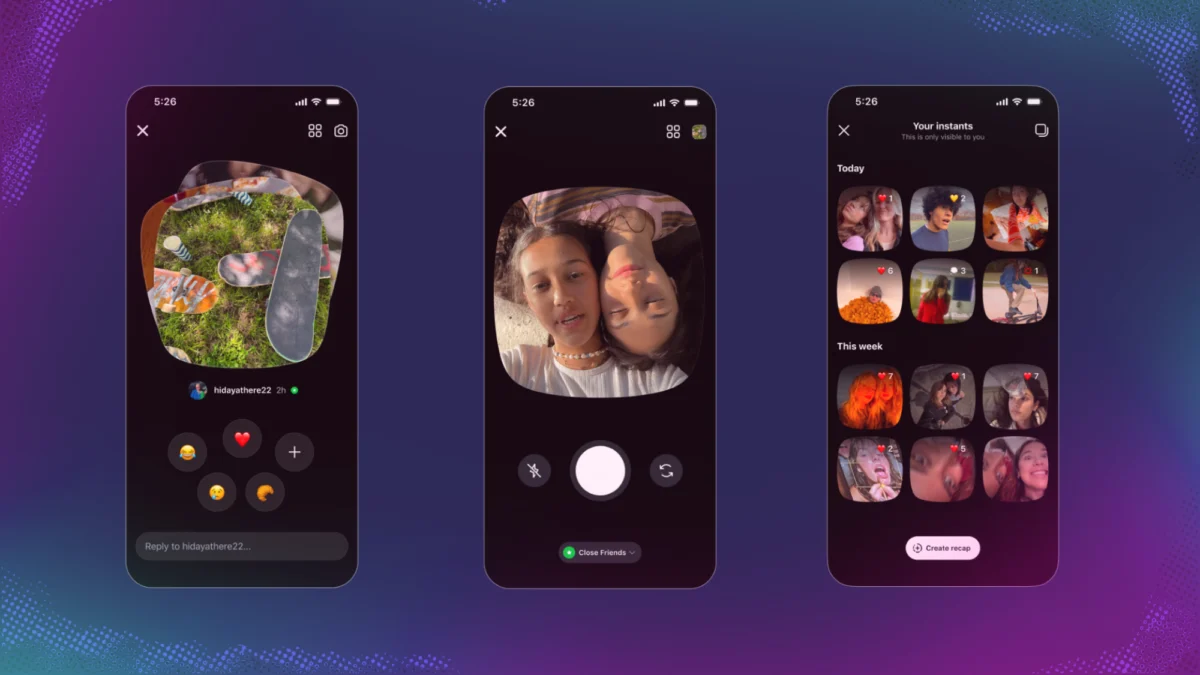
In an era defined by high-definition filters, meticulously curated grids, and the pressure of "aesthetic" perfection, Instagram has taken a counterintuitive turn. On Wednesday, the Meta-owned social media giant unveiled "Instants," a new ephemeral messaging tool designed to facilitate the rapid-fire exchange of unedited, raw photo dumps. By stripping away the ability to apply filters or digital enhancements, Instagram is leaning into a growing cultural appetite for authenticity, while simultaneously blurring the lines between private messaging and ephemeral content.
However, as the feature rolls out to users globally, it brings with it a complex web of privacy concerns, security realities, and questions regarding Meta’s broader strategy for its messaging infrastructure.
The Core Functionality: How Instants Work
At its most basic level, Instants are a batch-processing tool for direct messages. Users can select multiple photos from their device’s camera roll and send them as a collective "dump" to either their "Close Friends" circle or specific mutual followers.
The defining characteristic of an Instant is its volatility. Unlike standard DMs that persist indefinitely, Instants are designed to disappear. Once the recipient views the batch, the content vanishes from the conversation. If left unviewed, the content is automatically purged after 24 hours. While this mirrors the functionality of existing disappearing messages on platforms like Snapchat, Signal, and WhatsApp, Instagram has added a layer of permanence for the sender: a dedicated, private folder where sent Instants are archived, allowing users to later repurpose these raw snaps for their public Stories.
Beyond the "disappearing act," the interface is minimalist. Users can append text captions to their batches, but they are barred from applying the platform’s signature suite of editing tools. There is also an "undo" button, providing a brief window for users to retract a sent photo, acknowledging that the speed of the feature invites the potential for impulsive sharing.
A Chronology of Ephemerality: The Social Media Landscape
To understand why Instagram is pushing for more ephemeral content, one must look at the evolution of digital communication. The concept of "disappearing content" is not new, yet it has become the gold standard for modern social interaction.
- 2011-2013: The rise of Snapchat popularized the "ephemeral" model, fundamentally changing how teenagers and young adults communicated. It introduced the idea that not every digital interaction needed to be recorded for posterity.
- 2016: Instagram launched "Stories," a direct response to Snapchat’s dominance. By allowing users to post content that expired after 24 hours, Instagram shifted from a static "photo album" app to a dynamic "real-time" social network.
- 2017-2020: The integration of disappearing messages across Meta’s ecosystem (WhatsApp and Messenger) began, signaling a corporate-wide pivot toward privacy-focused communication.
- 2024: The introduction of Instants marks the next phase: moving away from the "broadcast" model of Stories toward the "intimate" model of DMs, specifically targeting the trend of "photo dumping"—sharing raw, unfiltered life updates with a select inner circle.
This chronology illustrates a clear trajectory: social media platforms are moving away from the public square and into the private inbox.
Supporting Data: Why "Raw" is Trending
The popularity of platforms like BeReal, and the rise of "photo dumping" on Instagram, suggest that users are experiencing "curation fatigue." According to recent industry sentiment surveys, Gen Z users, in particular, are increasingly skeptical of highly polished, professional-grade imagery.
Data shows that engagement rates on "authentic" or "lo-fi" content often outperform heavily edited imagery. By forcing users to send unedited photos, Instagram is effectively gamifying this trend. The "pile of photos" interface encourages a back-and-forth cadence, turning a static DM thread into a dynamic, temporary conversation. It creates a "comet-like" experience: a burst of information that is intense, fleeting, and gone before it can be over-analyzed.
Official Responses and Internal Policy
While Instagram has positioned this as a fun, creative tool, the company remains tight-lipped regarding specific technical details. Mashable and other outlets have reached out to Meta for clarification on the long-term storage of these "private" folders.

Meta’s official stance remains that these features are designed to "deepen connections" within smaller, trusted groups. However, the company’s internal moderation teams are still tasked with monitoring this content. This creates a friction point: while the content is designed to feel private and "incognito," it is still subject to the same community guidelines as any other post on the platform.
The Critical Implications: Privacy, Security, and Censorship
The introduction of Instants is not without controversy. There are four major areas of concern that users should consider before treating this feature as a "safe" space for private media.
1. The Myth of "Screenshot-Proofing"
Instagram has implemented technical barriers to prevent screenshots, but it is vital to remember that these are not absolute. Any user can employ a secondary device to photograph the screen of their phone. In the world of digital security, there is no such thing as an uncopyable image once it is displayed on an endpoint device. Relying on "disappearing" features to share sensitive or compromising material is a dangerous misconception that has led to countless instances of non-consensual image sharing.
2. The Illusion of Incognito
There is a common misunderstanding that "Close Friends" or private DM groups are hidden from Meta’s moderation systems. They are not. Instagram utilizes automated moderation tools to scan content for nudity, hate speech, and harassment across all platforms, including private DMs. If a user sends an image that violates Meta’s strict nudity policy, the system will flag it, regardless of the "ephemeral" nature of the message.
3. The Censorship Dilemma
Meta’s nudity guidelines have long been a subject of intense debate. By forcing "raw" photos into a system that monitors for policy violations, the platform is doubling down on its algorithmic policing. The "fine line between protection and censorship" is becoming increasingly blurred, and it is likely that many users will find their Instants flagged or their accounts restricted for photos that might otherwise be considered innocuous in a different context.
4. The Encryption Gap
Perhaps the most significant technical implication is the status of encryption. Instagram has officially moved away from default end-to-end encryption (E2E) for all DMs. Unlike platforms such as Signal or even WhatsApp’s E2E-enabled chats, Instants are processed under standard encryption. This means that while your photos are "disappearing" to the human eye, the data is still accessible to the platform’s infrastructure. For users who prioritize true privacy, this distinction is paramount.
Looking Ahead: A New Era of Interaction?
Instagram’s "Instants" is more than just a new button in the DM menu; it is an acknowledgment that the way we use social media is changing. The age of the perfectly polished grid is receding, replaced by a desire for the messy, unedited, and immediate.
However, as we embrace this new tool, we must remain vigilant. The allure of the "raw" should not blind users to the realities of the digital ecosystem they are inhabiting. Meta’s tools are designed to maximize engagement and time spent on the app, not necessarily to provide a secure, private, or truly anonymous environment.
As we continue to "throw mountains of snaps" back and forth, it is worth pausing to consider what remains behind when the screen goes dark. In the digital age, nothing is ever truly deleted—it is only hidden from view. Use the tool for its creative potential, but treat it with the same caution you would apply to any other digital footprint. The "Instant" may disappear, but the data—and the responsibility—stays with you.
 Nana Wu
 Neng Nana
 Reynand Wu
