

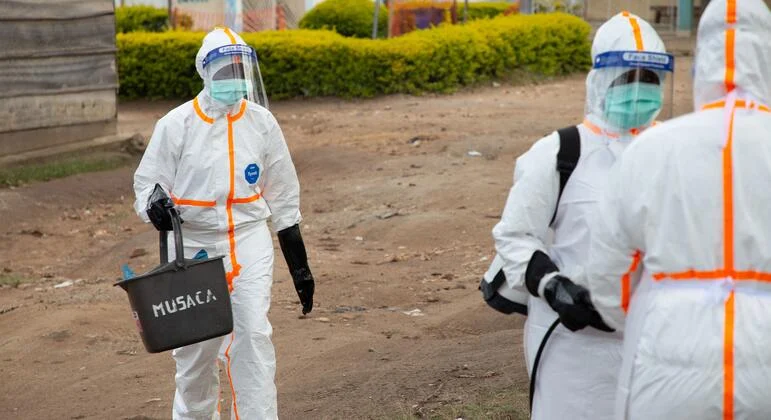
As of 17 June, the Democratic Republic of the Congo (DRC) finds itself gripped by an accelerating Ebola epidemic, a situation compounded by the fragile security landscape of the country’s eastern provinces. With 896 confirmed cases and a staggering 232 deaths reported across 31 health zones, the outbreak has moved beyond a localized health crisis, evolving into a regional emergency that now threatens neighboring nations. The crisis is further exacerbated by the ongoing conflict between Congolese authorities and the M23 armed group, creating a "perfect storm" of displacement, disease transmission, and limited access to life-saving care.
Main Facts: A Disease Without Borders
The geographic reality of the eastern DRC—a region defined by porous borders, active trade routes, and a massive population of forcibly displaced persons—has become the primary driver of the virus’s rapid spread. Uganda has already confirmed 19 cases and two deaths, serving as a grim indicator of the potential for the virus to leapfrog into Rwanda, Burundi, Tanzania, and South Sudan.
According to the World Health Organization (WHO), the intersection of high human mobility and political instability is creating unprecedented challenges for responders. The virus is moving through areas where millions are already struggling to survive, with more than two million people forcibly displaced in the region, including over 320,000 refugees. In these dense, unstable environments, traditional contact tracing and isolation measures are exceptionally difficult to implement, allowing the pathogen to outpace current containment efforts.
Chronology of the Escalation
The trajectory of this outbreak has been marked by rapid shifts, often dictated by the movement of armed groups.
- Initial Outbreak: Following the initial identification of the virus, the response was met with the harsh realities of eastern DRC’s security vacuum.
- Early June: Panic erupted in the vicinity of Mbau, approximately 20 kilometers from the outbreak’s epicenter in Beni. As armed group activities intensified, roughly 2,250 people fled toward Oicha, North Kivu.
- The Oicha Crisis: The influx into Oicha—a region already struggling to support over 14,300 displaced individuals—placed an immense strain on existing health infrastructure. This movement of people, while necessary for the survival of the civilians, created a high-risk scenario for further community transmission of Ebola.
- Mid-June: The WHO and its partners, including the UNHCR and IOM, shifted their strategy from purely clinical containment to a broader, regional preparedness model, acknowledging that the virus had effectively breached administrative boundaries.
Supporting Data: The Scale of the Response
The magnitude of the humanitarian response is unprecedented, involving a complex web of UN agencies, local governments, and non-governmental organizations.
Diagnostic and Medical Surge
WHO has deployed over 115 specialized health experts to the frontlines across the most affected provinces. These teams are supported by more than 110 metric tonnes of emergency medical supplies. Despite these efforts, Dr. Marie Roseline Belizaire, WHO interim regional emergency director, has cautioned that access constraints remain a significant hurdle. In many high-risk areas, the volatility of the security situation prevents medical teams from reaching patients, or worse, forces them to evacuate, leaving populations vulnerable.
Surveillance and Mobility Mapping
The International Organization for Migration (IOM) has emerged as a crucial player in the containment strategy. Recognizing that "human mobility patterns" are the primary vehicle for the virus, the IOM has conducted over one million health screenings to date. These operations are not limited to clinics; they occur at over 110 designated points of entry, along key transit routes, and at bustling border crossings. The strategy is to monitor the flow of people without completely severing the vital connections that allow communities to seek safety and work.
Official Responses: A Plea for Peace and Stability
The international community, led by WHO Director-General Dr. Tedros Adhanom Ghebreyesus, has issued urgent calls for a cessation of hostilities. Last month, Dr. Tedros explicitly called for a ceasefire in the eastern DRC, arguing that it is impossible to effectively battle a biological threat while the population is under fire.
UNHCR’s Regional Strategy
Dr. Allen Maina of the UNHCR has emphasized that the goal is to prevent cross-border transmission without infringing on the rights of those seeking asylum. The agency is actively working with host governments to strengthen surveillance, infection prevention, and hygiene infrastructure in refugee-hosting corridors. "We aim to prevent further cross-border transmission without impeding people seeking safety," Dr. Maina stated, highlighting the precarious balance between public health and human rights.
UNFPA: The Maternal Health Emergency
Perhaps the most harrowing statistic of the current crisis is the impact on pregnant women. According to the United Nations Population Fund (UNFPA), the mortality rate for infected pregnant women is as high as 90 percent, with perinatal mortality reaching 100 percent in some locations.
Noemi Dalmonte, UNFPA’s deputy country representative in Kinshasa, has categorized this as a "maternal health and protection emergency." The agency has deployed 153 midwives to the eastern DRC, tasked with providing essential prenatal, obstetric, and postnatal care. Beyond clinical support, these midwives are working to rebuild community trust—a vital component in ensuring that women seek medical help early, rather than hiding their symptoms due to fear or stigma.
Implications: A Conflict-Driven Health Disaster
The situation in the DRC demonstrates that infectious diseases in the 21st century cannot be managed as isolated clinical events. They are inextricably linked to geopolitics, poverty, and human rights.
The Security-Health Nexus
The Ebola outbreak is, in many ways, a casualty of the decades-long conflict between Congolese authorities and the M23 group. When families are forced to flee their homes due to mortar fire or militia threats, they move in massive, uncoordinated groups that are impossible to screen thoroughly. Every time a community is displaced, the chain of infection is potentially broken and rewritten, making it nearly impossible for epidemiologists to map the virus accurately.
The Economic and Social Toll
The disruption of trade and the closure of markets due to infection fears threaten to deepen the poverty that already plagues the region. Furthermore, the stigma associated with the disease often prevents people from seeking help, which in turn leads to home-based care. This cycle—the "silent" transmission of the virus within households—is a primary cause of the high death rates seen among women and children.
The Urgent Need for Funding
As the situation continues to evolve, UN agencies are sounding the alarm regarding funding gaps. The current operation requires a massive injection of capital to sustain screening operations, maintain the midwife deployment program, and secure logistics in conflict zones. Without an immediate increase in international financial support, the hard-won gains in screening and diagnostic capacity could be lost, allowing the outbreak to spiral into a broader regional pandemic.
Conclusion: A Race Against Time
The Ebola outbreak in the Democratic Republic of the Congo is a test of the international community’s resolve. As medical experts continue to push forward, the success of the mission relies on three pillars: the restoration of regional security, the continued monitoring of population movement, and the protection of the most vulnerable, particularly pregnant women and displaced communities.
The message from the ground is clear: the situation remains volatile and dangerous. With cases still being reported across multiple areas, the response must not only be sustained but accelerated. The world is watching to see if a combination of medical science and diplomatic pressure can contain a virus that thrives on the chaos of war. As the IOM and WHO continue their daily screenings, each individual stopped at a border or identified in a camp represents a potential life saved—and a potential link in the transmission chain broken. However, until the guns in eastern DRC fall silent, the virus will continue to find new paths to travel, and the international humanitarian effort will remain in a desperate race against time.
 Azzam Bilal Chamdy
 Pevita Pearce
 Iffa Jayyana
