

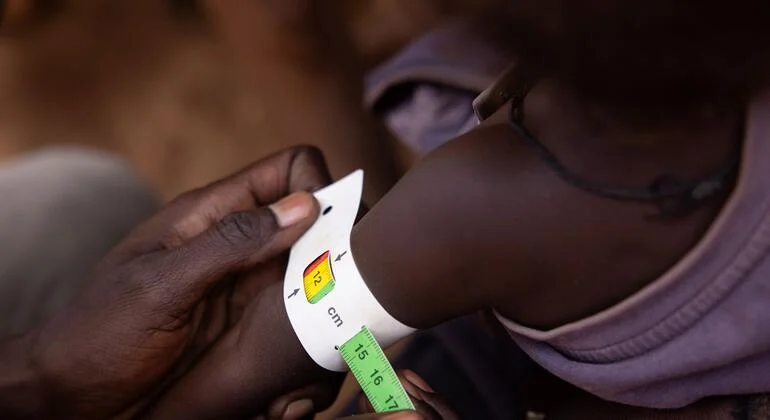
The international community is facing a catastrophic humanitarian emergency as a new report from the United Nations Food and Agriculture Organization (FAO) and the World Food Programme (WFP) warns that 13 countries and territories are sliding toward famine. The Hunger Hotspots report, released this Wednesday, paints a harrowing picture for the period between June and November 2026, noting that millions of people are being pushed to the brink of starvation by a toxic combination of relentless conflict, economic instability, and climate-driven disasters.
As the world’s most vulnerable populations face "impossible decisions" regarding basic survival, the global response is faltering. Humanitarian funding has plummeted by 59 percent since 2022, leaving aid agencies with a gaping deficit that threatens to turn regional food crises into a widespread humanitarian collapse.
The Epicenter of the Crisis: Main Facts and High-Risk Zones
The latest data identifies 13 specific geographic areas—including Sudan, South Sudan, Yemen, Palestine, Nigeria, and Somalia—where food insecurity is expected to deteriorate significantly. While the drivers of these crises vary by region, the common denominator across 12 of these 13 hotspots is persistent, violent conflict.
Sudan: The World’s Most Critical Crisis
Sudan currently represents the most severe hunger emergency on the planet. With famine risks already established in parts of Darfur and South Kordofan, the situation is projected to persist well into early 2027. Earlier this year, nearly 20 million people were classified as experiencing crisis-level hunger or worse. The breakdown of infrastructure and the displacement of millions have effectively halted food production and distribution, leaving the population entirely dependent on aid that is increasingly difficult to deliver.
Yemen and Palestine
Yemen remains locked in one of the world’s most protracted and serious hunger crises. Despite occasional windows of stability, structural economic collapse and ongoing hostilities have left over 18 million people facing severe food shortages. Similarly, in Palestine, the humanitarian landscape remains fragile. Even with the respite provided by the October 2025 ceasefire, the logistical challenges of delivering aid to a population of 1.6 million in desperate need of food support continue to threaten the stability of the region.
The Rise of New Hotspots
Nigeria and Somalia have recently been upgraded to the highest-risk category. In Nigeria, internal conflict and market disruptions have led to forecasts suggesting that parts of Borno State are on the cusp of catastrophic hunger. Meanwhile, Somalia is suffering from a "triple threat": persistent drought, recurring conflict, and a series of poor harvests, which have triggered famine risks in the Burhakaba District.
A Chronology of Declining Support
To understand the current emergency, one must look at the rapid erosion of the global humanitarian safety net over the past four years.
- 2022 – The Starting Point: Following the onset of major global geopolitical shifts and the initial surge in food and fuel prices, humanitarian funding reached a peak as the international community recognized the necessity of stabilizing fragile food systems.
- 2023 – The Funding Squeeze: As inflation gripped developed economies and geopolitical attention shifted, the initial wave of emergency funding began to stall. Aid agencies began to report "funding fatigue," as donor nations struggled to maintain high levels of humanitarian assistance.
- 2024 – The Widening Gap: The disparity between the number of people in need and the resources available began to grow exponentially. Humanitarian operations were forced to prioritize "life-saving" interventions over "long-term resilience" projects, such as sustainable farming support.
- 2025 – The Collapse: A massive 59 percent drop in funding compared to 2022 levels forced agencies to slash rations and terminate nutrition programs. This period also saw the October ceasefire in Palestine, which provided a temporary, albeit insufficient, window for aid delivery.
- 2026 – The Current Reality: We are currently in a period where only one-third of the "hyper-prioritized" funding requirements have been met. The result is a global food security framework that is effectively broken, leaving 266 million people facing severe food insecurity without a safety net.
Supporting Data: The Anatomy of a Man-Made Disaster
The statistics provided by the FAO and WFP are not merely numbers; they represent a breakdown of human civilization in the world’s most vulnerable regions.
Economic and Climate Catalysts
Beyond the scourge of war, the report highlights two primary "multipliers" that are accelerating the crisis:
- Economic Shocks: Currency devaluation, inflation of food prices, and the destruction of local markets have rendered food unaffordable for those who aren’t already displaced.
- Climate Variability: The report explicitly warns of an looming El Niño event, which is expected to bring erratic weather patterns—ranging from extreme drought to catastrophic flooding—to regions already struggling to produce food.
The Aid Deficit
The 59 percent decline in funding is perhaps the most damning indictment of current international policy. This represents a level of withdrawal not seen in nearly a decade. When agencies like the WFP are forced to prioritize who receives food, they are essentially forced to decide who is allowed to survive. This is not a logistical failure; it is a funding failure.
Official Responses: The Call for Political Will
The leadership of the UN agencies has been stark in its assessment of the current situation. During a briefing at UN Headquarters, Rein Paulsen, the FAO Director, delivered a blunt message: "As of June 2026, only about a third of the hyper-prioritized requirements for food security funding and activities globally has been met, forcing extremely difficult choices."
The "Act Early" Mandate
Beth Bechdol, Deputy Director-General of the FAO, emphasized that the global community is consistently failing to act at the necessary scale. She argued that investing in emergency agricultural programs is one of the most effective ways to mitigate hunger. By enabling families to produce their own food, agencies can reduce the long-term reliance on external aid—a strategy that is far more cost-effective than managing mass-starvation events after they have already begun.
The Human Toll
Carl Skau, Acting Executive Director of the WFP, captured the moral weight of the crisis, stating, "Conflict, shocks, and disasters are forcing families to make impossible decisions about who gets to eat and who goes to bed hungry." His remarks underscore that for millions, the "hotspot" status is not an abstract statistical risk, but a daily struggle for existence.
Implications: A Future in Jeopardy
The implications of failing to address these 13 hotspots are profound and global.
Disruption and Disease
The report notes that the situation could be further exacerbated by the ongoing Ebola epidemic in the eastern Democratic Republic of the Congo. Disease outbreaks thrive in populations weakened by malnutrition, and humanitarian corridors, already stretched thin, may be forced to close to prevent the spread of contagion, effectively cutting off thousands from life-saving assistance.
The Ripple Effect of Inaction
If these hotspots are not stabilized, the world will likely face:
- Increased Migration: As food security fails, displacement will inevitably increase, leading to regional instability and pressure on neighboring states.
- Long-term Developmental Setbacks: A generation of children suffering from severe malnutrition will face permanent cognitive and physical impairments, permanently lowering the developmental trajectory of their nations.
- Geopolitical Instability: History has shown that acute food insecurity is a primary driver of civil unrest and government collapse. By ignoring these warnings, the international community is effectively inviting further conflict.
The Path Forward
The FAO and WFP have issued a final, desperate plea for governments and donors to increase support immediately. The agencies stress that early intervention is not only more humanitarian but also more fiscally responsible. Without a surge in political commitment and a return to consistent, reliable funding, the world is on a trajectory to see hunger deepen across the most vulnerable communities on Earth.
The window for effective intervention is closing. As of mid-2026, the global food security architecture is holding by a thread. The question for the international community is no longer whether they have the capacity to act, but whether they possess the collective will to prevent a catastrophic loss of life.
 Lina Hope
 Asro
Asro
 Layla Zulfa
