

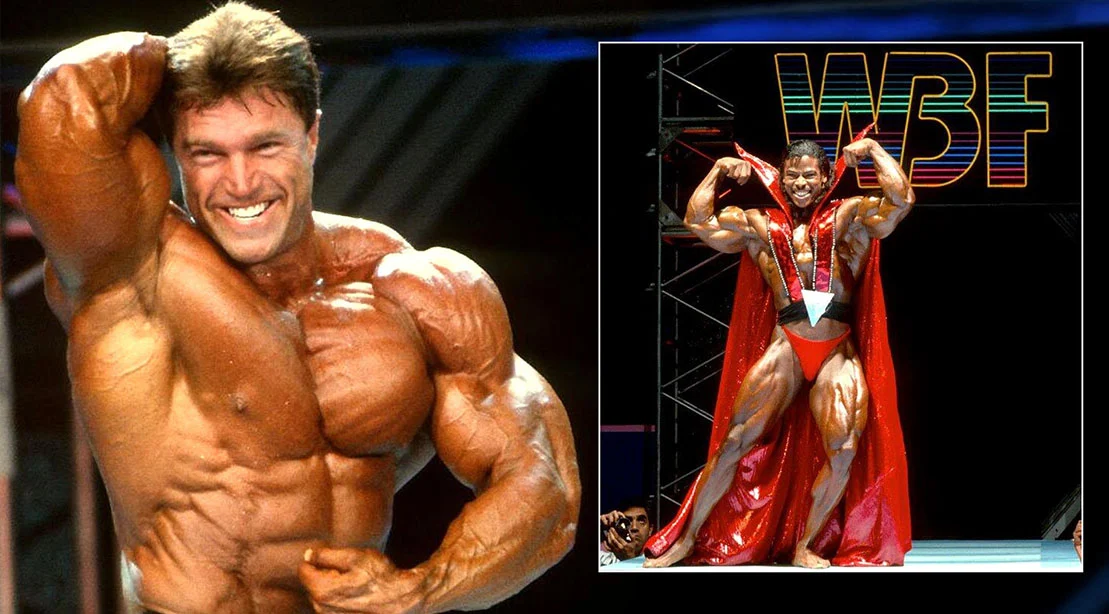
Vince McMahon is a man synonymous with the transformation of professional wrestling from a regional, territorial curiosity into a global, multi-billion-dollar entertainment juggernaut. His vision for the WWE (then WWF) revolutionized how audiences consumed combat sports. Yet, history is also littered with the debris of McMahon’s ambitious, often erratic, business expansions. Perhaps no venture captures his penchant for audacious, high-stakes, and ultimately catastrophic risk-taking quite like the World Bodybuilding Federation (WBF).
Thirty-five years after the inaugural WBF Championship, the legacy of this short-lived enterprise remains a fascinating case study in hubris. It serves as a reminder that the "larger-than-life" formula that worked in the squared circle could not simply be superimposed onto the world of competitive physique modeling.
The Genesis: A Brazen Incursion
McMahon’s entry into bodybuilding was not a subtle affair; it was an act of corporate warfare. In the late 1980s and early 1990s, the sport of bodybuilding was firmly under the control of Joe and Ben Weider and their International Federation of Bodybuilding and Fitness (IFBB). The Weiders had built a hegemony that spanned decades, backed by Muscle & Fitness magazine and the prestigious Mr. Olympia contest.
McMahon, emboldened by his success in wrestling, saw the IFBB as a stagnant entity ripe for disruption. He believed that the bodybuilding world lacked "personality" and "entertainment value." In a move that shocked the industry, McMahon chose the 1990 Mr. Olympia event in Chicago as the launchpad for his hostile takeover. He hired 1980s icon Tom Platz as a consultant and talent scout, effectively using the Weiders’ own stage to recruit their top stars. The stunt culminated in a group of models parading around the event in WBF-branded sashes, signaling that the "Vince McMahon machine" had officially arrived to challenge the status quo.
The Financial "Arms Race"
The most aggressive aspect of the WBF’s strategy was its attempt to buy market share. Historically, professional bodybuilders were largely reliant on contest winnings, sponsorships, and magazine modeling contracts. McMahon shattered this model by offering guaranteed, full-time contracts.
Reports from the era suggest that top-tier talent, including stars like Gary Strydom, Mike Christian, Aaron Baker, Berry DeMey, and Jim Quinn, were offered annual salaries upward of $400,000—a figure that was, at the time, significantly higher than what many WWE wrestlers were earning. These contracts came with lavish perks, including first-class travel and luxury accommodations.
The strategy was simple: starve the competition of its best assets. By 1991, the WBF had successfully poached a significant portion of the IFBB’s elite roster. On June 15, 1991, the inaugural WBF Championship took place, with Gary Strydom crowned the winner. For a brief moment, it appeared that the WBF might actually sustain its momentum.
The Lou Ferrigno Factor and the Steroid Crisis
The WBF’s most ambitious signing was undoubtedly Lou Ferrigno. Known globally for his role as the Incredible Hulk and his participation in the seminal documentary Pumping Iron, Ferrigno was the mainstream face the WBF desperately needed. McMahon reportedly secured him with a massive two-year, $900,000 contract.
However, the partnership was doomed by timing. McMahon was already under intense federal scrutiny regarding the widespread use of steroids within the professional wrestling industry. To mitigate public relations damage and legal exposure, McMahon felt compelled to implement a strict drug-testing policy for the WBF.
This policy proved to be the project’s Achilles’ heel. The sudden pivot to "natural" competition was viewed with deep suspicion by both fans and athletes. Lou Ferrigno, realizing that the brand’s credibility was hemorrhaging, backed out of his commitment. He instead made a high-profile return to guest-pose for the Weiders at the IFBB, effectively signaling the beginning of the end for the WBF’s mainstream legitimacy.
Chronology of a Collapse
The downward spiral of the WBF was swift and punctuated by a series of unfortunate events:
- September 1990: McMahon makes his aggressive entrance at the Mr. Olympia in Chicago.
- June 1991: The first WBF Championship takes place. While production values were high, critics noted that the athletic quality was beginning to fluctuate under the new testing regime.
- Late 1991: The loss of Lou Ferrigno leaves a void in the WBF’s marketing.
- Early 1992: In a desperate attempt to salvage the brand, McMahon pivots to cross-promotion, recruiting professional wrestler Lex Luger to join the WBF. The hope was that Luger’s physique would bridge the gap between wrestling and bodybuilding.
- June 1992: Days before the second WBF Championship, Lex Luger suffers a severe motorcycle accident, fracturing his arm and his ability to compete.
- June 15, 1992: The final WBF Championship show draws a pathetic 3,000 pay-per-view buys. Shortly thereafter, McMahon calls the Weiders to announce he is folding the organization.
The Spectacle vs. The Sport
The WBF failed because it fundamentally misunderstood its audience. McMahon attempted to "sports-entertain" a discipline that was, at its heart, about aesthetic perfection and discipline. The WBF shows were characterized by gaudy stage sets, forced personas, and attempts to turn individual poses into theatrical skits.
While the "rock concert" atmosphere was intended to broaden the appeal, it alienated hardcore bodybuilding fans who viewed the routines as gimmicky and disrespectful to the sport. The combination of declining physique quality due to drug testing and a lack of genuine, organic interest meant that the WBF never stood a chance against the deep-rooted loyalty the bodybuilding community felt toward the IFBB.
Implications and The "Death" of the WBF
The end of the WBF was as dramatic as its inception. At the 1993 IFBB Night of Champions, the industry collectively mocked the defunct project. Dorian Yates, one of the greatest bodybuilders of all time, took the stage dressed as a preacher. He was surrounded by tombstones bearing the names of former WBF athletes, who then "rose from the dead" to rejoin the IFBB ranks. It was the ultimate symbolic victory for the Weiders.
Financially, the failure was staggering. Estimates suggest McMahon lost over $15 million on the project—a massive sum in the early 90s. The failure of the WBF served as a sobering lesson for McMahon: dominance in one entertainment sector does not guarantee transferability to another.
Legacy: A cautionary Tale
Looking back at the 35-year anniversary, the WBF is often cited as one of the most audacious blunders in sports business history. It was a project defined by ego, excessive spending, and a failure to respect the culture it sought to disrupt.
While Vince McMahon would go on to survive his legal woes and lead the WWE to unprecedented heights in the "Attitude Era," the WBF remains a permanent mark on his professional record. It serves as a reminder that even the most powerful promoters are not immune to the laws of supply, demand, and industry authenticity. For the athletes caught in the middle—many of whom had their careers disrupted by the WBF’s rapid rise and fall—the venture remains a strange, expensive, and ultimately hollow chapter in the history of iron and muscle.
 Lina Hope
 rifanmuazin
 Laily UPN
