

In the world of extreme fitness and outdoor adventure, the line between casual hobbyist and elite athlete is often drawn by one’s ability to respond when opportunity knocks. For Dylan Efron, the 34-year-old reality star and outdoor enthusiast, maintaining peak physical conditioning is not about vanity—it is about readiness. Whether it is a spontaneous game of tennis, a competitive round of beach volleyball, or an intense rock-climbing expedition in the desert, Efron has cultivated a lifestyle designed to ensure he never has to turn down an adventure because his body isn’t up to the task.
The "Always Ready" Philosophy
Efron’s approach to health is rooted in versatility. Rather than hyper-specializing in one discipline, he prefers to remain a "jack-of-all-trades" athlete. "I like to play sports," Efron explains in an exclusive interview with Muscle & Fitness. "There’s a tennis court outside my hotel just now, and I went out there and was trying to hit balls. I play beach volleyball and soccer, and I try to just play as many sports as I can to stay loose."
This functional fitness mentality is the bedrock of his climbing success. When he set his sights on the iconic red rocks of Moab, Utah, in May 2026, he knew that the technical demands of the climb would require more than just general gym strength. "I just want to be ready for when those opportunities come," he notes. "Like that rock climbing adventure—it’s a hard enough one that if I wasn’t in shape, I wouldn’t be able to do it."
A Chronology of Exploration: From Childhood Curiosity to Moab
The journey to the Moab peaks was not an overnight success but a culmination of a lifetime spent outdoors. Growing up alongside his brother, Zac Efron, the two developed an early appreciation for the natural world. "I’ve been going to national parks since I was a kid," Efron recalls. "Seeing people out there and thinking, ‘Oh, I want to do that someday,’ and then realizing, ‘Oh, I could do that today if I want.’"
2017–2018: The Initial Itch
Efron’s formal interest in high-stakes climbing began during a period between 2017 and 2018 when he tackled his first major climb in Utah. As an avid hiker, he found the transition to vertical terrain natural but challenging. This period served as his "apprentice" phase, where he learned the basics of rope management, grip strength, and the psychological fortitude required to hang hundreds of feet above the ground.
May 2026: The Moab Milestone
By May 2026, Efron was ready to push his limits. His goal was to conquer a nearly 90-degree climb in Moab—a feat that required intense preparation. The expedition consisted of a one-hour approach hike, a three-hour technical climb, and a one-hour hike back out. Having been told by a skeptical climbing guide early on that he "wasn’t good enough" for such a technical route, Efron channeled that negativity into a rigorous six-day-a-week training regimen, effectively proving his critics wrong.
The Mechanics of a Successful Climb: Training and Strategy
While many might assume a professional climber spends hours on a wall daily, Efron’s training is surprisingly grounded in traditional gym work. He avoids over-complicating his routine, focusing instead on consistent, heavy lifting and functional strength.
Training Breakdown
Efron’s training philosophy centers on balance and big-muscle recruitment. His weekly split is carefully curated:
- Lower Body: Targeted twice a week to handle the grueling approach hikes and stabilization required for climbing.
- Back and Pulling Strength: Recognizing that climbing is a "pulling" sport, Efron prioritizes back development over chest and arms.
- Cardiovascular Health: During the Moab trek, Efron recorded heart rates reaching 160 beats per minute during the approach. This highlighted the necessity of high-intensity interval training (HIIT) to ensure he wasn’t exhausted before he even touched the rock.
- Flexibility and Grip: Efron notes that his fingers are often the first to fail. He embraces the development of calluses as a "badge of honor" and emphasizes that consistency—not natural talent—is the secret to finger strength.
The Mental Game
Perhaps the most significant hurdle for Efron was not physical, but psychological. "The highline, I was very scared," he admits. "The rock climb, the first pitch was harder than I thought, so I got a little nervous because I started to cramp up."
His method for overcoming this fear is simple: "climbing smarter." By focusing on breathing, rhythmic movement, and electrolyte management, he was able to quiet the internal anxiety that accompanies exposure. He draws a direct parallel to his time on Dancing with the Stars, where he wasn’t the most naturally gifted dancer, but he was undeniably the most dedicated to the practice.
Fueling the Machine: The Role of Nutrition
Nutrition serves as the invisible tether holding Efron’s performance together. In recent years, Efron has leaned into a protein-heavy diet, a shift informed by blood work he received while training for triathlons.
"When I was younger, I would work out without having protein," he reflects. "I did some blood work and realized I needed more protein, more specifically whey protein, and realized the power of nutrition in general."
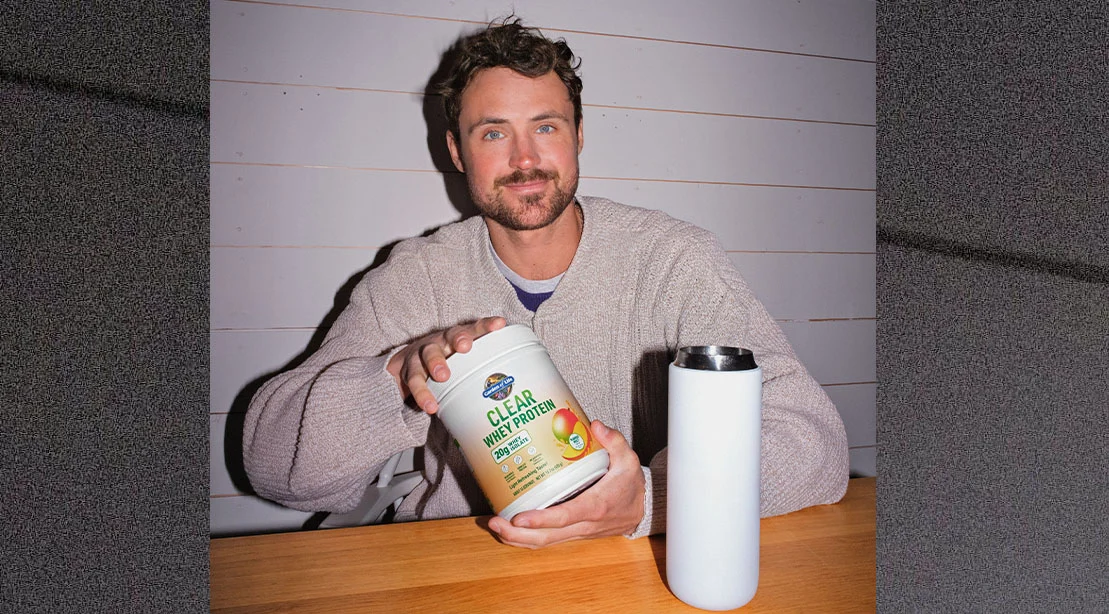
His partnership with Garden of Life to launch their Clear Whey Protein and smoothie kits represents an alignment between his lifestyle and his brand. He views supplementation as a way to ensure his body is "nourished" after the systemic stress of a high-intensity climb. By prioritizing rapid-absorption proteins, he is able to recover faster, allowing him to maintain his grueling six-day training week without succumbing to fatigue or injury.
Implications of the "Always Ready" Mindset
Dylan Efron’s trajectory serves as a template for the modern fitness enthusiast. His story suggests that elite performance is not about having a perfectly curated gym routine, but about building a body capable of handling the unexpected.
Implications for Fitness Enthusiasts:
- Consistency Over Talent: Whether it is dancing or rock climbing, the ability to show up and put in the hours will consistently outperform natural ability.
- Functional Redundancy: By training for multiple sports (soccer, volleyball, tennis), Efron ensures that his tendons, ligaments, and cardiovascular system are robust enough to handle the eccentric loading of rock climbing.
- Psychological Resilience: Efron’s willingness to tackle things he is "bad at" is what ultimately makes him good at them. By observing highliners and deciding to learn, he demonstrates that "fear is just a skill to be managed."
Conclusion
As Efron continues to explore the intersections of extreme sports and lifestyle fitness, he remains a testament to the idea that our physical limits are often defined by our mental constraints. From the red rocks of Moab to the dance floor, his journey underscores a simple, powerful truth: if you stay ready, you never have to get ready. With his sights likely set on his next high-altitude challenge, Efron isn’t just climbing rocks; he’s climbing a ladder of personal growth, one callus and one protein shake at a time.
 Lina Hope
 rifanmuazin
 Laily UPN
