

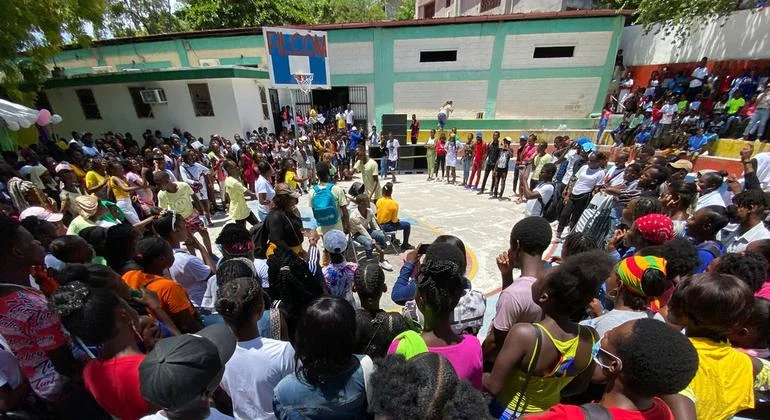
In a world where the drumbeat of conflict often dominates the global discourse, the quiet, persistent work of preventing violence rarely captures the front page. Yet, for the past 20 years, the United Nations Peacebuilding Fund (PBF) has served as the bedrock of international stability, acting as a proactive guardian against the erosion of peace. As the UN marks its inaugural Peacebuilding Week, the international community is taking a rare, reflective look at its "financial instrument of first resort"—a mechanism designed not just to end wars, but to stop them from ever starting.
Main Facts: The Anatomy of a Global Safeguard
The UN Peacebuilding Fund is, at its core, the organization’s primary investment vehicle for sustaining peace. Established by UN Member States in 2005, the Fund operates on a simple but radical premise: it is far more effective, humane, and cost-efficient to invest in the precursors of stability than it is to fund the humanitarian fallout of a full-scale war.
Unlike traditional development aid, which often involves bureaucratic layers and protracted timelines, the PBF is engineered for agility. It is a "financial instrument of first resort," designed to capitalize on fragile windows of opportunity where political will exists to avert conflict. Its operational mandate is defined by three pillars: speed, flexibility, and national ownership. By operating through a collaborative network of over 20 UN agencies—alongside local governments, civil society, and grassroots organizations—the PBF ensures that its interventions are not imposed from the outside, but are rooted in the specific needs of the local population.
A Chronology of Impact: Twenty Years of Resilience
The trajectory of the PBF over the last two decades reflects the evolving nature of global conflict.
2005: The Inception
The Fund was established in the wake of the 2005 World Summit, recognizing that the UN’s peacebuilding architecture was chronically underfunded and reactive. Member States sought a dedicated mechanism to support countries emerging from conflict or teetering on the brink.
2006–2010: The Formative Years
The initial phase focused on post-conflict recovery. In countries like Sierra Leone, the PBF began testing its model, focusing on the integration of former combatants and the restoration of state institutions following devastating civil wars.
2011–2015: Scaling and Specialization
As the nature of conflict shifted toward internal societal tensions and climate-induced resource competition, the PBF began to pivot toward localized prevention. Its work in the Kyrgyzstan-Tajikistan borderlands during this period served as a pilot for how water and land management could be used as a tool for cross-border cooperation rather than a spark for violence.
2016–2020: The Gender Mandate
Recognizing that peace is not sustainable without half the population, the Fund underwent a strategic shift to become one of the world’s largest financiers of women-led peace initiatives. This era saw the PBF prioritize the role of women as mediators and negotiators in regions as diverse as the Democratic Republic of the Congo and Colombia.
2021–2025: Global Expansion and Digital Transformation
The PBF has expanded its reach to over 75 countries. Today, it integrates new challenges—such as climate change adaptation and the digital spread of misinformation—into its peacebuilding strategies, ensuring that the "building blocks" of peace remain relevant in a rapidly changing geopolitical landscape.
Supporting Data: The Quantitative Evidence of Peace
The effectiveness of the PBF is best understood through its reach and its targeted investment strategies. Over the past 20 years, the Fund has channeled resources into some of the most volatile regions on Earth.
- Global Footprint: Projects have spanned more than 75 countries and territories.
- The Gender Dividend: A significant percentage of the Fund’s total portfolio is explicitly dedicated to the Women, Peace, and Security agenda. By backing grassroots women’s organizations, the Fund has amplified the voices of thousands of women in mediation efforts that might otherwise have been excluded from formal state-level negotiations.
- Preventative Impact: Data indicates that for every dollar invested in prevention, the international community saves exponentially more in potential peacekeeping missions and humanitarian aid.
- Catalytic Funding: The PBF often acts as a "de-risker." By providing the initial capital for innovative, high-risk projects, it paves the way for larger multilateral donors to join in, effectively leveraging its modest initial investment into much larger, sustainable programs.
Official Perspectives: Why Prevention is the Future
UN officials and member states have increasingly cited the PBF as the "connective tissue" of the international system. In high-level discussions, the sentiment remains clear: the traditional model of "peacekeeping" (sending troops to maintain a ceasefire) is a reactive necessity, but "peacebuilding" (strengthening the foundations of society) is the long-term solution.
"The Fund fills a unique gap," notes one senior UN official. "Other donors are often bound by rigid mandates or risk-aversion. The PBF is designed to move quickly, to take risks, and to support initiatives that address the root causes of tension—whether that is youth unemployment, land disputes, or the lack of justice for wartime atrocities."
The consensus among stakeholders is that the PBF serves as a vital signal of international solidarity. When the Fund enters a country, it demonstrates that the international community is committed to the long-term success of that society, which in turn encourages local actors to engage in the difficult work of dialogue and reconciliation.
Implications: The Moral and Economic Imperative
The implications of the PBF’s existence are profound, touching upon the ethical responsibility of the global community to safeguard human life before it is lost.
The Cost of Inaction
The most striking implication of the PBF’s success is the contrast it provides to the status quo of global military spending. When conflict erupts, the costs—in terms of lives lost, refugees displaced, and infrastructure destroyed—are astronomical. By investing in "soft" infrastructure—dialogue workshops, local governance, and women’s mediation groups—the PBF provides a high-return, low-cost alternative.
Fostering Inclusive Societies
The Fund’s emphasis on "inclusive societies" has shifted the definition of peace. No longer viewed simply as the absence of war, peace is now understood to be an active, ongoing process of negotiation and integration. Whether it is supporting indigenous women seeking justice in Guatemala or helping youth in Sierra Leone find paths to economic empowerment rather than violence, the PBF proves that peace is built from the bottom up.
The Challenge of the Future
Despite its successes, the PBF faces mounting challenges. Global instability is rising, and the complexity of modern conflict—often involving non-state actors, transnational criminal networks, and climate-related stressors—requires even greater funding and more agile strategies. The increasing demand for PBF support is not just a sign of rising conflict; it is a sign that more nations are finally realizing that prevention is the only viable path forward.
Conclusion: A Legacy of Quiet Progress
The UN Peacebuilding Fund may not always make the headlines, but its impact is felt in the lives of millions who are living in, or working toward, stability. From the bike riders promoting peace in Sierra Leone to women in the Central African Republic navigating the delicate process of trauma healing, the PBF provides the tools, the trust, and the resources to turn the tide against violence.
As we look toward the next two decades, the lesson of the PBF is clear: peace is not a destination to be reached, but a state of being that must be constantly cultivated. By choosing to invest in the humanity, resilience, and potential of local communities, the United Nations is not just managing conflict; it is, bit by bit, building a world where the need for such emergency intervention will, one day, be a thing of the past. The Fund stands as a testament to the idea that, even in the most fragile settings, the architecture of peace can be built by those who are most invested in its survival.
 Lina Hope
 Asro
Asro
 Layla Zulfa
