

Main Facts: The New Alchemy of Audience Attention
As the digital and traditional entertainment industries converge on the Anaheim Convention Center for VidCon next week, the atmosphere is charged with a specific kind of electricity. It is "sunny with a chance of development deals," a climate driven by a phenomenon industry insiders are calling "Backsession" fever. This fervor, surrounding breakout hits like Kane Parsons’ The Backrooms and Curry Barker’s Obsession, marks a pivotal shift in how intellectual property is discovered and monetized.
However, the underlying driver of these success stories is not merely a "YouTube-to-Hollywood" pipeline. Instead, the invisible variable dictating modern success is a concept known as compression.
In the context of media, compression is the concentration of audience attention into a window short enough that a critical mass of people experiences the content simultaneously. This simultaneity creates cultural relevance—the "watercooler moment"—which, in a fragmented digital landscape, has become the rarest and most valuable commodity in entertainment. Whether it is a viral horror short on YouTube or a high-octane vertical drama on TikTok, the goal is the same: to release years of pent-up audience pressure into a singular, explosive moment of distribution.
Chronology: From Park City to the Palm of Your Hand
The mechanics of compression have evolved significantly over the last three decades, moving from prestigious physical locations to algorithmic digital storefronts.
The Sundance Era (1990s – 2010s):
For decades, the Sundance Film Festival served as the industry’s primary compression mechanism. It created a finite temporal and geographical window where buzz could be manufactured. When a film like The Blair Witch Project or Little Miss Sunshine debuted, the concentration of critics, buyers, and tastemakers in one snowy town created a high-pressure environment that forced bidding wars and immediate cultural relevance.
The YouTube Emergence (2010s – 2022):
Creators like Kane Parsons (The Backrooms) and Curry Barker (Obsession) spent years building "homegrown compression." They did not wait for a festival; they cultivated fanbases over years of consistent output. When their tentpole projects finally "opened," the pressure of millions of loyal subscribers watching at once created a release of energy that traditional Hollywood could no longer ignore.
The Vertical Revolution (2023 – Present):
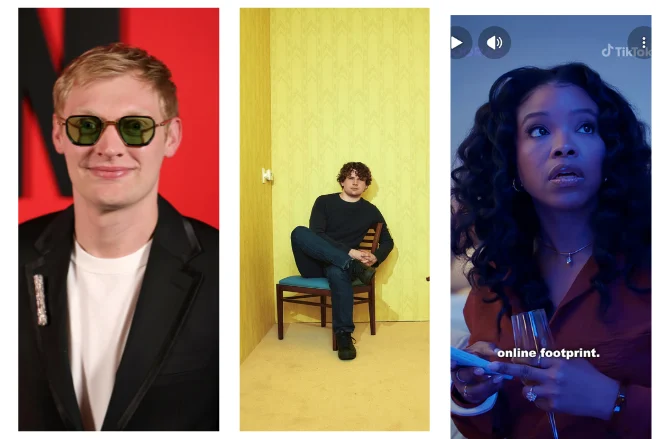
The current phase involves "engineered compression." Media moguls like Issa Rae are now utilizing platforms like TikTok to distribute "vertical dramas." In May 2024, Rae’s Hoorae Media released Screen Time, a 57-episode series where each episode lasts only 60 to 90 seconds. By using paid amplification and a strict promotional calendar, the production achieved 350 million global views in just four weeks. This represents the cutting edge of compression: content designed specifically to be "cut down" and distributed across feeds to ensure maximum simultaneity.
Supporting Data: The Math of the Modern Hit
The shift toward compression is backed by staggering data that highlights the struggle between "new hits" and "evergreen catalogs."

According to a recent report by Luminate, the streaming landscape is increasingly dominated by "catalog titles"—older shows and movies that viewers watch out of comfort or habit. At Disney+ and Hulu, the majority of viewing hours are spent on library content. Even Netflix, the industry leader in manufacturing "industrial-scale FOMO" (Fear Of Missing Out), sees catalog titles accounting for 60% of its viewership.
The data suggests a paradox: while streamers offer massive catalogs across an infinite timeline, this "ubiquity" actually works against the creation of hits. A film that is available "forever" lacks the urgency of a film that must be seen "now."
In contrast, the success of Screen Time demonstrates the power of the "clip-first" model. Hoorae Media co-founder Ian Schafer notes that the value delivered to advertisers and the industry is not found in the long-form stream itself, but in the vignettes and cutdowns. By controlling who sees these clips and when, they manufacture a "hit" through artificial scarcity of attention.
Official Responses: Marketing as Nuclear Physics
Industry leaders are beginning to view marketing not as a creative endeavor, but as a branch of physics. Ian Schafer of Hoorae Media describes the process of creating a hit as "distribution compressed into a finite period of time."
"It’s marketer as physicist," the article suggests. Success requires creating a "critical mass" by concentrating enough "fissionable material"—in this case, audience attention—in a small enough space to sustain a chain reaction. If that same material is spread too thinly over a long period, no reaction occurs, and the project fades into the "content graveyard" of a streaming library.
Schafer’s strategy assumes that nothing goes viral organically anymore. Instead, the window is compressed artificially through smart media buys and promotional calendars. Once the "simultaneity" is generated, the organic behavior of the audience (sharing, commenting, meme-making) follows as a secondary effect.
Implications: The Future of Filmmaking and the Independent Ecosystem
The rise of digital-native compression has profound implications for the future of the film industry, particularly for independent creators.
1. The Decline of Traditional Festivals
The Sundance dynamic has lost much of its power because streamers—the primary buyers—have opted out of the compression game. When a streamer buys a festival hit, they often drop it into a massive library where it competes with Grey’s Anatomy reruns. Sellers blame Sundance’s move to online platforms for diluting the "pressure" of the festival, but the reality is that the business model of streaming favors "ubiquity" over "urgency."

2. The Rise of the "Digital Circus"
The success of projects like The Amazing Digital Circus (a Fathom Entertainment release) proves that online audiences, once compressed over time, will eventually show up at physical movie theaters. This "digital-native" story trajectory is becoming a more reliable path to the box office than the traditional indie circuit.
3. The Importance of Post-Production Sound
As creators move from YouTube to the big screen, technical hurdles remain. Max Cea, a prominent voice in film commentary, notes that "bad sound" is the ultimate killer of independent films. As compression strategies bring amateur creators into professional spaces, the investment in post-production sound mixes will be the final step that turns a "viral moment" into a "cinematic hit."
4. The Resilience of the Art Form
Despite the collapse of traditional independent film ecosystems, there is a growing "case for optimism." As veteran producer Ted Hope suggests, it is much easier to kill an industry than an art form. The "Backsession" moment proves that while the gates of Hollywood are changing, the passion for storytelling remains. Artists who build their own businesses—such as the former drug dealer-turned-media mogul profiled by the Wall Street Journal—are proving that one can eschew gatekeepers entirely by mastering their own compression strategies.
5. The Financial Reality of Festivals
For many filmmakers, the festival circuit remains a dream, but data-driven studies by experts like Stephen Follows reveal a darker economic reality. Many festivals rely heavily on entry fees for survival, creating a system that isn’t nearly as altruistic as it appears. This makes the "homegrown compression" of YouTube and TikTok even more attractive to new filmmakers who wish to avoid the "submission fee trap."
Conclusion: The New Gatekeepers
As agents "lurk behind every pillar" at VidCon next week, they are searching for the next Kane Parsons or Issa Rae. But they aren’t just looking for talent; they are looking for creators who understand the physics of the modern audience.
The "Backrooms" and "Obsession" phenomena are not anomalies; they are the blueprint. In a world of infinite content, the only thing that matters is the ability to make a million people look at the same thing at the exact same time. Compression is no longer just a marketing tactic—it is the product itself. For the next generation of filmmakers, the challenge is clear: build your own window, create your own pressure, and don’t wait for the industry to give you a "state of grace." Create it yourself.
 Jia Lissa
 Lina Irawan
 Iffa Jayyana
