

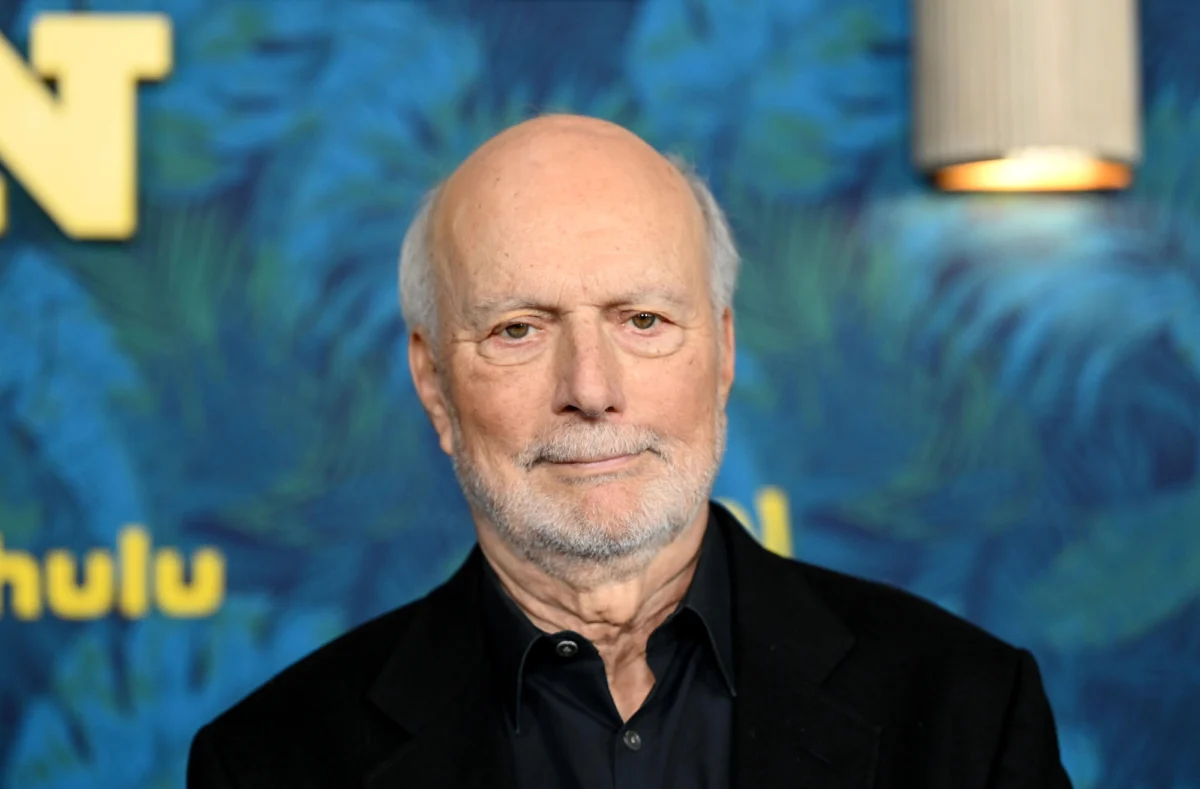
LOS ANGELES — James “Jimmy” Burrows, the transformative director and producer who served as the primary architect of the American multi-camera sitcom for over half a century, has died at the age of 85. His passing marks the end of an era for network television, leaving behind a staggering body of work that includes foundational hits such as Cheers, Taxi, Frasier, and Friends.
The news was confirmed by Burrows’ family in a statement released through People on Tuesday. “We celebrate the extraordinary life and enduring legacy of James ‘Jimmy’ Burrows, who passed away peacefully today surrounded by his loving family,” the statement read. “For more than five decades, Burrows was one of the most influential and beloved directors in television history. As a legendary director, mentor, and creative force, he helped shape generations of comedy and brought immeasurable joy to audiences around the world.”
Burrows is survived by his wife, Debbie Easton, and his four children. His death resonates across an industry where the phrase “Directed by James Burrows” became a gold standard for quality, synonymous with sharp pacing, sophisticated character work, and the enduring warmth of the live-audience format.
A Chronology of a Comedy Titan: From Broadway to the Small Screen
The Formative Years and the MTM Revolution
Born on December 30, 1940, in Los Angeles, James Burrows was destined for a life in the theater. He was the son of Abe Burrows, the legendary playwright and director responsible for Broadway masterpieces like Guys and Dolls and How to Succeed in Business Without Really Trying. Growing up in the shadow of Broadway royalty, the younger Burrows developed an innate understanding of comedic timing and stagecraft.
After graduating from the Yale School of Drama, Burrows initially pursued a career in the theater, working as a stage manager. However, his trajectory changed in the mid-1970s when he pivoted to television. He found a home at MTM Enterprises, the production company founded by Mary Tyler Moore and Grant Tinker, which was then reinventing the sitcom as a character-driven art form.
Burrows honed his craft on the sets of The Mary Tyler Moore Show and The Bob Newhart Show. These early experiences solidified his belief that a sitcom should function like a "22-minute play." In 1978, he achieved a major breakthrough as the primary director for Taxi, where he directed 75 of the show’s 114 episodes. His work on Taxi displayed his unique ability to manage large ensemble casts and find the humanity within eccentric characters.
The Era of ‘Cheers’ and the Birth of a Creator
In 1982, Burrows transitioned from director to co-creator, joining forces with brothers Glen and Les Charles to launch Cheers. Set in a Boston bar "where everybody knows your name," the show became a cultural phenomenon and a masterclass in the "will-they-won’t-they" romantic dynamic between Sam Malone (Ted Danson) and Diane Chambers (Shelley Long).
Burrows directed 237 episodes of Cheers over its 11-season run. The show became the bedrock of NBC’s "Must See TV" lineup and established Burrows as the industry’s most sought-after pilot director. If a network wanted a show to succeed, they hired Jimmy Burrows to set the tone.

The Pilot King and the 90s Boom
Throughout the 1990s and early 2000s, Burrows’ influence was inescapable. He directed the pilots for a staggering array of hits, including Frasier, Friends, Will & Grace, NewsRadio, and 3rd Rock from the Sun.
His contribution to Friends was particularly vital; he directed the first several episodes, helping the young cast find their rhythm and chemistry. In Will & Grace, Burrows took on a role rare for a high-level director: he directed every single episode of the show’s original eight-season run, as well as its later revival. This level of consistency helped the show become a landmark in LGBTQ+ representation on television.
Supporting Data: The Burrows Legacy by the Numbers
James Burrows’ career is not just defined by the quality of his work, but by its sheer volume and the critical acclaim it garnered.
- Emmy Dominance: Burrows was nominated for a Primetime Emmy Award every year between 1980 and 2005 (with the exception of 1997). Over his career, he earned 11 Emmy Awards and a record-breaking number of nominations for directing and producing.
- DGA Recognition: The Directors Guild of America (DGA) honored him with five awards. In 2014, he received the DGA’s Lifetime Achievement Award for Distinguished Achievement in Television Direction.
- The 1,000-Episode Milestone: In 2016, NBC aired a star-studded tribute to Burrows to celebrate his 1,000th episode of television directed—a feat virtually unmatched in the history of the medium.
- The "Pilot Touch": Burrows directed over 50 pilots that went on to become full series. His success rate in the pilot stage made him the most influential "midwife" of modern comedy.
The Burrows Philosophy: "The Theatre Rat"
What separated Burrows from his peers was his steadfast refusal to let the camera dictate the comedy. While single-camera sitcoms like The Office or Modern Family eventually gained popularity by using the camera as a character, Burrows remained a devotee of the multi-camera, proscenium-style setup.
“I’m not a film director. The camera, I leave that to Spielberg and Scorsese,” Burrows told IndieWire in a 2023 interview. “I’m a theatre rat. I stage a play every week… and then my camera comes in and covers it. I understand characters, I understand what’s funny, I understand the essence of keeping it moving and keeping the energy going. It’s all theatrical. If it doesn’t happen on that stage, it’s never gonna happen on film.”
This philosophy meant that Burrows prioritized the "energy" of the room. He was famous for moving around the set, whispering notes to actors between takes, and ensuring that the live audience’s laughter was earned through genuine performance rather than technical trickery.
Official Responses and Industry Tributes
The passing of James Burrows has triggered a wave of grief and gratitude from the actors and writers whose careers he helped launch.
The Cast of ‘Cheers’ (Joint Statement):
"Jimmy was our captain. He created a space where we could fail, where we could play, and where we could become a family. He didn’t just direct a show; he built a home for us in that basement bar in Boston. We are heartbroken."

Kelsey Grammer (Frasier):
"I always said that Jimmy Burrows was the man who taught me how to be funny on camera. He saw things in the character of Frasier Crane that I hadn’t even realized were there. He was a giant of the medium and a dear friend."
David Crane and Marta Kauffman (Creators of Friends):
"There is no Friends without Jimmy Burrows. He gave those six actors the foundation they needed to become the icons they are today. He was the master of the craft, and we were lucky to have him in the director’s chair for those early, formative days."
Implications: The Future of the Multi-Cam Sitcom
The death of James Burrows comes at a precarious time for the multi-camera sitcom. Once the dominant form of American entertainment, the "laugh track" comedy has struggled to find its footing in the era of streaming and prestige single-camera dramedies.
Burrows was acutely aware of this shift. In his final years, he remained a vocal defender of the format, arguing that the communal experience of a live audience creates a unique type of magic that cannot be replicated in a closed set. His work on the Frasier reboot for Paramount+ and the multi-cam Midcentury Modern starring Nathan Lane proved that he believed the format still had life.
The Stance on AI and Creative Integrity
Burrows also became an unexpected voice in the fight for creative integrity against the encroachment of Artificial Intelligence. In Season 3 of Lisa Kudrow’s The Comeback, Burrows played a fictionalized version of himself ("Jimmy the Director"). In a poignant monologue that many now view as his final artistic testament, his character delivered a scathing critique of AI-generated content, calling it "creatively bankrupt" and an insult to the human messiness that makes comedy work.
His final message to the industry was clear: Comedy is a human endeavor. It requires the "theatre rat" mentality—the ability to stand on a stage, look an actor in the eye, and find the truth in a joke.
A Legacy That Will Not Fade
As television continues to evolve, the lessons taught by James Burrows remain the blueprint for successful storytelling. He taught the industry that the funniest moments come from character, not punchlines; that the best sets are those that feel like a family; and that a well-timed pause is more powerful than any special effect.
James Burrows didn’t just direct television; he defined the way a generation laughed. While the "theatre rat" has left the stage, the echoes of the laughter he orchestrated will remain in the rafters of television history forever.
 Jia Lissa
 Lina Irawan
 Iffa Jayyana
