

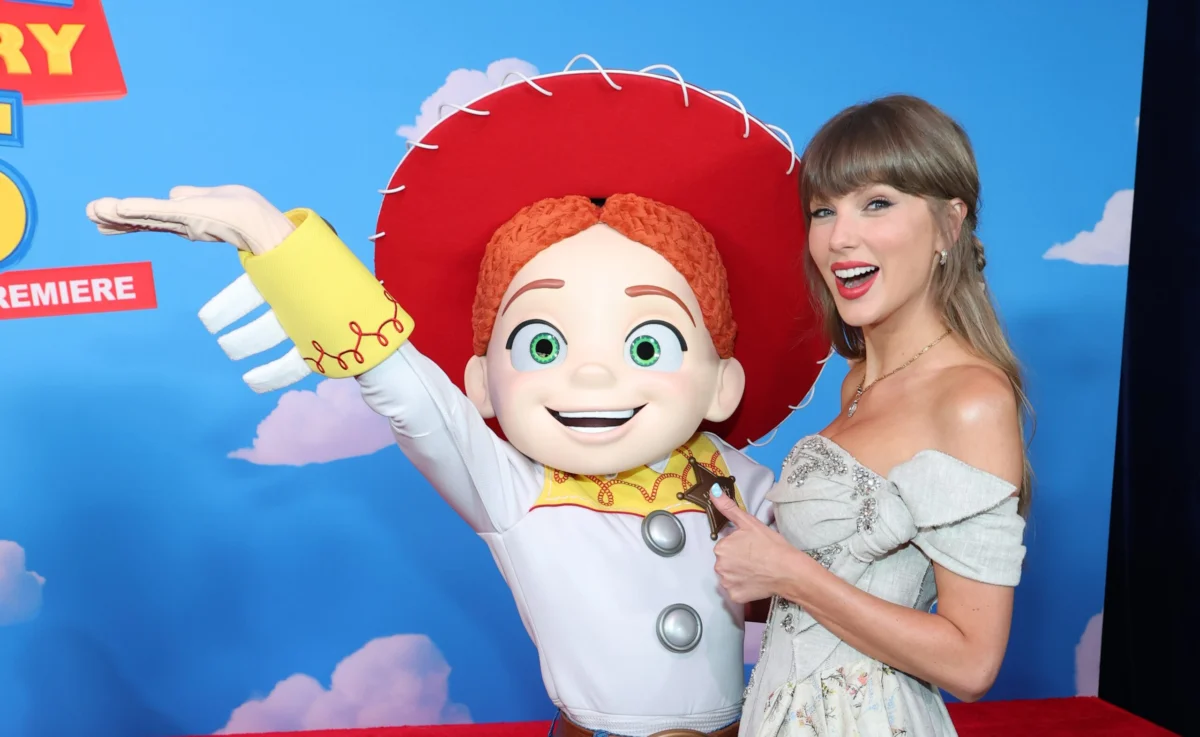
LOS ANGELES — The intersection of cinematic royalty and pop music hegemony has reached a new zenith. As of Monday, June 22, 2026, Pixar’s Toy Story 5 has officially claimed the throne at the global box office, securing the highest-grossing opening weekend of the year. Simultaneously, the film’s lead single, "I Knew It, I Knew You," written and performed by Taylor Swift, has debuted at Number 1 on the Billboard Hot 100.
On paper, the film is a juggernaut. It possesses the commercial momentum, the critical pedigree, and the star power of the world’s most influential musician. However, as the industry begins to look toward the 99th Academy Awards, a significant debate is brewing among Oscar prognosticators. Despite the song’s chart dominance, its placement within the film—relegated to the end credits rather than integrated into the narrative—may prove to be a formidable hurdle in Swift’s long-standing quest for an Academy Award for Best Original Song.
Main Facts: A Dual-Threat Powerhouse
The success of Toy Story 5 represents a revitalized era for Pixar Animation Studios. Following a period of experimental releases and direct-to-streaming pivots, the fifth installment of the $3 billion franchise has proven that audiences remain deeply invested in the lives of Woody, Buzz, and particularly Jessie.
The film’s financial performance is mirrored by the cultural impact of its soundtrack. "I Knew It, I Knew You," produced by Swift alongside her frequent collaborator Jack Antonoff, has been described by critics as a "bouncy, timeless return to form," echoing the simplistic, folk-adjacent charm of Randy Newman’s original franchise staples.
However, the "frontrunner" status currently attributed to Swift is being met with a note of caution from Academy insiders. The central tension lies in the distinction between a "hit song" and a "cinematic song." While "I Knew It, I Knew You" captures the emotional resonance of the film’s themes, it serves as an atmospheric bookend rather than a narrative engine.
Chronology: From Newman’s Piano to Swift’s Synthesizers
To understand the stakes of the Toy Story 5 soundtrack, one must look at the thirty-year musical legacy of the franchise.
- 1995: Randy Newman establishes the sonic identity of the series with "You’ve Got a Friend in Me." The song becomes an instant classic and receives an Oscar nomination, though it loses to Disney’s Pocahontas.
- 1999: Toy Story 2 introduces Jessie the Cowgirl. The heart-wrenching montage soundtracked by "When She Loved Me" (performed by Sarah McLachlan) sets a high bar for how music can elevate animated storytelling. It remains one of the most cited examples of song-driven narrative in Pixar history.
- 2010: Newman finally secures a Best Original Song Oscar for "We Belong Together" from Toy Story 3, cementing the franchise’s status as an Academy favorite.
- 2022-2023: Taylor Swift intensifies her pursuit of Academy recognition. Her song "Carolina" from Where the Crawdads Sing earns a shortlist spot and leads to her invitation to join the Academy’s Music Branch.
- Early 2026: Rumors of a Swift-Pixar collaboration surface, promising a song that captures the "soul" of the franchise’s new chapter.
- June 2026: Toy Story 5 premieres. While the film focuses heavily on Jessie’s emotional journey—a callback to her Toy Story 2 origins—the Swift track is noticeably absent from the film’s actual scenes, playing only as the lights come up in theaters.
Supporting Data: Chart Success vs. Academy Preference
The disparity between commercial success and Oscar gold is well-documented. While Swift’s "I Knew It, I Knew You" is currently the most-streamed song in the world, the Academy’s Music Branch has historically favored "functional" songwriting.

The "Integration" Factor
In the last decade, winners for Best Original Song have shared a common trait: they are indispensable to the films they inhabit.
- "Shallow" (A Star Is Born): A pivotal plot point where the protagonist’s career is launched.
- "What Was I Made For?" (Barbie): An emotional climax that provides the answer to the film’s central philosophical question.
- "Naatu Naatu" (RRR): A high-energy sequence that serves as a core action set-piece.
Swift’s track, by comparison, functions as a thematic summary. While its lyrics—dealing with recognition, legacy, and the return to one’s roots—align perfectly with Jessie’s discovery that her original owner named her daughter after her, the absence of the song during that specific scene is viewed by some as a missed opportunity for "Oscar-level" integration.
Box Office Performance
Toy Story 5 has shattered expectations, earning an estimated $185 million in its domestic opening weekend. This puts it ahead of previous 2026 heavyweights. Traditionally, a "Best Picture" contender or a massive box office hit provides a "coattail effect" for its original song. However, popularity does not always translate to a Music Branch nomination. In 2025, several chart-topping hits from major blockbusters failed to make the final five because they were deemed "incidental" to the film.
Official Responses: The Campaign Strategy
Sources close to the Toy Story 5 Oscar campaign suggest that Disney and Pixar are not deterred by the song’s placement.
"The song is the emotional afterglow of the experience," said one campaign consultant who requested anonymity. "When audiences hear those lyrics after seeing Jessie find her legacy, the connection is instantaneous. We aren’t worried about eligibility; we are focused on the resonance."
Indeed, recent Academy rule changes have clarified the status of post-credits songs. While there was a movement among some members to disqualify songs that do not appear during the body of the film, the current rules allow for end-credits songs provided they are the first song heard during the credits and contribute to the overall artistic vision of the movie.
Swift herself has remained characteristically quiet about the Oscar buzz, focusing instead on the song’s connection to the fans. However, her induction into the Music Branch in 2023 means she is now being judged by her peers—a group known for prioritizing technical composition and narrative utility over celebrity status.

Implications: A Wide-Open Race in 2026
With six months remaining in the 2026 calendar year, the Best Original Song category is far from settled. The current landscape suggests that Swift is the frontrunner by default, but several challengers are on the horizon.
The Competitive Field
- Lady Gaga & ‘The Devil Wears Prada 2’: Despite Gaga’s pedigree, the two songs she penned for the sequel failed to crack the Top 40. However, both are performed in-character during the film, which could appeal more to the Music Branch’s sensibilities.
- Charli XCX & ‘Wuthering Heights’: While the soundtrack is a critical darling, its "Brat-adjacent" energy may be too avant-garde for the more traditionalist members of the Academy.
- Jesse Eisenberg’s ‘The Debut’: This indie project is rumored to feature a raw, acoustic track that plays a central role in the film’s climax. Eisenberg, fresh off his success with A Real Pain, could be the dark horse in the race.
- Miley Cyrus & ‘Avatar: Fire and Ash’: Last year proved that even James Cameron’s spectacles don’t guarantee a song nomination (as seen with the previous Avatar snubs), but Cyrus remains a potent threat if the song is utilized well.
The Swift Legacy
For Taylor Swift, an Oscar is more than just another trophy for her shelf; it is the final piece of the "EGOT" puzzle (provided she secures a Tony in the future). Her previous attempts—"Safe and Sound" (2012), "Beautiful Ghosts" (2019), and "Carolina" (2022)—all fell short of the final nomination.
The irony of Toy Story 5 is that Swift has written a song that feels like a Pixar classic. It has the "timeless" quality that Randy Newman championed for decades. Yet, the decision to play it over the credits rather than during Jessie’s pivotal homecoming may be the very thing that keeps the Academy from fully embracing it.
Conclusion: The Road to the 99th Oscars
As Toy Story 5 continues its dominant run in theaters, the narrative surrounding "I Knew It, I Knew You" will likely shift from its commercial stats to its artistic merits. The film has successfully passed the torch to Jessie, and Swift has provided the anthem for that transition.
Whether the Music Branch will reward a song that audiences only hear while walking toward the exit remains the season’s biggest question. In a year where big-budget musicals are scarce, Swift’s star power is undeniable. But as history has shown, the Academy’s Music Branch marches to the beat of its own drum—one that usually beats loudest when the music and the movie are inseparable.
 Jia Lissa
 Lina Irawan
 Iffa Jayyana
