

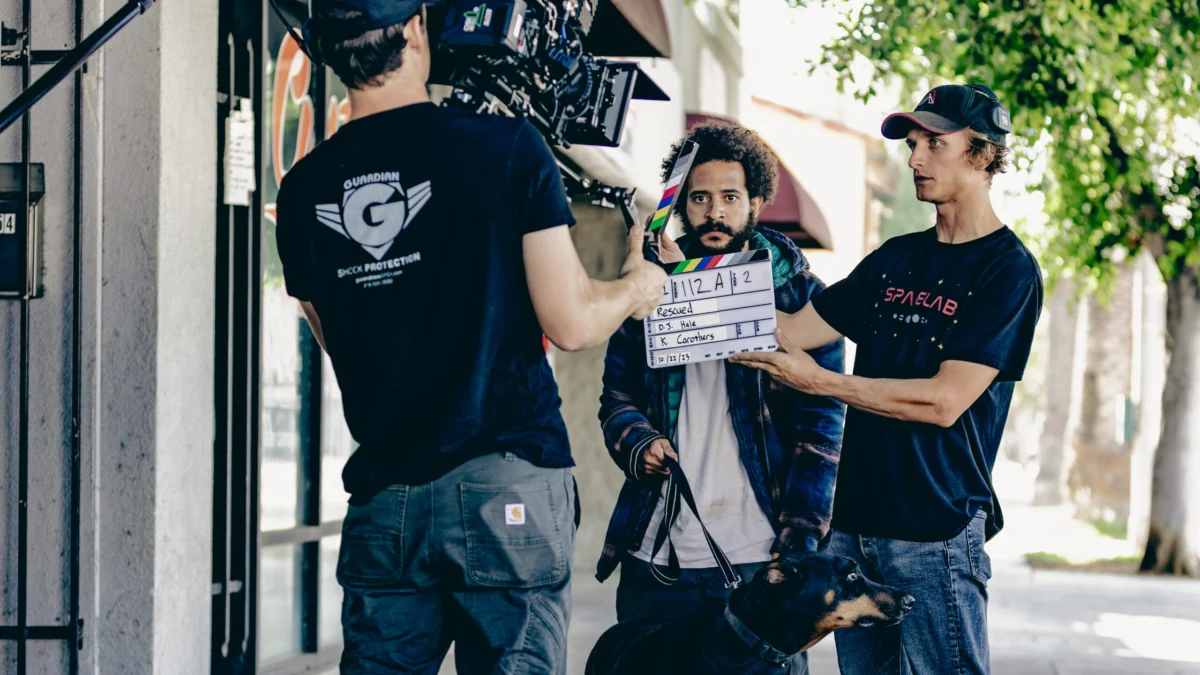
The landscape of independent cinema is often painted with the broad strokes of romanticism—a world of "undiscovered" geniuses and serendipitous breaks. However, the reality for most creators is a grueling marathon of financial risk and personal sacrifice. This reality is epitomized in the journey of D.J. Hale and his debut feature film, Rescued. Scheduled to premiere at the prestigious Dances with Films: Los Angeles festival, the film stands as a testament to survival, not just as a narrative on screen, but as a production that nearly collapsed under the weight of its own ambition.
Main Facts: A Multi-Hyphenate’s Desperate Gamble
D.J. Hale is the quintessential independent filmmaker of the modern era. On Rescued, he serves as the writer, producer, director, editor, and lead actor. This "total authorship" was born less out of ego and more out of economic necessity. Starring alongside Hale are established industry names, including Lindsey Shaw (Ned’s Declassified School Survival Guide), David DeLuise (Wizards of Waverly Place), and Elissa Kapneck.
Despite the presence of recognizable talent, the film’s journey to the screen was anything but a standard Hollywood trajectory. Funded through a combination of predatory personal loans, maxed-out credit cards, crowdfunding, and the meager earnings of a gig-economy driver, the production hit a literal dead end 18 days into a 26-day shoot. With the bank account emptied and debt mounting, the project sat in a state of suspended animation until an extraordinary act of friendship from creative partner Dominique Smith provided the necessary "rescue" to bring the film to the finish line.
Chronology: From Vagabond Beginnings to the Los Angeles Premiere
The Foundation of Resilience (Pre-2022)
The tenacity required to finish Rescued was forged long before the first camera rolled. D.J. Hale’s background is one of systemic poverty. Moving to Los Angeles at age 21, Hale arrived with the perspective of a "vagabond," having spent his youth bouncing between the homes of friends and family with his mother and sister. This lack of a financial safety net meant that any pursuit of the arts would have to be self-subsidized.
The Funding Phase (2022)
After completing the script for Rescued in 2022, Hale faced the "indie wall": no studio backing and no private equity. He turned to the only resources available to a working-class creator in the 21st century. He spent ten-hour days driving for Uber and Lyft, funneling every cent of profit into a production fund. He supplemented these earnings with high-interest loans and credit card debt, essentially betting his entire financial future on a single 90-minute reel of film.

The Day 18 Collapse (Production Phase)
The production launched with a 26-day schedule. For the first two weeks, the momentum held. However, the hidden costs of independent filmmaking—permits, equipment rentals, craft services, and insurance—quickly outpaced the budget. On the 18th day, the production ground to a halt. Hale found himself with $200 in his bank account and eight critical shooting days remaining. The film was effectively dead, and Hale was left with a mountain of debt and an unfinished product.
The Hiatus and the "Rescue" (2023-2024)
For months, the project languished. Hale returned to full-time work and continued his gig-economy hustle, but the pace of savings was too slow to settle existing debts, let alone restart production. The turning point occurred when Dominique Smith, a long-time collaborator who had experienced his own period of homelessness while living with Hale, received a legal settlement from a past work injury.
In a move that defied conventional financial wisdom, Smith chose to invest a significant portion of his settlement into the film. This infusion of capital allowed the production to clear its debts and return to the set. When those funds were eventually exhausted, Smith joined Hale in the gig-economy grind, driving for rideshare apps to ensure the post-production costs were covered.
The Finish Line (2024)
The film was finally completed through this dual-effort of "belief-based funding." The result is a feature-length drama that secured a coveted spot at Dances with Films: Los Angeles, a festival known for championing truly independent voices.
Supporting Data: The Economic Reality of Indie Film
The story of Rescued highlights a growing trend in the film industry where the "middle class" of filmmaking has effectively vanished.

- The Funding Gap: According to industry reports, "ultra-low-budget" SAG-AFTRA features typically require between $200,000 and $300,000 to maintain professional standards. Hale attempted to bridge this gap with personal debt, a move that is increasingly common but carries a high failure rate.
- The Gig Economy Subsidy: A 2023 survey of independent filmmakers in Los Angeles suggested that over 60% of creators under the age of 35 rely on "side hustles" like Uber, DoorDash, or freelance editing to fund their own IP.
- The Debt Trap: Hale’s admission of taking out loans he "had no plans of repaying any time soon" reflects a desperate "all-in" strategy. In the current economic climate, the interest on such debt can often exceed the potential ROI of a small-scale film distribution deal.
Official Responses and Perspectives
The Filmmaker’s Stance
In his account of the production, D.J. Hale emphasizes that Rescued is a product of "stubborn refusal to quit." He rejects the "fairy tale" version of filmmaking, stating, "Independent filmmaking often leaves scars that audiences never see. What appears on screen as a finished feature is often the result of years of uncertainty, sleepless nights, and second jobs."
The Creative Partner’s Role
Dominique Smith’s contribution has been framed by Hale not as a business transaction, but as an act of profound creative loyalty. Smith’s decision to risk his only financial windfall on an unfinished indie film serves as a critique of the traditional investment model, which often ignores projects without "guaranteed" returns.
The Festival Context
Dances with Films (DWF) has long positioned itself as a "no-politics" festival, focusing on the quality of the work rather than the pedigree of the producers. The inclusion of Rescued in their 2024 lineup validates Hale’s "belief-funded" model, suggesting that the raw output of the film met the high standards of a festival that receives thousands of submissions annually.
Implications: The Future of "Blue-Collar" Filmmaking
The saga of Rescued raises critical questions about who gets to tell stories in the modern era. When the barrier to entry is not just talent, but the ability to survive extreme debt and housing instability, the demographic of filmmakers risks becoming limited to those with generational wealth.
The Democratization vs. The Financial Barrier
While digital technology has democratized the tools of filmmaking (cameras and editing software), the infrastructure of filmmaking (labor, insurance, and locations) remains prohibitively expensive. Hale’s story suggests that "democratization" is an illusion if creators are forced into poverty to exercise their voice.

The Power of "Micro-Collectives"
The success of Rescued may serve as a blueprint for other indie creators. By moving away from the search for "The Big Investor" and toward "Micro-Collectives"—small groups of creators who pool their meager resources and labor—filmmakers can bypass the gatekeepers of traditional finance. However, this model relies heavily on the type of "extraordinary loyalty" demonstrated by Dominique Smith, which is a rare and volatile resource.
A New Narrative of Success
For D.J. Hale, success is no longer defined by a multi-million dollar distribution deal, but by the mere existence of the film. The title Rescued has become a double entendre: it refers to the plot of the film, but also to the production itself, which was saved from the brink of obscurity by a friend’s sacrifice.
As the lights dim at the Dances with Films premiere in Los Angeles, the audience will see a polished feature film. They will see Lindsey Shaw and David DeLuise delivering performances in a professionally edited drama. What they won’t see are the ten-hour Uber shifts, the maxed-out credit cards, and the legal settlement that was traded for a chance at a dream. In the end, Rescued is more than a movie; it is a document of what it costs to be an artist in the 21st century.
 Jia Lissa
 Lina Irawan
 Iffa Jayyana
