

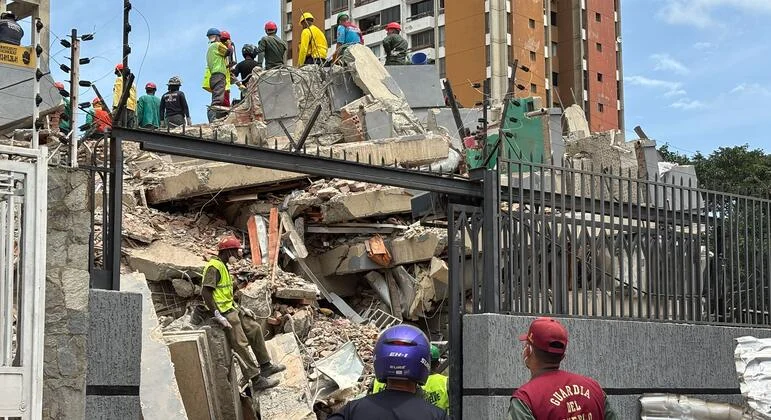
CARACAS, Venezuela – A profound humanitarian crisis is unfolding in Venezuela following a catastrophic seismic event that has left the nation in shock. On Wednesday, June 25, 2026, the country was struck by two powerful, consecutive earthquakes, triggering widespread devastation, a mounting death toll, and a desperate, large-scale international rescue operation spearheaded by the United Nations.
As of early Thursday morning, local authorities have confirmed at least 164 fatalities, a figure expected to rise significantly as search-and-rescue teams navigate the precarious wreckage of residential and commercial structures in the capital city of Caracas and its surrounding suburbs.
The Seismic Event: A Double Blow
The geological instability began without warning. At approximately midday on Wednesday, the Earth’s crust fractured, releasing immense energy. Seismologists have confirmed that the initial tremor, measuring a magnitude of 7.2, was followed less than a minute later by a more powerful 7.5-magnitude earthquake.
This "double-tap" seismic activity proved particularly lethal. The first quake severely weakened the structural integrity of already vulnerable buildings, and the second, more powerful shock caused these structures to collapse entirely. The rapid succession of the quakes left residents with virtually no time to evacuate or reach safety, turning the bustling urban landscape into a scene of dust, debris, and profound human tragedy.
Chronology of the Disaster
- Wednesday, 12:00 PM (Local Time): The first 7.2-magnitude earthquake strikes. Panic ensues as office buildings sway and residents flee into the streets.
- Wednesday, 12:01 PM: A second, more intense 7.5-magnitude quake hits, causing catastrophic collapses across the metropolitan area.
- Wednesday, 2:00 PM: The Venezuelan government declares a state of emergency. Local emergency services are overwhelmed by the sheer scale of the destruction.
- Wednesday, 6:00 PM: United Nations agencies, including OCHA (Office for the Coordination of Humanitarian Affairs), finalize plans for rapid deployment of personnel and aid.
- Thursday, 4:00 AM: The first international rescue teams and emergency supplies begin arriving at Simón Bolívar International Airport.
- Thursday, 8:00 AM: Full-scale rescue operations are underway as search teams utilize thermal imaging and canine units to locate survivors trapped under the rubble.
Supporting Data and Technical Assessment
The seismic intensity of these events places them among the most significant natural disasters in Venezuela’s recent history. The proximity of the epicenters to the densely populated Caracas metropolitan area has exacerbated the impact.
Geologists note that the shallow depth of the quakes significantly amplified the shaking felt on the surface. Preliminary damage assessments indicate that older, unreinforced masonry structures have suffered the highest rates of collapse, while critical infrastructure—including power grids and water supply lines—has been severely compromised.
As of this writing, hospitals in Caracas are reporting an influx of hundreds of patients suffering from crush injuries, respiratory issues due to dust inhalation, and acute trauma. The local healthcare system, already under strain, is struggling to provide necessary care as electricity outages further complicate surgical procedures and the preservation of medical supplies.
Official Responses and Global Solidarity
The United Nations has moved swiftly to mobilize support. Secretary-General António Guterres issued a statement early Thursday morning expressing his deep condolences to the families of the victims and the government of Venezuela.
"The United Nations stands in firm solidarity with the people of Venezuela at this heart-wrenching time," the statement read. "We are mobilizing all available resources to support the national rescue efforts and provide life-saving assistance to those affected by this tragedy."
UN Agency Deployment
- OCHA: Coordinating the arrival of Urban Search and Rescue (USAR) teams from neighboring nations and international partners.
- WHO/PAHO: Deploying emergency medical kits and trauma surgeons to assist local hospitals.
- UNICEF: Setting up temporary shelters and supply chains for displaced children and their families, prioritizing the distribution of clean water and hygiene kits.
- WFP: Assessing food security needs and establishing mobile kitchens in the most affected districts.
Government officials from across Latin America and the European Union have also pledged material and technical support, with specialized rescue teams currently in transit to Caracas.
Implications: A Nation at a Crossroads
The aftermath of the June 25th earthquakes presents significant long-term implications for Venezuela. Beyond the immediate loss of life, the economic and social fabric of the country faces a grueling recovery period.
Infrastructure and Urban Planning
The disaster has reignited debates regarding the seismic resilience of Venezuelan infrastructure. Many of the buildings that collapsed were built before strict modern seismic building codes were strictly enforced. As the country moves toward the reconstruction phase, experts argue that a "build back better" approach will be essential to ensure the capital can withstand future seismic activity.
The Humanitarian Outlook
For the thousands who have been displaced, the coming weeks will be defined by uncertainty. With power grids down and communication networks intermittent, tracking the missing remains a logistical nightmare. The UN’s primary focus in the immediate future will be the "Golden Hour" window—the critical period for rescuing survivors trapped under the rubble—followed by the systematic provision of shelter, sanitation, and trauma counseling.
Economic Strain
The cost of reconstruction is expected to be immense. Venezuela’s existing economic climate makes this disaster particularly difficult to navigate, as the nation will rely heavily on international loans, grants, and humanitarian aid to rebuild. International financial institutions are currently monitoring the situation to determine how best to provide fiscal relief without further destabilizing the local economy.
How to Stay Informed
In the wake of this disaster, information management is critical. The United Nations advises the public to rely on official channels for updates to avoid the spread of misinformation, which can often hinder rescue operations.
- UN News App: The primary source for real-time updates from the field, including lists of missing persons centers and donation portals.
- Official Bulletins: Local government authorities in Caracas are broadcasting periodic updates via radio and text-alert systems.
- Global Support: For international observers and those wishing to assist, the UN encourages monitoring the OCHA website for approved humanitarian corridors and verified donation platforms.
As the sun rises over a scarred and silent Caracas, the resilience of the Venezuelan people is being tested as never before. The international community remains on high alert, with thousands of rescue workers working around the clock in the hope of finding more survivors in the dark, shifting voids of the city’s ruined heart.
The task ahead is monumental, but the rapid, coordinated international response provides a beacon of hope in what is undeniably one of the darkest days in the nation’s history.
For those seeking to stay connected with the ongoing situation, please download the UN News app on iOS or Android and subscribe to the daily Humanitarian Aid newsletter to receive verified updates directly to your inbox.
 Siti Muinah
 Lina Hope
 Asro
Asro
