

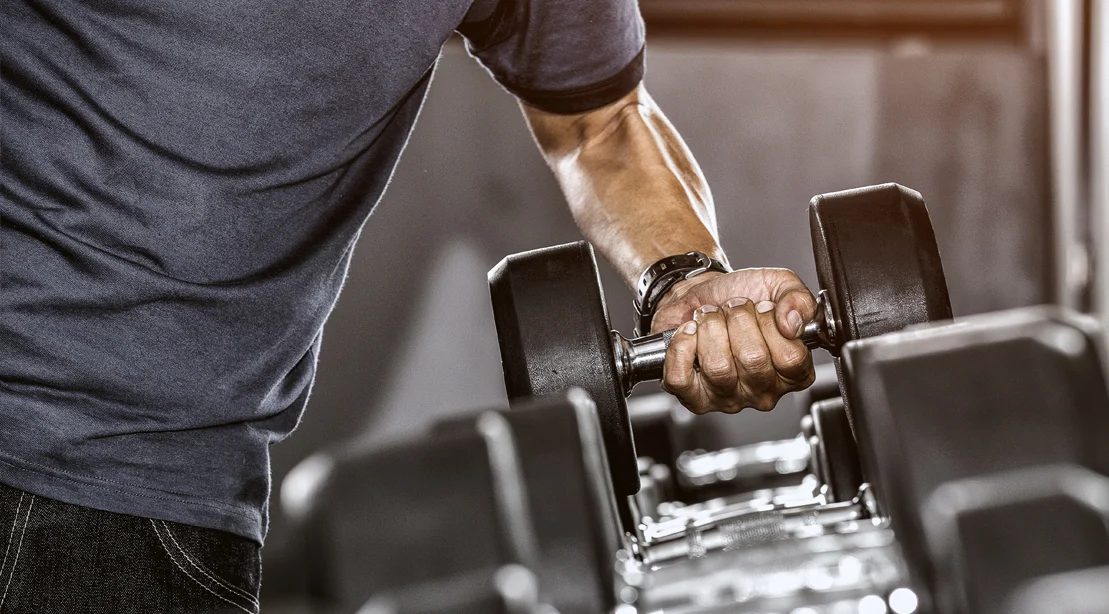
For over a century, the dumbbell reigned supreme as the undisputed monarch of the free-weight floor. Its design—symmetrical, stable, and intuitive—served as the bedrock for bodybuilders, powerlifters, and general gym-goers alike. However, the fitness landscape shifted dramatically two decades ago. With the meteoric rise of functional fitness and the global proliferation of CrossFit, the kettlebell emerged from the shadows of Eastern European conditioning rooms to become the darling of modern training.
Suddenly, the "cannonball with a handle" was everywhere. Trainers were prescribing swings, cleans, and snatches as the panacea for all physiological ills, often suggesting that the humble dumbbell was an antiquated relic. But as the dust settles on this fitness revolution, a critical question remains: Has the kettlebell truly rendered the dumbbell obsolete, or have we fallen victim to a trend that ignores the fundamentals of biomechanics?
The Anatomy of the Conflict: Design vs. Utility
To understand the friction between these two implements, one must first examine their structural engineering. A dumbbell is a model of equilibrium; weight is distributed evenly on either side of the handle, ensuring the load remains perfectly aligned with the wrist, forearm, and elbow. This predictability allows for controlled, high-volume repetition, making it the gold standard for hypertrophy (muscle growth) and localized strength training.
Conversely, the kettlebell is an exercise in managed chaos. Because the bulk of the mass is situated several inches below the handle, the center of gravity is constantly shifting. This design introduces a leverage challenge that requires significantly more stabilization from the core and stabilizer muscles.
The Instability Paradox
Advocates of the kettlebell argue that this instability is its greatest asset. By forcing the body to compensate for a shifting center of mass, kettlebells purportedly improve coordination, explosive power, and grip strength. It is the cornerstone of "functional fitness"—the idea that training should mirror the unpredictable nature of real-world movement.
However, there is a fine line between "functional instability" and "unnecessary risk." While professional athletes may benefit from the reactive demands of a kettlebell snatch, the average gym-goer may find that the dynamic nature of these movements creates a high barrier to entry.
A Chronology of the Iron Age
The evolution of these tools tells a story of changing priorities in physical culture:
- The 1900s–1980s: The Era of the Dumbbell. During the golden age of bodybuilding and the rise of commercial gym culture, the dumbbell was the primary tool for aesthetic development. It was used to systematically isolate muscle groups, allowing for precise progressive overload.
- The 1990s–Early 2000s: The Kettlebell Resurgence. Influenced by Pavel Tsatsouline and the importation of Soviet-era training methodologies, the kettlebell began to gain traction in the United States, marketed initially to the military and martial arts communities.
- 2005–2015: The Functional Fitness Explosion. CrossFit redefined the gym environment. The kettlebell became the symbol of this movement, representing "hard style" training that prioritized power output and metabolic conditioning over traditional muscle isolation.
- 2020–Present: The Pragmatic Reconciliation. We have entered an era of "evidence-based" fitness. Leading exercise scientists and coaches are now advocating for a balanced approach, emphasizing that the "best" tool is the one that best suits the individual’s biomechanics and goals.
Supporting Data: When Technique Fails
The most significant argument against the universal adoption of the kettlebell lies in the risk-to-reward ratio. The kettlebell swing, the foundational movement of the implement, is a complex, hip-hinge-driven ballistic exercise. When performed correctly, it is an efficient tool for posterior chain development. When performed incorrectly—which is common among beginners—it becomes a "spinal event."
The Biomechanical Reality
Unlike a dumbbell squat or a floor press, where the movement is largely linear and easy to guide, the kettlebell’s ballistic nature makes it difficult to self-correct under fatigue. Data from clinical observations in sports medicine suggests that poor technique in dynamic kettlebell work places acute stress on the lumbar spine, shoulders, and wrists.
In contrast, the dumbbell remains the most scalable tool in the gym. Whether a user is a sedentary office worker looking to improve posture or an athlete looking to increase muscle mass, the dumbbell allows for micro-adjustments in weight. Because progression is easier to manage, the risk of "catastrophic technique failure" is significantly lower.
The Professional Consensus: Insights from Experts
Industry experts increasingly caution against the "dogmatic" use of kettlebells. In interviews with high-performance coaches, a recurring theme emerges: The tool must serve the athlete, not the other way around.
"I see trainers having clients with zero overhead mobility or core stability attempting complex kettlebell flows because it looks impressive on social media," says one strength and conditioning specialist. "When you take a client who hasn’t mastered a basic dumbbell goblet squat and put a heavy kettlebell in their hand for a high-rep snatch, you aren’t training them—you’re gambling with their joints."
The professional consensus is clear: Kettlebells are superior for specific athletic qualities like explosive hip extension and cardiovascular conditioning in a circuit setting. However, they are not a "better" version of a dumbbell. They are simply a different tool with a different intent.
The Implications for Your Training Program
If your goal is to build a physique, increase strength, or simply live a healthier life, you should be wary of any program that mandates one tool over another. Here is how to integrate these implements effectively:
1. The Case for the Dumbbell
- Hypertrophy: Dumbbells allow for a greater range of motion and superior tension on the target muscle.
- Progression: Most gyms offer dumbbells in 2.5 or 5-pound increments, making it easier to track consistent progress.
- Safety: The stable path of a dumbbell makes it ideal for beginners learning movement patterns.
2. The Case for the Kettlebell
- Dynamic Conditioning: Use kettlebells for high-intensity intervals or "finishers" that require both strength and cardiovascular output.
- Grip and Forearm Strength: The thicker handles and offset center of gravity provide a unique stimulus for the hands and forearms.
- Explosive Power: If you have mastered the hip hinge, the kettlebell is an unmatched tool for developing speed and power.
Conclusion: The Religion of Lifting
At the end of the day, the human body does not recognize the brand or the shape of the iron it is lifting. Muscles respond to the fundamental laws of physiology: tension, mechanical overload, and progressive adaptation.
If your trainer insists that kettlebells are the only way to achieve "functional" results, it may be time to reassess your programming. The most successful lifters in history have built world-class physiques using a combination of barbells, dumbbells, machines, and bodyweight—often with little to no reliance on kettlebells.
Treat your training with logic, not trend-following. If you have not mastered the old-school basics—the dumbbell press, the row, the lunge, and the squat—adding the complexity of a kettlebell will not accelerate your progress. It will only add a layer of unnecessary risk to a foundation that has not yet been built. In the gym, as in life, simplicity is the ultimate sophistication. Master the basics, respect the biomechanics, and choose the tool that serves your goals, not your aesthetic of what a "functional" workout should look like.
 Lina Hope
 rifanmuazin
