

By Ryan Epps | Published July 3, 2026
For over four decades, the ethereal, melancholic, and unmistakably fluid art of Yoshitaka Amano has served as the visual foundation for the global fantasy lexicon. From his iconic character designs for the Final Fantasy franchise to the dark, gothic allure of Vampire Hunter D, Amano’s aesthetic has shaped how generations perceive the intersection of dreamscapes and reality. Yet, despite his profound influence on the medium, one of his most deeply personal creative endeavors—the fantasy novel Deva Zan—has remained trapped within the stillness of the printed page.
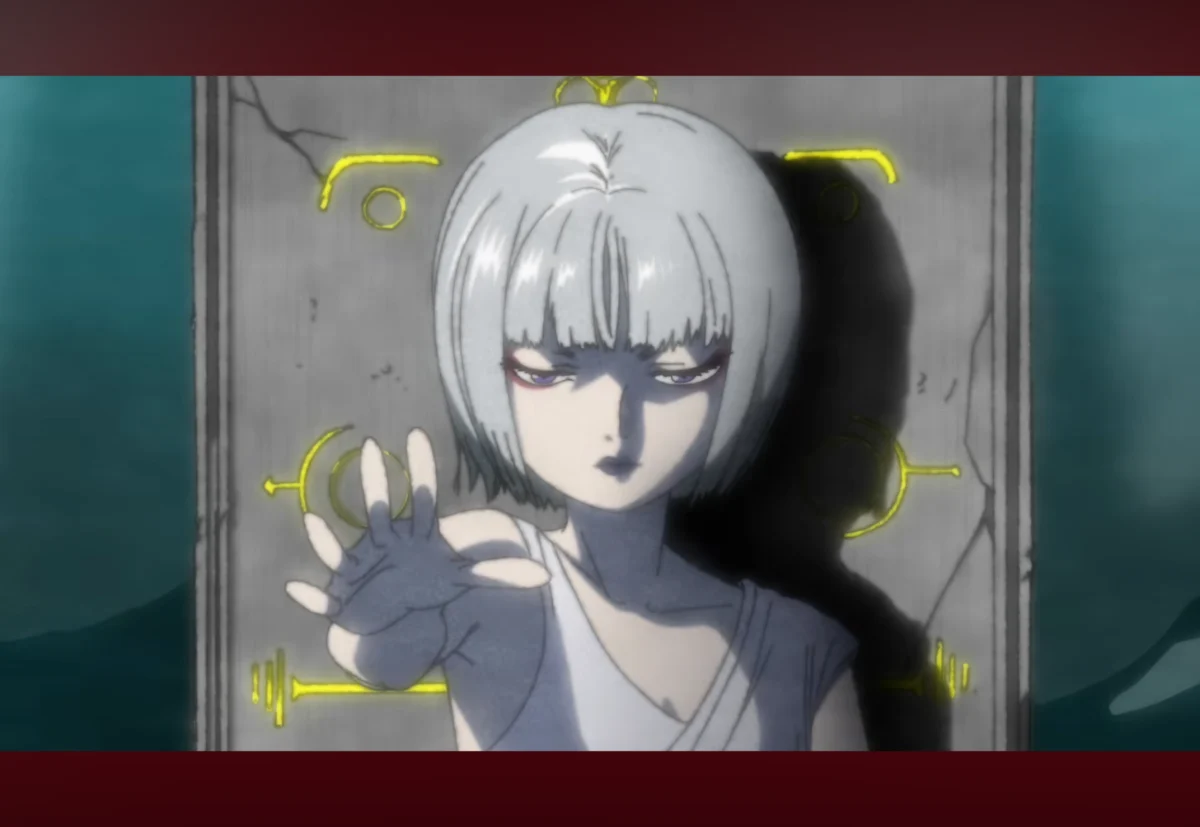
That changed this week at Anime Expo 2026. In a landmark presentation that served as both a retrospective of his career and a bold declaration of intent, Amano and a team of industry titans unveiled the first proof-of-concept footage for ZAN, an ambitious anime adaptation of Deva Zan. In an era where artificial intelligence and digital shortcuts are increasingly encroaching upon the animation industry, ZAN stands as a deliberate, uncompromising act of defiance: a project committed to being 100% hand-drawn.
The Genesis of ZAN: A Mythic World Brought to Life
Deva Zan is, at its core, a sprawling tapestry of myth. Set in a world where the boundaries between humanity, divinity, and the supernatural are porous, the narrative follows a young hero thrust into a celestial conflict that threatens to unmake both the physical and spiritual realms. The story is quintessential Amano: a blend of high-fantasy tropes filtered through a surrealist lens, where destiny, sacrifice, and the weight of existence are explored through hauntingly beautiful imagery.
While the novel provides the thematic backbone, the anime adaptation is being steered by a creative team that reads like a “who’s-who” of the golden age of Japanese animation. Screenwriter Ryosuke Takahashi, famed for his work on legendary mecha and drama series, is collaborating with co-directors Toru Yoshida and Masashi Ikeda to translate Amano’s delicate, sprawling illustrations into motion. Production is being overseen by Tatsuyoshi Matsumoto, who emphasized during the panel that the primary goal is not just to adapt the story, but to replicate the tactile, painterly energy of the late ’90s and early 2000s—an era when Akira, Ghost in the Shell, and Kite defined the zenith of hand-drawn cinematic animation.
Chronology: A Multi-Year Journey Toward Realization
The road to ZAN has been long and deliberate, reflective of a production philosophy that prioritizes craftsmanship over release windows.

- The Conceptual Phase (2010s): Following the publication of the Deva Zan novel, Amano began exploring ways to translate his prose and illustrations into a moving format. The project remained in development hell for years as he sought a team capable of capturing his specific, often abstract, visual language.
- The Formation of the Studio (2023–2025): A critical milestone occurred three years ago with the establishment of a new, Los Angeles-based studio. This facility was specifically designed to support the international scope of the project and to house the collaborative efforts between Japanese veterans and Western talent.
- The Proof-of-Concept Reveal (July 2026): At Anime Expo 2026, the public finally saw the fruits of these efforts. The teaser revealed a stylistic departure from current industry trends, showcasing raw, textured, and deeply personal animation.
- The Path Forward (2026–2029+): According to Hiroaki Ikegami, CEO of Yoshitaka Amano Inc., the project is currently in its early stages of full production. Given the sheer scale and the decision to prioritize manual labor over automated processes, the team estimates a minimum of two to three years before a finished product reaches the public.
Supporting Data: The "Paper-Drowning" Philosophy
The centerpiece of the Anime Expo announcement was the team’s explicit commitment to traditional techniques. In a modern anime landscape dominated by 3D CGI integration and digital vector tools, ZAN is opting for a "paper-first" workflow.
During the panel, producer Tatsuyoshi Matsumoto famously joked that the team is currently "drowning in paper." This is not a figure of speech; the production is utilizing massive amounts of physical cels and sketches to ensure that the final product retains the "touch of the artist."
Key Technical Considerations:
- Manual Line Work: Unlike digital animation, which often relies on clean, uniform line weights, ZAN is embracing the subtle imperfections of the human hand. Every frame is intended to feel like an extension of Amano’s own brushwork.
- The "Anime R" Reunion: The staff, largely comprised of veterans from the esteemed studio Anime R, brings a collective decades-long expertise. The average age of the creative team is over 60, a fact they wear as a badge of honor. As director Toru Yoshida noted, the staff is not merely "not past their prime"—they are drawing on a lifetime of muscle memory that digital-native artists are only beginning to acquire.
- Hybrid Realities: While the goal is a hand-drawn feel, the team has acknowledged that some digital assistance—particularly for complex backgrounds—will likely be necessary to meet contemporary distribution standards. However, the intent remains to keep the foreground action and character animation entirely analog.
Official Responses and Creative Vision
The creative team was emphatic that ZAN is a reaction against the homogenization of modern anime. Ryosuke Takahashi, the project’s screenwriter, offered a poignant mission statement during the Q&A session: "Our goal is simple: put life into the characters we create. Original creators should never lose to creativity itself."
For Amano, the project is a testament to the longevity of artistic vision. When asked about the pressures of such a labor-intensive project, Amano remained characteristically humble and focused on the process rather than the destination. "It’s only just getting started," he remarked, a sentiment that underscored the deliberate pace of the production.
Hiroaki Ikegami provided the necessary context for fans looking for a release date. He noted that while the proof-of-concept teaser represents the soul of the series, the scope of ZAN is massive. To ensure the final series meets the high bar set by the teaser, they are not rushing. "We want to do this right, not fast," Ikegami said, confirming that the multi-year development window is a necessity, not a delay.

Implications: A Catalyst for a Traditional Renaissance?
The announcement of ZAN has broader implications for the anime industry. For years, the debate regarding the "loss of soul" in digital animation has raged in fan circles. By backing a project that explicitly rejects the modern efficiency of digital workflows, Amano is betting on a counter-trend.
If ZAN succeeds, it could provide a roadmap for other legendary creators to return to traditional roots, potentially fostering a "boutique" tier of anime production that values craftsmanship as a premium commodity. It positions ZAN not just as a piece of entertainment, but as a preservation project—an attempt to keep the techniques of the 20th century alive in the 21st.
Furthermore, the expansion of Amano’s brand—which includes a newly illustrated edition of the Deva Zan novel and an immersive art experience that premiered in Milan—suggests that ZAN is part of a larger ecosystem. Amano is creating a multi-media universe that bridges the gap between high art and popular animation.
As we look toward the potential release in 2028 or 2029, the anticipation surrounding ZAN is not just about the story of a hero in a mythic world. It is about the hope that in an increasingly automated world, there is still space for the raw, imperfect, and beautiful labor of the human hand. Yoshitaka Amano has spent his life painting dreams; with ZAN, he is finally teaching those dreams how to move.
 Basiran
 Nana Muazin
 Layla Zulfa
