

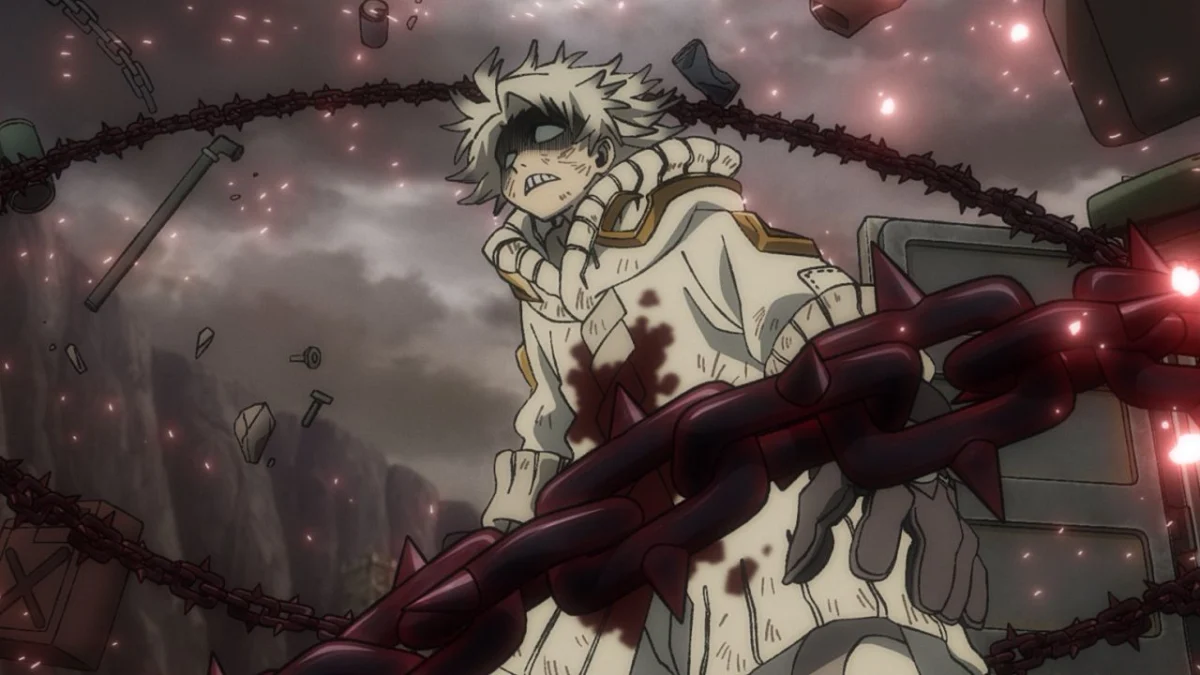
The anime landscape is notoriously crowded, often dominated by long-running staples or predictable genre tropes. Yet, occasionally, a series emerges that feels entirely singular, possessing a distinct visual language and narrative grit that demands immediate attention. Following its explosive 2025 debut, Gachiakuta—produced by the industry titan Bones Film—has officially signaled its return. At this year’s Anime Expo, fans were treated to a tantalizing first look at the second season, confirming that the story of Rudo and the Cleaners is shifting from a gritty survival tale into a complex, high-stakes political and existential drama.
The Foundation: A World Built on Discarded Truths
To understand the significance of the upcoming second season, one must appreciate the structural audacity of Kei Urana’s original manga. Unlike traditional shonen narratives that often rely on clear-cut hero journeys, Gachiakuta presents a dystopian reality where society exists above the "Pit," a bottomless landfill where the unwanted and the "criminals" are cast away.
The series’ visual identity—heavily influenced by graffiti culture, urban decay, and a tactile, grimy aesthetic—has been masterfully translated by Bones Film. Known for their legendary work on Fullmetal Alchemist: Brotherhood and the hyper-kinetic Mob Psycho 100, the studio has imbued Gachiakuta with a sense of motion and weight that few contemporary productions can match. The "Jinki" power system, which allows users to manifest abilities through objects they share a deep emotional connection with, has become a hallmark of the show, grounding its supernatural battles in the lived experiences of its characters.
Chronology: The Evolution of Rudo’s Journey
The trajectory of Gachiakuta is one of rapid escalation. The first season served as an introduction to Rudo, an outcast accused of a crime he didn’t commit, and his subsequent descent into the Pit. It was a story of discovery, establishing the rules of the world and the immediate danger posed by the environment itself.
Season 1: The Survivalist Phase
The debut season focused heavily on Rudo’s assimilation into the world of the "Cleaners"—those who operate within the Pit to protect humanity from the "monsters" spawned by human malice. By the finale, the stakes had shifted from simple survival to a realization that the society above is not the utopia Rudo once believed it to be.
Season 2: The Political Pivot
According to insights shared at Anime Expo 2026, the second season marks a definitive "pivot." While the first season established the "how" of the world, the second season will interrogate the "why." Viewers can expect a transition away from episodic monster-of-the-week conflicts toward a serialized narrative that explores the systemic corruption between the Pit and the world above. Rudo’s powers, which were erratic and raw in the first season, are expected to undergo a significant evolution, mirroring his internal maturation as he grapples with the truth of his lineage and the history of the world.
Supporting Data: Why Bones Film is the Perfect Conduit
The decision to entrust Gachiakuta to Bones Film was a strategic triumph. Data from the 2025 anime season consistently ranked Gachiakuta among the top-rated new entries in terms of "animation quality" and "artistic direction" on aggregator platforms.
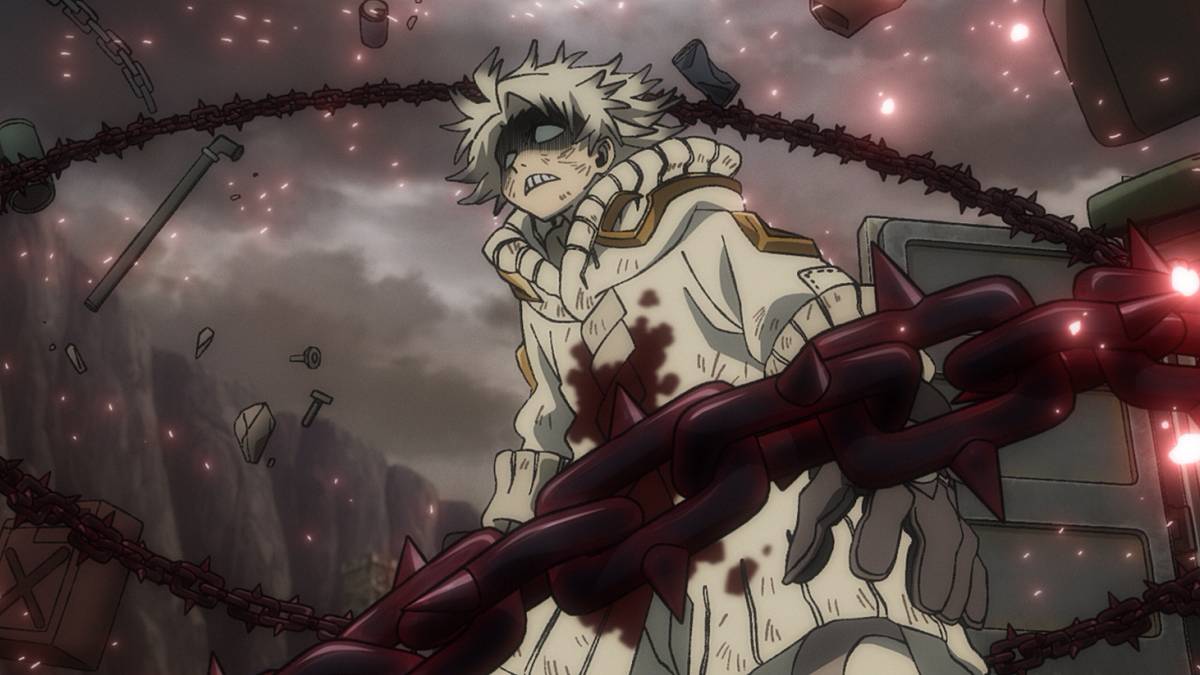
The studio’s commitment to "kinetic action" is more than just a stylistic choice; it is a narrative tool. In the teaser footage revealed at Anime Expo, the choreography of the fights appears faster, more claustrophobic, and more visceral than the previous season. By utilizing a high frame rate for key combat sequences and maintaining a gritty, hand-drawn look for the background assets, Bones is ensuring that the visual experience of the Pit remains as intimidating as the characters who inhabit it.
Official Responses and Creative Vision
During the panel at Anime Expo 2026, Director Fumihiko Suganuma offered a rare glimpse into the production philosophy guiding the second season.
"We are treating this season as a major expansion of the Gachiakuta universe," Suganuma noted. "If the first season was about proving that the series belonged in the conversation with modern shonen greats, this season is about showing exactly how deep that rabbit hole goes. We aren’t just looking at individual battles anymore; we are looking at the clash of organizations, ideologies, and the very foundation of society."
Suganuma emphasized the theme of "growth," noting that the audience should expect the character dynamics to become significantly more complex. "It’s not just about Rudo becoming stronger physically," he added. "It’s about him understanding the weight of the objects he uses and the history of the people he fights alongside. There is a lot of growth—and a lot of heartbreak—coming in the next stretch of the story."
Implications: The Future of the Shonen Genre
The anticipation surrounding Gachiakuta Season 2 is a bellwether for current trends in the anime industry. Fans are increasingly gravitating toward series that offer "high-concept" world-building—stories that marry the fast-paced thrills of shonen with the thematic depth of seinen (media aimed at young adult men).
The "Dorohedoro" Comparison
Comparisons to MAPPA’s Dorohedoro are frequent and warranted. Both shows thrive on a "trash-punk" aesthetic, where the setting is a character in its own right. However, Gachiakuta distinguishes itself through its focus on emotional resonance. The idea that a discarded object can hold power is a poignant metaphor for the characters themselves, who have been discarded by a society that fears them.
Expanding the Cast and Conflict
The introduction of new factions is perhaps the most significant implication for the show’s longevity. By moving beyond the binary of "hero vs. monster," the show opens the door for internal conflicts, betrayal, and shifting alliances. This expansion is essential for any series hoping to maintain its momentum into a third or fourth season. The teaser footage suggests that the conflict will soon involve organizations that operate with far more sophistication than the threats seen in season one.
Conclusion: A Must-Watch Event
While an official release date remains shrouded in mystery, the message from the Anime Expo event is clear: Gachiakuta is not resting on the laurels of its successful debut. The series is doubling down on its unique visual identity and its commitment to a darker, more ambitious narrative.
For viewers who value animation that feels like a labor of love and stories that challenge the status quo, the return of Rudo to the screen is the most significant development in the 2026 anime calendar. As the Cleaners prepare to descend even deeper into the Pit, the audience should prepare for a season that will likely redefine what it means to be a "shonen hero." When the series eventually returns to the airwaves via Crunchyroll, it won’t just be a sequel; it will be an evolution of the medium itself.
 Nana Muazin
 Layla Zulfa
 Basiran
