

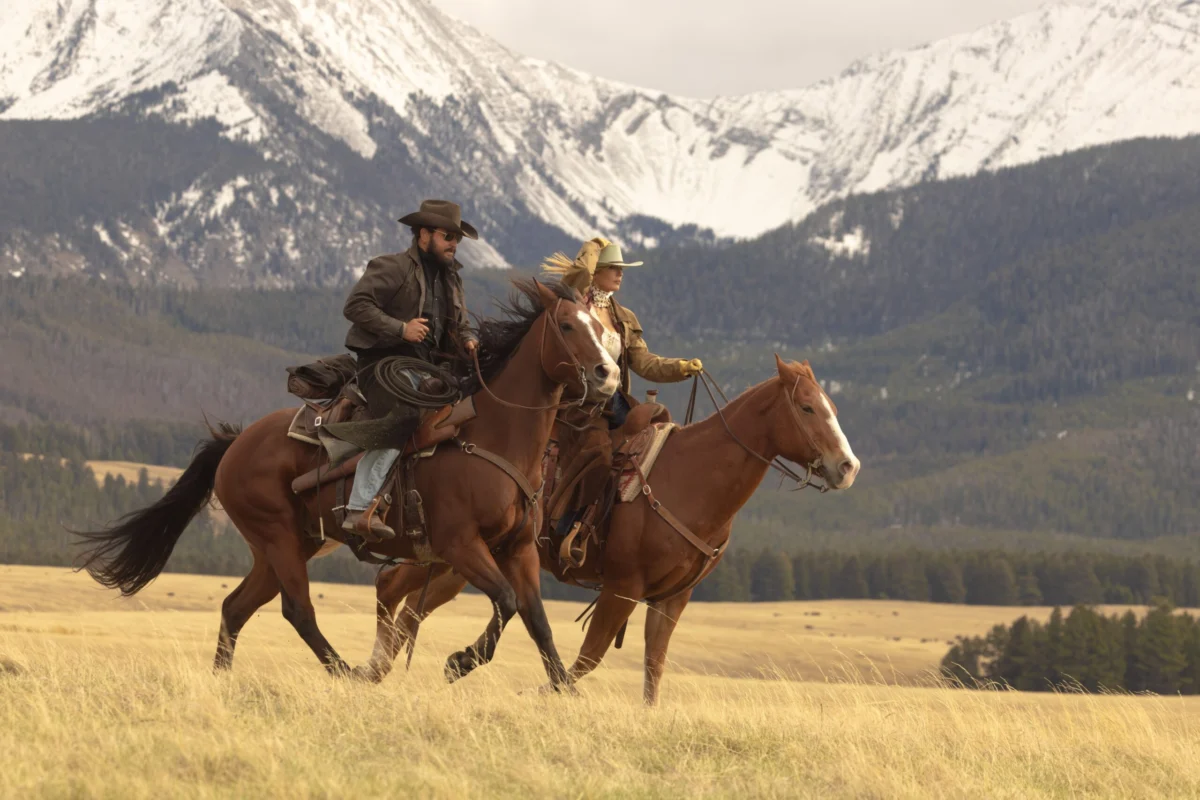
The Taylor Sheridan universe continues its relentless expansion, shifting its gaze from the jagged, snow-capped peaks of Montana to the sun-baked, expansive horizons of the Lone Star State. In the highly anticipated premiere of Dutton Ranch, fans witness the displacement of fan-favorites Beth Dutton (Kelly Reilly) and Rip Wheeler (Cole Hauser). Forced to abandon their ancestral Montana home following a catastrophic fire, the couple seeks refuge—and a fresh start—in the rugged landscapes of Rio Paloma, Texas.
Yet, as the Duttons quickly learn, geographical distance does not equate to peace. In this latest installment, the narrative shifts from the internecine squabbles of the Yellowstone valley to the complex, high-stakes power dynamics of Texas ranching. As the couple navigates their new environment, they find themselves locked in a classic Sheridan-esque standoff with Beulah Jackson (Annette Bening), the formidable matriarch of the rival 10 Petal Ranch.
Main Facts: A New Chapter in the Sheridan Saga
Dutton Ranch is not merely a change of scenery; it is a fundamental shift in the aesthetic and thematic DNA of the franchise. While the series retains the signature grit, violence, and Shakespearean family drama that define Taylor Sheridan’s work, the environment serves as an active participant in the storytelling.
.jpg)
The primary conflict centers on the transition from the mountains to the plains. Beth and Rip’s relocation to Texas is framed as an attempt at survival, but they find that the local power structure, led by Bening’s Beulah Jackson, is every bit as predatory as the corporate raiders they faced in the north. The series explores themes of legacy, the "American Dream" in the 21st century, and the friction between old-guard ranching traditions and the encroachment of modern influence.
Chronology: From the Ashes of Montana to the Texas Plains
The narrative arc of the first season is a slow-burn descent into the politics of the South. Following the destruction of their Montana home, the premiere establishes the couple’s arrival in Rio Paloma. By the second and third episodes, the show pivots to character development, specifically the burgeoning, "star-crossed" romance between Carter (Finn Little) and Oreana (Natalie Alyn Lind), which serves to mirror the tension between their warring family factions.
Mid-season, the stakes escalate significantly. In episode four, the narrative introduces a brutal turning point: the mass culling of the Duttons’ herd due to a foot-and-mouth disease outbreak. This event acts as the catalyst for the climactic power struggles that define the latter half of the season. The finale, which coincides with America’s 250th anniversary, serves as both a conclusion to the season’s primary conflicts and a political commentary on the state of the American identity, culminating in a poignant confrontation between Kino and his father, Mariano, at the Landmark Lodge.

Supporting Data: The Craft of Authenticity
The visual language of Dutton Ranch is deeply rooted in the concept of "geographic realism." Production designer Yvonne Boudreaux, a Louisiana native with over two decades of experience in the Texas film industry, spearheaded the effort to ensure the show felt grounded in the specific, dust-caked reality of the region.
"Authenticity is everything," Boudreaux stated during a recent production briefing. "We wanted to transition the aesthetic from Yellowstone while giving it a distinct Texas makeover. Beth and Rip’s color palette is a sunrise—we took from the earth, the vegetation, the agaves, those greens and the dust and the dirt. It’s grittier."
The Geography of Production
To achieve this, the production team utilized a sprawling network of Texas locales, moving away from soundstages whenever possible to capture the raw scale of the state:

- Weatherford, Texas: Serving as the central hub for the Duttons’ new life, a sixth-generation family ranch provided 2,500 acres of authentic, unadorned land. This site was chosen specifically for its modest appearance, contrasting sharply with the opulence of the 10 Petal Ranch.
- Granbury, Texas: The expansive exteriors for the 10 Petal Ranch and the rodeo sequences were filmed here, utilizing the town’s wide-open spaces to convey the sheer scale of Beulah Jackson’s influence.
- Dallas, Texas: For scenes involving high-stakes negotiation, the production utilized the Hotel Swexan. By incorporating real staff and chefs from the hotel into the scenes, Boudreaux ensured that the "swanky" environment felt lived-in and professional rather than staged.
- Ferris, Texas: The 23,000-square-foot estate used as Beulah’s home was a meticulous project of interior design. Decorator Suzanne Stover sourced artifacts from San Antonio to populate the home with the "archives" of a fifth-generation family, complete with hunting trophies, period-appropriate gun displays, and heavy, traditional woodwork.
- Fort Worth, Texas: While the city served as the base of operations, the production used local landmarks like the E.M. Daggett Middle School to stand in for Rio Paloma High, and the iconic Landmark Lodge—a real-life, mid-century motel—to provide the perfect, neon-soaked backdrop for the series’ most intense dialogue-driven scenes.
Official Responses and Creative Vision
The show’s success in capturing the "soul" of Texas has been a point of pride for the production team. By utilizing real-world locations like the Roughnecks Bar and Grill in Rio Vista—which was later recreated as a replica on a Fort Worth soundstage—the team managed to maintain a connection to local culture.
Taylor Sheridan’s creative direction has remained consistent: deliver high-drama, intense character studies, and "clichéd wisdom" that resonates with a broad American audience. The dialogue, exemplified by lines like "You’ve built a kingdom in a country that hates kings," suggests that the series is leaning further into the political undertones of its predecessor, challenging the audience to consider the cost of building power in a democratic society.
Implications: A Second Season and Beyond
The finale, while leaving several narrative threads frayed, successfully established Dutton Ranch as a permanent fixture in the Paramount+ lineup. The decision to renew the series for a second season before the finale even aired highlights the network’s confidence in the brand’s enduring power.

Looking ahead, the show faces a significant challenge: balancing the "Shakespearian" love stories of the younger cast with the increasingly dark, violent realities of the adult characters. As the Duttons dig their heels into the limestone and dust of Texas, the implications for the future of the franchise are clear. The show is no longer just about preserving a ranch; it is about defining what it means to be a "king" in a landscape that has historically rejected the concept.
For the audience, the wait for season two promises a deeper dive into the specific locales of the Lone Star State. As the production moves forward, fans can expect the visual narrative to continue its evolution, further blurring the lines between the cinematic, the political, and the deeply personal experiences of the American ranching class. Whether the show successfully bridges the gap between the Montana legend and the Texas reality will be the true test of the next installment, but for now, the Dutton Ranch has firmly claimed its territory.
 Lina Hope
 rifanmuazin
 Layla Zulfa
