

This story is an installment of The Oeno Files, our weekly insider newsletter to the world of fine wine. Sign up here.
In the rarefied air of Napa Valley, where cult-status Cabernets frequently command prices that eclipse the mortgage payments of the average American household, the arrival of a new, relatively accessible wine is usually met with skepticism. However, when that wine is crafted by Andy Erickson and Annie Favia—a duo whose collective influence on California viticulture is nothing short of foundational—the industry takes notice.
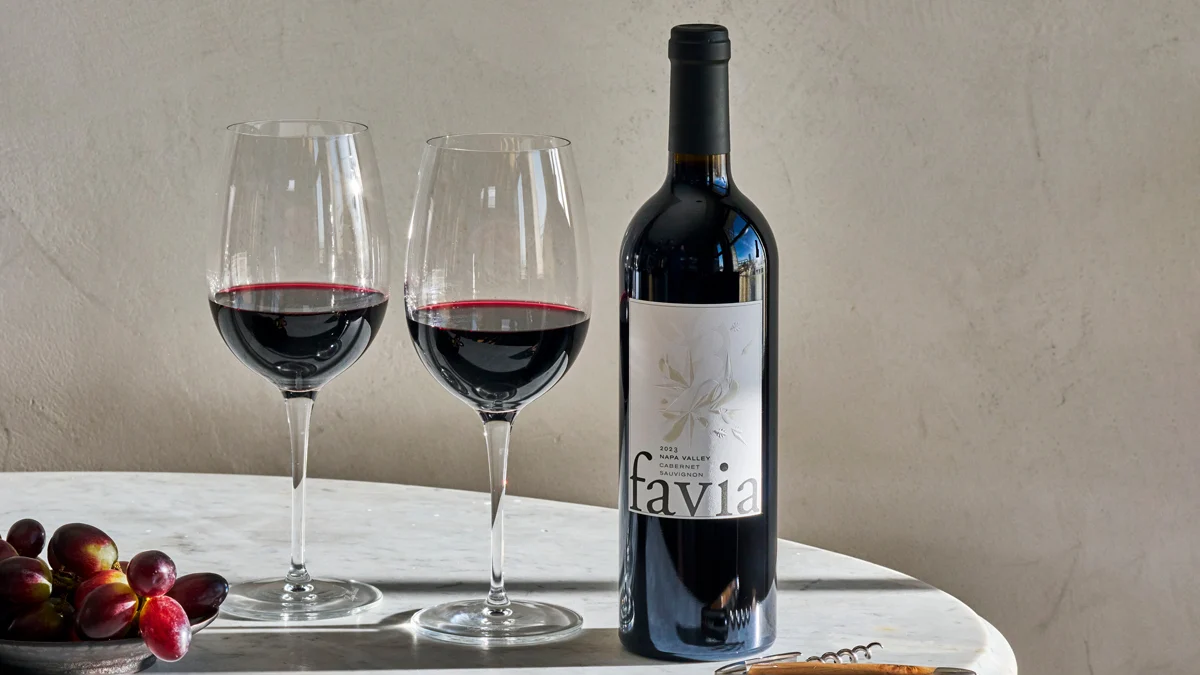
Favia Wines has officially re-launched its Napa Valley Cabernet Sauvignon, a label that has been dormant since 2013. Priced at $150, the release represents a calculated pivot for the couple. By marrying fruit from their own Coombsville estate with a newly acquired 86-acre tract in the hallowed grounds of Oakville, they are not merely releasing a bottle; they are making a statement about the future of the Napa Valley blend.
The Architects of Modern Napa
To understand the weight of this release, one must look at the architects behind it. Andy Erickson and Annie Favia are often dubbed a "Napa Valley power couple," a title they politely deflect, preferring to let the contents of the cellar do the talking. Yet, their professional trajectories represent a "Who’s Who" of American wine.
Erickson’s fingerprints are on the most prestigious labels in the valley. His tenure as a winemaker has shaped the programs at Screaming Eagle, Harlan Estate, Spottswoode, Dalla Valle, and the To Kalon Vineyard Company. If there is a "Napa style"—a balance of power, precision, and longevity—Erickson helped codify it.
Complementing his work is Favia, a viticulturist of singular repute. Having worked for over a decade with the legendary David Abreu, Favia has managed the complexities of some of the most difficult and rewarding terroirs in the West. Her career encompasses work with Newton Vineyard, Corison, Ovid, Bryant Family, Staglin, and Colgin. Together, they possess an encyclopedic knowledge of the valley’s micro-climates, an asset that has been poured into the 2023 Napa Valley Cabernet Sauvignon.
Chronology: A Decade in the Making
The return of the Favia Napa Valley Cabernet is not a sudden marketing decision but the culmination of a decade of land management and strategic planning.

- 2013: The last vintage of the Favia Napa Valley Cabernet is produced, marking the end of an era for the label’s original iteration.
- 2014–2022: The couple focuses on their single-vineyard bottlings and specific Cabernet Franc cuvées, which have historically sold for between $250 and $300. During this period, they deepen their commitment to their estate in the cooler, volcanic soils of Coombsville.
- 2023: A defining year for the estate. The couple secures an 86-acre property in Oakville, with 60 acres dedicated to new vine plantings. This acquisition allows them to bridge the gap between the valley floor’s intensity and their estate’s signature freshness.
- 2026 (Current Release): The 2023 Napa Valley Cabernet Sauvignon is released, signaling a new direction that prioritizes regional blending over singular site expression.
Supporting Data: Why 2023 Was the Perfect Vintage
The 2023 vintage proved to be a "Goldilocks" year for Napa Valley producers. According to Favia, the growing season was defined by a mild spring and a cooler-than-average summer, which acted as a natural brake on sugar accumulation.
"The 2023 vintage benefited from steady ripening and an extended autumn," Favia notes. "We had good groundwater reserves and temperatures that allowed the grapes to achieve full phenolic maturity while retaining ample natural acidity."
This climatic profile is critical for a wine intended to represent the "complete expression" of the valley. By sourcing from the sun-drenched, powerful terroir of Oakville and the cooler, maritime-influenced soils of Coombsville, the resulting wine achieves a structural duality. The Oakville fruit provides the backbone—the density and tannin—while the Coombsville fruit provides the aromatic lift and savory freshness that has become a Favia signature.
Official Perspectives: The Philosophy of Minimal Intervention
The winemaking approach for this $150 release remains strictly aligned with the couple’s high-end, limited-production philosophy. "We always lean toward minimal winemaking," Erickson explains. "We carefully manage the tannin extraction, age the wine for 20 months in barrel, and bottle without fining or filtration. We want the grapes to shine through in the bottle."
This dedication to transparency has caught the attention of the global wine trade. Mathieu Chadronnier, CEO of the Bordeaux-based négociant firm CVBG, was an early proponent of bringing the Favia brand into the international marketplace through the Place de Bordeaux.
"I love their wines, not only for their remarkable balance, nuance, freshness, and restraint, but also for the philosophy that underpins them," Chadronnier says. "What makes their work so distinctive is their deep connection to nature and to the land, and the way they see wine as part of a broader living ecosystem."
Implications: A New Benchmark for Value
Perhaps the most significant aspect of this release is its price point. In a market where $500 to $1,000 bottles are becoming the baseline for "serious" Napa Cabernet, the $150 tag for a Favia wine is, by comparison, a deliberate choice.

Vanessa Conlin, a Master of Wine and consultant, suggests that this release occupies a critical void in the current market. "At $150, this wine occupies a particularly compelling place," Conlin notes. "Many wines at significantly higher price points don’t necessarily deliver greater complexity or pleasure. The 2023 Favia Cabernet benefits from Annie and Andy’s decades of knowledge, their experience with exceptional vineyard sources, and a very clear point of view."
Conlin highlights the technical success of the blend: "The result is a Cabernet Sauvignon that feels complete. It possesses richness and concentration, yet also energy and detail. It bridges the gap between the generosity of Oakville and the aromatic architectural tannins of Coombsville."
Pairing the Future
The release is already finding its way into top-tier hospitality venues, such as New York City’s Smith & Wollensky. Aaron Sagendorf, the steakhouse’s wine manager, notes that the wine’s profile—which includes a significant 20 percent inclusion of Cabernet Franc—makes it an ideal companion for high-fat proteins.
"The upfront fruit, beautifully balanced acid, and super-long tannic finish hold up against the mouthfeel of a dry-aged, double-cut sirloin with just the right amount of charred crust," Sagendorf says. "Neither overwhelms the other; they only accentuate the best of each other."
As Favia looks toward the future, the integration of their Oakville and Coombsville holdings serves as a blueprint for their production. By prioritizing the blend over the single site, they are arguably returning to the classic tradition of Napa Valley winemaking—where the goal was never to express a single square acre, but to capture the majesty of the entire valley in a single, harmonious glass.
For the collector, this represents a rare opportunity to acquire a wine of impeccable provenance without the typical "cult" tax. For the valley, it is a reminder that even at the highest levels of winemaking, the most profound expressions are often found in the balance between power, grace, and accessibility.
Do you want access to rare and outstanding reds from Napa Valley? Join the Robb Report 672 Wine Club today.
 rifanmuazin
 Laily UPN
 Suro Senen
