

For over a century, the winged badge of Bentley Motors has been synonymous with the pinnacle of British grand touring—a harmonious blend of opulence, craftsmanship, and effortless, high-displacement power. However, the automotive landscape is undergoing its most significant transformation since the invention of the internal combustion engine. As the industry pivots toward a zero-emissions future, Bentley finds itself at a pivotal crossroads, balancing its rich heritage with the cold, hard realities of modern electrification.
The unveiling of the "Torcal"—the marque’s first fully electric vehicle—marks more than just a new product launch. It represents a strategic evolution in the company’s "Beyond 100+" roadmap, a calculated gamble to define a new segment: the world’s first true Luxury Urban SUV.
A Chronology of Ambition: From "Beyond 100" to "Beyond 100+"
The narrative of Bentley’s electrification began in earnest in November 2020. At that time, the company announced its "Beyond 100" strategy, an incredibly aggressive timeline that aimed to have the entire model portfolio transitioned to either plug-in hybrids or fully battery-electric vehicles (BEVs) by 2024. The long-term goal was equally audacious: total electrification by 2030.
However, the reality of the global automotive market—defined by shifting consumer demand, evolving battery chemistry, and the notoriously sluggish pace of public charging infrastructure development—necessitated a strategic pivot. By 2024, Bentley announced its "Beyond 100+" mandate. While the vision remained intact, the timeline was recalibrated to account for global economic and technical headwinds. The deadline for being a solely battery-reliant brand was moved to 2035.
Crucially, this update did not signal a retreat; rather, it signaled a refinement of focus. The company doubled down on its promise to reveal its first fully electric vehicle in 2026. As the press release from two years ago noted, this vehicle was intended to create an entirely new segment—the "Luxury Urban SUV." Today, we finally have a name for this pioneer: the Bentley Torcal.

Defining the Torcal: Etymology and Inspiration
The name "Torcal" is deeply rooted in the geographical and linguistic traditions of the brand. According to the official announcement from Crewe, the name draws direct inspiration from the "El Torcal de Antequera," a spectacular, otherworldly limestone landscape in Andalusia, Spain. The region is famous for its unique karst formations, which feel both ancient and futuristic—a fitting metaphor for a car that seeks to bridge Bentley’s history with its electric future.
Furthermore, the name is derived from the Latin torquere, meaning "to twist." This is the etymological root of the word "torque," the very metric that defines the instantaneous, exhilarating acceleration of electric powertrains. By choosing a name that references both the physical beauty of the Spanish landscape and the mechanical essence of electric propulsion, Bentley is attempting to frame the Torcal not as a "compliance car," but as a machine defined by "effortless progression."
The Crewe Experience: A Firsthand Preview
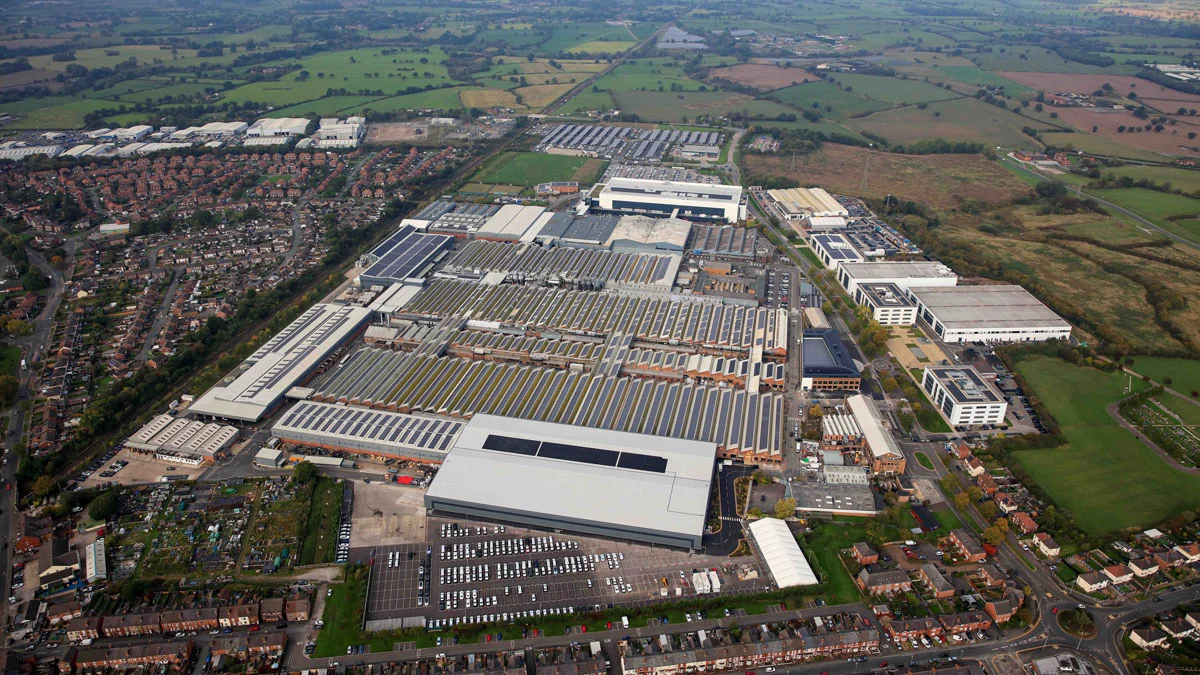
Last month, Robb Report was granted exclusive access to Bentley’s headquarters in Crewe, England, for a private, early-look preview of the near-production prototype. The statistics provided at the briefing offer a glimpse into the performance targets of this new machine: a vehicle length of approximately 16.4 feet and an estimated range exceeding 300 miles.
Walking around the prototype, the first impression is one of familiar authority. Unlike many manufacturers who feel the need to signal their EV status through alien, "spaceship" aesthetics, the Torcal feels inherently like a Bentley. It is elegant, substantial, and imposing. Having witnessed the design firsthand, it is safe to opine that the Torcal will avoid the polarizing, disruptive design language seen in competitors like Ferrari’s recent "Luce" project. Bentley has chosen a path of continuity over confrontation.
The Goodwood Philosophy: Bentley’s Strategic Playbook
When Rolls-Royce introduced the Spectre, their first all-electric model, the late CEO Torsten Müller-Ötvös famously declared that the car was developed on the "promise that it’s a Rolls-Royce first, and an electric car second."

Bentley appears to be reading directly from this playbook. The visual and tactile impact of the Torcal suggests that the engineers in Crewe have prioritized the "Bentley experience"—the silence, the ride quality, the exquisite material palette—above the gimmickry often associated with early-stage EV development. The goal is to ensure that a customer who has driven a Continental GT for a decade feels immediately at home inside the Torcal, despite the absence of a thrumming V-8 or W-12 engine.
Official Insights: A Conversation with Dr. Frank-Steffen Walliser
During our visit, we had the privilege of sitting down with Bentley’s global C.E.O., Dr. Frank-Steffen Walliser. When asked what would stand out to those who have never previously owned a "Flying B," Walliser was characteristically thoughtful.
"I think it attracts technology seekers that look for a different expression of their car," Walliser explained. "It’s clearly a Bentley, but it really develops the brand into a new stage, and modernizes everything."
Perhaps the most revealing moment of our interview occurred when Walliser posed a rhetorical question to us: "What would have happened if this [car] had a V-8? What would the car look like?" His answer was swift and definitive: "It would look exactly the same. There is no ‘EV design’ behind it."
This philosophy is central to the Torcal’s identity. Walliser is adamant that the shift to electric power is not an excuse to reinvent the visual language of the brand, but rather a chance to refine it. When pressed on whether the materials and design language debuting on the Torcal would eventually migrate to the rest of the portfolio—including the Bentayga, Flying Spur, and Continental GT—Walliser nodded before the question was even fully articulated. "Definitely, definitely. It feels right for Bentley."

Implications for the Luxury Sector
The implication of the Torcal is clear: the transition to electrification is not a temporary trend for the luxury sector, but a permanent recalibration of what constitutes "luxury."
- Material Innovation: With the shift to EV, the interior space becomes the primary differentiator. Bentley’s focus on sustainable, high-end materials that do not rely on traditional leather or carbon-heavy processes is likely to set a new benchmark for the industry.
- Performance Parity: By focusing on "effortless progression" rather than just 0-60 times, Bentley is aligning with the expectations of its clientele, who value torque-rich, smooth, and quiet power delivery over the aggressive, jittery acceleration that defines mass-market EVs.
- Brand Cohesion: The decision to avoid "EV-specific" styling proves that Bentley is confident in its brand equity. They believe the "Bentley-ness" of the car—the grill, the stance, the interior quality—is more important than advertising the powertrain through design.
Conclusion: The September Reveal
As we look toward the official unveiling of the Torcal this coming September, the automotive world remains in a state of heightened anticipation. While the engineering specifics—such as battery architecture, charging speed, and specific horsepower figures—remain under wraps, the philosophy is transparent.
The Torcal is a Bentley first and last. It seeks to answer the question of how to preserve the soul of a grand tourer in a world without combustion. If the prototype is any indication, Bentley has not only succeeded in creating a luxury electric vehicle; they have managed to create a vehicle that feels like an inevitable, natural extension of their storied history.
Whether the performance will ultimately match or overshadow the visual promise remains to be seen, but one thing is certain: when the Torcal rolls off the assembly line in Crewe, it will be the loudest, most significant statement in the history of the "Beyond 100+" era. The luxury SUV segment, and indeed the entire electric vehicle market, should take notice. The bar has been raised.
 Laily UPN
 Raul Delapena Setiawan
