

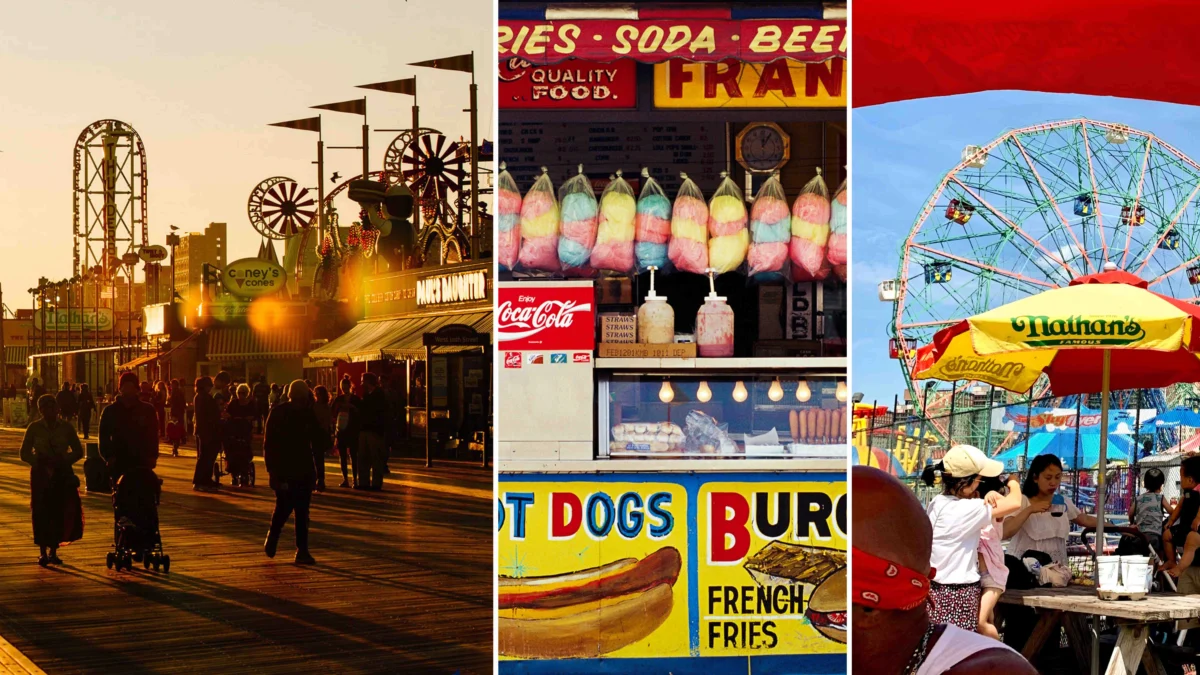
Since its inception in the 1800s as New York City’s premier seaside escape, Coney Island has functioned as the city’s collective backyard. It is a place where the salt-sprayed breeze of the Atlantic meets the neon-soaked grit of urban entertainment. While the neighborhood has weathered centuries of transformation—from grand Gilded Age resorts to periods of urban decay and modern-day revitalization—its core identity remains unchanged: it is the only place in the five boroughs where the roar of a wooden roller coaster, the mystery of a classic sideshow, and the scent of deep-fried indulgence converge.
Today, Coney Island serves as a living museum of American leisure. Whether you are a local seeking a respite from the sweltering heat of a Brooklyn summer or a tourist chasing the ghost of old New York, the boardwalk offers an experience that is as historically significant as it is kitschy and compelling.
The Chronology of a Coastal Icon
To understand Coney Island is to understand the layers of history pressed into its boardwalk.
- The 1800s (The Birth of the Resort): Coney Island began as a destination for the wealthy, who retreated to grand hotels on the shore. By the late 19th century, the expansion of public transportation brought the working class to the beach, fueling the development of the first amusement parks.
- The 1900s–1950s (The Golden Age): This era saw the rise of legendary attractions like Luna Park and Steeplechase Park. It was during this time that the "Coney Island style" of food—hot dogs, salt-water taffy, and funnel cakes—became solidified in the American consciousness.
- The 1960s–1990s (The Period of Decline): Following the construction of Robert Moses’s highways and the shuttering of major amusement parks, the area faced significant economic challenges. The neighborhood’s resilience during this period is a testament to the community’s refusal to let the culture fade.
- 2000s–Present (The Revitalization): With the arrival of modern institutions like the Maimonides Park (home of the Brooklyn Cyclones) and the redevelopment of Luna Park, the area has undergone a controlled renaissance. It remains a seasonal powerhouse, particularly on summer Friday nights when fireworks paint the sky above the Atlantic.
A Landscape of Leisure: What to Do
The modern Coney Island is defined by a distinct "raucous" energy. A stroll along the Riegelmann Boardwalk connects the major pillars of the neighborhood: the New York Aquarium, the Brooklyn Cyclones’ baseball stadium, and the Coney Island Amphitheater, which hosts major musical acts under the stars throughout the summer.

For the uninitiated, the choices can be overwhelming. The boardwalk is a sensory overload of games, rides, and culinary temptations. However, navigating the food scene requires a discerning eye. While fried clams and funnel cakes are omnipresent, the neighborhood hides deep culinary treasures that reflect the diverse immigrant history of Brooklyn.
Culinary Cornerstones: Where to Eat
Coney Island’s food scene is a microcosm of New York itself. From historic American staples to the rich, savory traditions of Eastern Europe and Mexico, here are the essential stops for any visitor.
1. Paul’s Daughter: The Boardwalk Institution
Occupying a prime piece of real estate, Paul’s Daughter is instantly recognizable by the two giant, kitschy figurines clutching a burger and a beer on its rooftop—a sight that effectively eclipses the iconic Wonder Wheel. Fans of pop culture might recognize it from the Sex and the City reboot, And Just Like That…, but locals know it for its unwavering commitment to the classics. While their burgers and beer are the standard, the true value lies in their seafood. When the sun is high and the crowd is thick, their lobster rolls and freshly shucked littleneck clams offer a refreshing, briny antidote to the summer heat.
2. Totonno’s: A Century of Crust
Located a short walk inland at 1524 Neptune Avenue, Totonno’s is not just a pizzeria; it is a pilgrimage. Operating since 1924, this family-run establishment maintains a strict, limited schedule—open only on Saturday and Sunday afternoons for takeout. Their menu is refreshingly Spartan: a traditional pie and a white pie. The quality, however, is peerless. The crust is a masterclass in texture, providing a sturdy, crisp foundation for the milky mozzarella and vibrant, fresh tomato sauce.

3. Georgian Corner: A Taste of the Borderlands
Moving east toward Brighton Beach, the culinary landscape shifts. Georgian Corner, situated on the border of Coney Island and Brighton Beach, is the ultimate resource for a beachside picnic. For those looking to avoid the heavy grease of traditional carnival food, this cafe provides a sophisticated alternative. In the colder months, their hot kharcho or borscht is restorative, while in the summer, their stuffed breads, steamed khinkali, and deli-style salads offer a lighter, more complex flavor profile. Their refrigerator case, stocked with tarragon soda and quince juice, is a local secret for those who prefer their refreshments without the sugar rush of a soda fountain.
4. Doña Zita: Mexican Soul in the City
Tucked away on Bowery Street, Doña Zita serves as a sanctuary for those looking for a sit-down meal amidst the carnival chaos. Their cemitas are legendary—towering creations packed with chipotle, stringy Oaxaca cheese, and the distinct, grassy note of pápalo leaves. For the adventurous eater, their elotes are a highlight, dusted with the spicy, neon-colored powders of blue, red, and orange Takis. If you are torn between the traditional Coney Island hot dog and a taco, the solution is simple: order a chorizo-topped dog at Doña Zita and smother it in their house-made salsa.
5. Nathan’s Famous: The Gargantuan Flagship
No discussion of Coney Island is complete without acknowledging the titan of the industry. The flagship location at 1310 Surf Avenue (and its sister boardwalk location) is the only place to truly experience the brand. While the brand is ubiquitous at ballparks and supermarkets nationwide, the flagship offers a chaotic, electric atmosphere that the frozen packages cannot replicate. From the unexpected menu items like fried frog legs to the late-night beer service, Nathan’s remains the beating heart of the neighborhood’s commercial life.
Supporting Data and Economic Context
Coney Island’s economic health is inextricably linked to its seasonal nature. According to local business councils, the summer months account for nearly 80% of annual revenue for most boardwalk merchants. The recent investment in the Coney Island Amphitheater has successfully extended the "shoulder season," drawing visitors into September and October.

Furthermore, the neighborhood serves as a vital economic engine for the borough. The Brooklyn Cyclones bring thousands of visitors to Maimonides Park, many of whom contribute to the local economy before and after games. Despite concerns regarding climate change and rising sea levels—a constant topic of discussion among city planners—the current infrastructure, reinforced after Hurricane Sandy, has shown significant resilience.
Official Perspectives: The Future of the Shoreline
The New York City Department of Parks and Recreation, in conjunction with local business improvement districts (BIDs), continues to emphasize the "mixed-use" future of the area. Official statements from the Coney Island Alliance stress that the goal is to balance the preservation of the area’s historic "raucous" charm with modern safety and accessibility standards.
"We are not looking to sanitize Coney Island," a spokesperson for the local BID noted in a recent planning session. "The goal is to maintain the grit and the joy that defines this place, while ensuring that the infrastructure—from our waste management systems to our transit connections at the Stillwell Avenue station—can support the millions of visitors we see annually."
Implications: Why Coney Island Matters
The persistence of Coney Island as a premier destination for New Yorkers serves as a reminder of the importance of "third spaces"—places that are neither home nor work, where people of all socio-economic backgrounds can coexist.

In a city that is increasingly defined by high-end real estate and corporate uniformity, Coney Island stands as a stubborn, vibrant outlier. It is a place that celebrates the low-brow as much as the high-brow, the loud as much as the quiet. As long as the roller coasters continue to turn and the scent of salt and sizzling onions fills the air, Coney Island will remain the essential, beating heart of Brooklyn. It is a reminder that in New York, even in the middle of a concrete metropolis, one is never truly far from the sea—or the spectacular.
 Evan Lee Salim
 Nana Muazin
 Sagoh
Sagoh
