

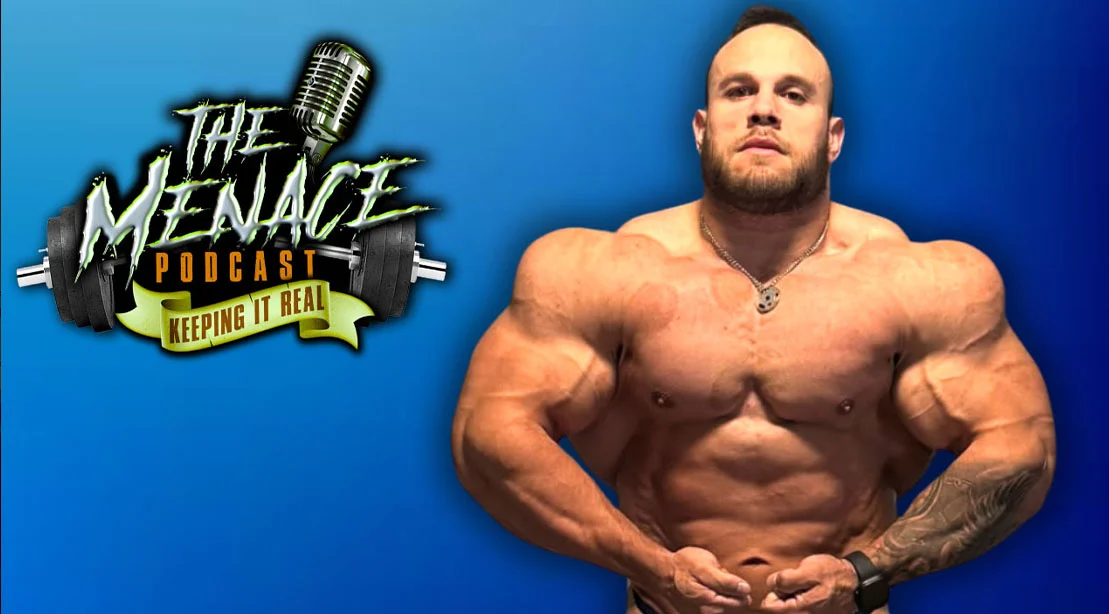
In the high-stakes world of professional bodybuilding, the difference between a podium finish and a disappointing exit often comes down to a matter of milliseconds—specifically, the time spent under the bright lights of the stage. On the latest installment of The Menace Podcast (Episode 291), host Dennis “The Menace” James assembled a powerhouse panel featuring industry legends Milos Sarcev and Chris “The Real Deal” Cormier, alongside special guest and iconic performer “Marvelous” Melvin Anthony.
The central thesis of their discussion was as sobering as it was instructional: the lost art of professional posing is currently under siege by social media trends, and the consequences for the next generation of competitors could be career-defining. As the current competition season hits its peak, the veterans are sounding an alarm: without formal coaching and a fundamental understanding of physical presentation, athletes are sabotaging their own success.
The Core Problem: The Decline of Presentation
The podcast panel reached a rare consensus: bodybuilding is not merely a contest of mass and conditioning; it is an exhibition of controlled, artistic display. When a bodybuilder steps onto the stage, they are tasked with showcasing their physique’s symmetry, proportion, and muscularity through a series of mandatory poses. However, the panel argued that many modern competitors treat these poses as checkboxes rather than a cohesive performance.
Dennis James, a veteran of the Olympia stage, opened the discussion by highlighting the stark contrast between those who have been professionally trained and those who rely on self-taught, viral-inspired routines. “When somebody is a good poser, this is mostly because someone taught them how to do it,” James noted. Reflecting on his own storied career, he admitted a lingering regret: “Because I never had anyone teach me how to pose, that’s why you can see the difference between guys like you and me. You can see the difference.”
This admission from James serves as a powerful testament to the value of mentorship. If a bodybuilder of his caliber identifies a deficit in his own presentation due to a lack of formal coaching, the implications for amateur and rising professional athletes are clear: seeking expert guidance is not optional—it is a necessity for those aiming for the pinnacle of the sport.
The Legacy of the Master: The Melvin Anthony Standard
To understand what "perfect" looks like, one only needs to look at the career of Melvin Anthony. During the late 1990s and early 2000s, while many of his contemporaries were struggling to transition cleanly between mandatory poses, Anthony was revolutionizing the stage. His routines were characterized by a dance-like fluidity, an effortless grace that belied the immense difficulty of the movements he was performing.
Anthony’s success was no accident. He revealed on the podcast that his skill set was forged through rigorous, disciplined training under the guidance of icons like John Brown. Anthony did not merely mimic the greats; he studied choreography, understanding that the stage is a theater of muscle.
“He had that watch,” Anthony recalled, describing the grueling training sessions with Brown. “We would practice 20 seconds of posing for each muscle group after we were already exhausted.” This level of intensity highlights a fundamental truth: posing is an athletic endeavor that requires as much endurance as a heavy set of squats. By practicing under fatigue, Anthony ensured that his performance remained crisp, regardless of how much energy he had expended during the pre-judging rounds.
The "Instagram" Misconception: Why Social Media is Failing Athletes
A major focal point of the discussion was the prevalence of “Instagram posing coaches”—individuals who offer quick-fix, cookie-cutter advice via short-form video content. Both Chris Cormier and Melvin Anthony were quick to label these digital tutorials as detrimental to the craft.
Cormier, who also trained under the legendary John Brown, expressed frustration with the modern trend of dissecting poses into rigid, binary rules. “When you present posing coaching on Instagram, with all these little green and red, this is right, this is wrong—that’s bulls**t,” Cormier asserted.
The panel argued that the danger lies in the lack of customization. A pose that highlights the strengths of a 280-pound mass monster will look disastrous on a 210-pound aesthetic competitor. By attempting to copy the poses of social media influencers, athletes often ignore their own structural limitations.
“It’s not all about looking at someone that you admire because you like everything that he does,” James added. “Just because it looks good on him doesn’t mean that you should do that pose, because you don’t have the body.”
The Philosophy of the "Soldier"
The discussion also touched upon the coach-athlete relationship. Chris Cormier emphasized that true mentorship requires total submission to the coach’s vision. He criticized the current generation of athletes for attempting to dictate their own training and posing regimens.
“I find a lot of these guys today, they need to be telling me what they think I should be doing,” Cormier observed. “And I’m like, no, you just be a soldier.”
This sentiment was echoed by Melvin Anthony, who stressed that when you hire a coach, you must trust their expertise implicitly. The coach acts as the objective eye, the only person who can see the physique as it truly appears from the judge’s perspective—a vantage point the athlete simply cannot replicate while standing on stage.
Technical Nuances and the "Twisting Back" Debate
Milos Sarcev, a master of the industry who has transitioned into a highly respected posing coach, added technical weight to the conversation. He highlighted a specific pose that serves as the gold standard for elite-level posing: the twisting back pose from the front.
“You and Melvin, you are the only ones, besides Arnold Schwarzenegger, to do the twisting back pose from the front,” Sarcev said, addressing Cormier. “Not the side view, but you were facing, with the legs positioned. I tried to replicate it, and I looked like an idiot.”
This anecdote underscores that elite posing involves complex physical manipulation—torquing the torso, balancing the weight on the legs, and managing the breath—all while maintaining a relaxed facial expression. It is a level of mastery that takes years to cultivate, far beyond the reach of a 60-second tutorial video.
Implications for the Future of Bodybuilding
The consensus from The Menace Podcast is a clarion call for a return to traditional, hands-on mentorship. As the sport continues to grow, the influx of new athletes who have only ever known the digital age has created a vacuum of knowledge. The panel’s advice to the community is multifaceted:
- Seek Professional Mentorship: Find a coach who has “been there” and who understands the anatomy of the individual athlete.
- Train for Fatigue: Posing is an endurance exercise. If you cannot pose for 20 seconds while completely exhausted, you will lose the judges’ attention in the final minutes of a callout.
- Reject Cookie-Cutter Routines: Avoid social media trends that suggest a “one-size-fits-all” approach to mandatory poses.
- Adopt a “Soldier” Mentality: Trust your coach’s vision. They are the only ones who can see your silhouette from the outside.
The implications for those who ignore this advice are clear: they risk becoming “flat” performers. A bodybuilder with a perfect physique but poor posing will almost always lose to a slightly less muscular competitor who knows how to manipulate the light, the angles, and the judge’s perception.
Conclusion: The Final Verdict
As bodybuilding moves further into the digital age, the human element—the art of presentation—remains the most vital component of the sport. Dennis James, Melvin Anthony, Chris Cormier, and Milos Sarcev have effectively drawn a line in the sand. They are advocating for a return to the grueling, meticulous, and deeply personal process of mastering one’s own body.
For the aspiring bodybuilder, the lesson is simple: stop scrolling and start practicing. The stage is not a place for imitation; it is a place for the display of a life’s work. To do that work justice, one must treat the art of the flex with the same professional reverence as the diet and the training itself. The veterans have spoken—the rest is up to the next generation of competitors.
To witness the full, in-depth discussion, including the panel’s analysis of the latest industry news and further insights into the competitive landscape, fans can watch the full episode of The Menace Podcast on the official Muscle & Fitness YouTube channel.
 Lina Irawan
 Jia Lissa
 Reynand Wu
