

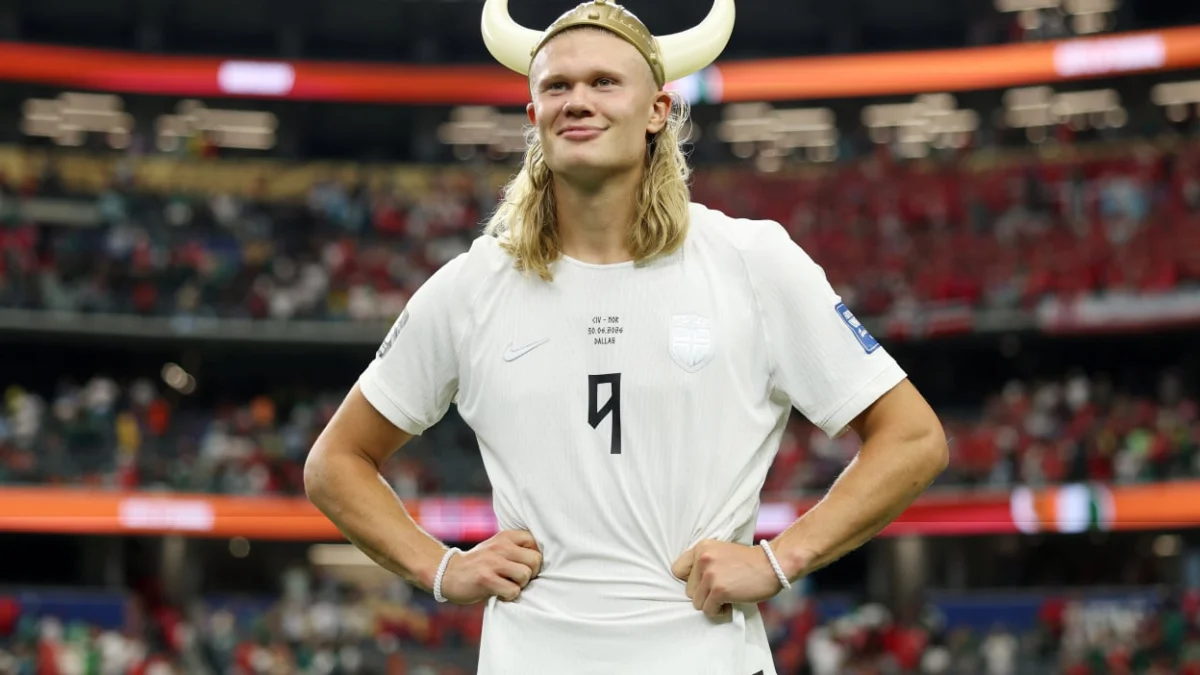
The 2026 FIFA World Cup has been defined by moments of pure athletic brilliance on the pitch, but for millions of fans in China, the tournament’s most enduring legacy is unfolding in the digital realm. Erling Haaland, the towering Norwegian striker whose clinical precision has propelled his nation deep into the knockout stages, has transcended his status as a mere footballer. He has, through a bizarre and fascinating intersection of AI, influencer marketing, and fan-driven meme culture, become a centerpiece of Chinese social media.
From being reimagined as a protagonist in the hit romance game Love and Deepspace to starring in deepfake-infused slapstick comedy, Haaland’s digital footprint in East Asia has grown at an exponential rate. This shift from "athlete" to "digital icon" offers a profound look at how global sports stars are being recontextualized in the age of generative artificial intelligence and hyper-localized social media ecosystems.
The Genesis of the "Habao" Phenomenon
The transformation of Haaland in China began with a calculated commercial move that quickly spiraled into something far more organic. In early June 2026, Haaland was tapped as the global brand ambassador for Walovi, the international arm of the venerable Chinese herbal drink brand Wang Lao Ji. The marketing campaign was designed to be culturally resonant, featuring the striker attempting Mandarin dialogue and engaging with themes of summer heat and football.
However, the campaign acted as a catalyst for a preexisting fascination with the Manchester City forward. Upon joining Weibo and Douyin—the Chinese equivalents of X and TikTok—Haaland’s follower count exploded. Within weeks, he had amassed over 1 million followers on Weibo and more than 5 million on Douyin.
The primary driver behind this surge was the dichotomy created by his fan base. On the pitch, the 6-foot-5 striker is viewed as a "Nordic Cyborg," a mechanical, unstoppable force of nature. Off the pitch, however, Chinese fans have affectionately dubbed him "Habao" or "Baby Ha." This nickname captures a perceived innocence and goofiness that contrasts sharply with his terrifying, efficient demeanor during matches. This duality transformed him from a distant, elite athlete into an approachable, meme-able figure, providing the perfect fodder for a creative digital community.

Chronology of a Digital Takeover
The timeline of Haaland’s digital ascent in China follows a rapid, viral trajectory:
- Early June 2026: The official announcement of the Walovi partnership introduces Haaland to the broader Chinese consumer market, setting the stage for his entry into local social media.
- Mid-June 2026: Haaland officially joins Weibo and Douyin. The launch of his personal accounts coincides with a series of high-profile World Cup performances, creating a feedback loop between his real-world goals and his digital engagement.
- Late June 2026: The meme culture matures. Fans begin producing high-fidelity edits, including the viral "Haaland (Ha Ha Ha)" song, which mashes up his name with the 1979 disco classic "Moskau."
- Early July 2026: The AI boom hits. Sophisticated deepfakes, such as the widely circulated (and eventually debunked) video of Haaland flinching at his own reflection in a restaurant, achieve massive reach. Concurrently, the Love and Deepspace crossover memes emerge, cementing his status as a "fictional" heartthrob.
Supporting Data: The Scale of Engagement
The metrics behind the Haaland meme movement are staggering. Hashtags associated with the striker have generated hundreds of millions of views on Weibo. The sheer volume of content—ranging from sophisticated video edits to fan-fiction style romantic depictions—indicates that Haaland is no longer just a subject of news coverage; he is a collaborative project for the Chinese internet.
The viral video of Haaland "eating in a restaurant," which garnered over 31 million views on a single post, serves as a case study for modern misinformation. Fact-checkers eventually traced the source footage to a sketch by Chinese comedian Jin Long. The ease with which Haaland’s face was seamlessly swapped into the video illustrates the democratization of AI tools. Fans are not just consuming Haaland’s likeness; they are actively manipulating it to fit the narratives they find most entertaining.
The "Love and Deepspace" Intersection
Perhaps the most surreal aspect of this phenomenon is the inclusion of Haaland in the ecosystem of Love and Deepspace. The mobile game, known for its intricate, sci-fi romantic storylines, has a dedicated and hyper-active player base. By inserting Haaland into this world, fans have effectively "isekaied" the footballer into a genre where he is treated as a collectible, romantic interest.
This trend speaks to a larger cultural phenomenon in China: the "idolization" of public figures. Whether it is K-pop stars, actors, or athletes, the expectation is that they must be multifaceted. By styling Haaland as a character who could inhabit the world of a dating sim, fans are effectively "domesticating" a global superstar, making him feel like an intimate part of their daily digital lives.

Official Responses and the Athlete’s Role
Unlike many athletes who maintain a strictly curated, sterile public image, Erling Haaland has embraced the chaos. His own social media habits—particularly on Snapchat, where he shares unfiltered, often bizarre selfies and casual updates—mirror the energy of his fans.
Haaland has been seen interacting with these edits, leaving comments on AI-generated videos and participating in the lighthearted banter that defines his Chinese fan base. This active participation acts as a feedback loop. When a star validates the memes created about them, it empowers the creative community to produce more. He has moved from being a victim of the internet’s obsession to a willing participant in it.
Implications: The Future of Athlete Branding
The "Haaland phenomenon" carries significant implications for the future of professional sports marketing.
1. The Death of the "Stiff" Brand
The traditional model of a footballer’s brand—relying on high-production commercials and stoic interviews—is being rendered obsolete by the speed of internet culture. Fans now prefer authenticity, even if that authenticity is expressed through the lens of irony or surrealist memes.
2. The AI Frontier
The ease of using AI to manipulate the likeness of public figures presents both risks and opportunities. While the Haaland memes have been largely lighthearted, they represent a shift where the "digital avatar" of a celebrity is often more influential than the celebrity themselves. Clubs and sponsors will need to navigate how to protect their assets while also capitalizing on the engagement that user-generated AI content provides.

3. Localization and Global Connectivity
Haaland’s success in China proves that a global star can be "localized" if the content is culturally relevant. The use of Chinese pop songs, local comedians, and domestic social media platforms allowed Haaland to transcend the language barrier and become a truly local icon in a country where he has never lived.
Conclusion: The New Knockout Stage
As the 2026 World Cup reaches its climax, it is clear that there are two distinct competitions running in parallel. On the field, Erling Haaland is battling for the Jules Rimet trophy, cementing his place in the pantheon of footballing greats. Off the field, he is battling in the "fan-edit bracket," a digital space where he has already achieved a level of cultural saturation that few athletes in history have reached.
Whether he is a Nordic Cyborg or a digital romantic lead, Haaland’s ability to remain the focal point of the global conversation is a testament to his personality and the changing nature of fandom. In the digital age, a player’s legacy is defined not just by the goals they score, but by the memories, memes, and digital realities they inspire in the fans watching from the other side of the world.
 Ali Ikhwan
 Raul Delapena Setiawan
 Azzam Bilal Chamdy
