

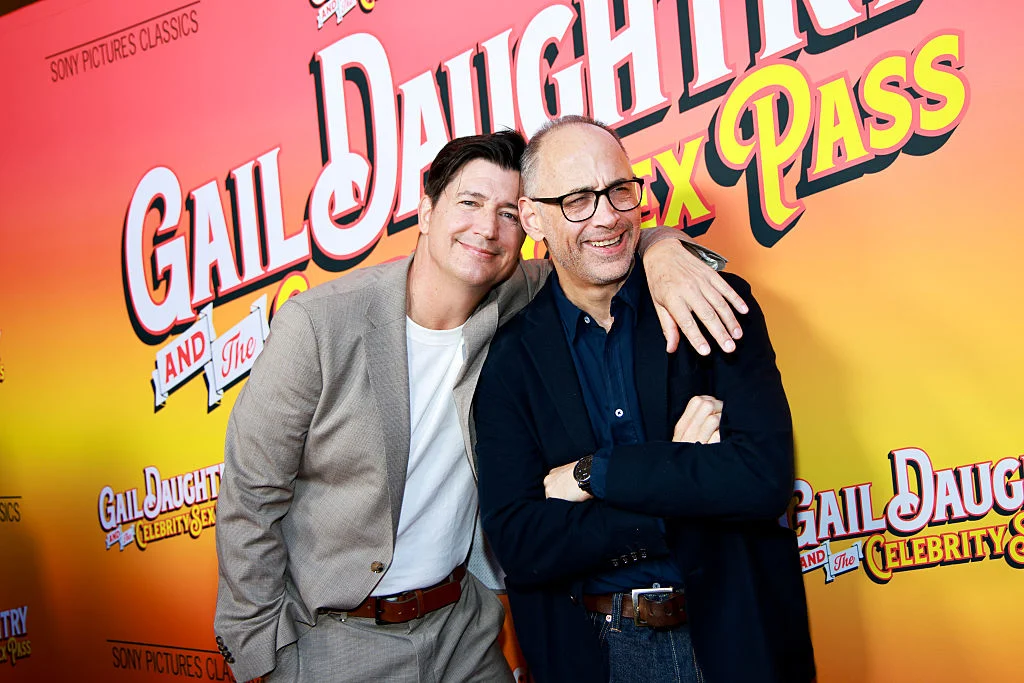
PARK CITY, UT — In the high-altitude pressure cooker of the 2026 Sundance Film Festival, where deals are struck in sub-zero temperatures and reputations are forged in darkened theaters, few stories have captured the imagination of the industry quite like the genesis of Gail Daughtry and the Celebrity Sex Pass. The film, a surrealist road-trip comedy that has become one of the festival’s most talked-about premieres, arrived with a backstory as unconventional as its plot.
During a recent sit-down on the Filmmaker Toolkit Podcast, longtime creative partners David Wain and Ken Marino pulled back the curtain on a writing process that defies traditional Hollywood development cycles. The duo revealed that the first draft of their latest feature was produced in a singular, hyper-focused seven-day sprint—a method they have now perfected over decades of collaboration.
Main Facts: The "Seven-to-Seven" Sprint
The core of the Wain-Marino method is built on a foundation of "on-the-clock" discipline, a rarity in a field often characterized by procrastination and the pursuit of elusive "inspiration." The rules of their exercise are deceptively simple but physically and mentally grueling:
- Strict Hours: The writers commit to a 12-hour workday, typically from 7:00 a.m. to 7:00 p.m.
- Consecutive Days: The process lasts for seven days straight, with no breaks for weekends or external obligations.
- Zero Pre-Planning: The duo enters Day 1 with no preconceived concept, no character sketches, and no outline.
- The "Done Over Good" Mantra: The primary objective is a completed 100-plus page script by the end of the week, regardless of its initial quality.
"The exercise is sourced out of the idea that, when you’re shooting something, you get there at seven in the morning and you do a 12-plus hour day, and there’s no wiggle room," David Wain explained. Wain, who also directed the film, noted that the professional rigor of a film set—where every minute costs thousands of dollars—is rarely applied to the solitary act of writing. By imposing an artificial "production clock" on the writing phase, they eliminate the "stop-and-start" nature that often kills creative momentum.
Chronology: From NYU to Sundance 2026
To understand why this method works for Wain and Marino, one must look back at their shared history, which spans over thirty years of American comedy evolution.
The NYU and ‘The State’ Era (1988–1995)
The partnership began at New York University, where Wain and Marino were founding members of the influential comedy troupe The State. Alongside collaborators like Michael Showalter and Joe Lo Truglio, they developed a "sketch-a-day" mentality. This period was crucial in teaching them that volume often leads to breakthrough. "It’s actually a discipline we learned when we were doing sketch comedy," Wain noted. "Sometimes you just write something, even if you don’t have a great idea, and something will come out of it."

The Feature Film Transition (2007–2012)
The "Seven-Day Exercise" was first field-tested during the creation of The Ten (2007), a Decalogue-inspired anthology comedy. They repeated the process for Wanderlust (2012), starring Paul Rudd and Jennifer Aniston. In both instances, the time-boxed environment allowed them to bypass the "development hell" that often plagues studio projects.
The Modern Necessity (2020–Present)
As the duo aged and their lives became more complex—Wain based in New York and Marino in Los Angeles, both managing family lives and separate acting/directing careers—the "sprint" evolved from a creative experiment into a logistical necessity. The seven-day window became a way to carve out a sacred space for collaboration that the "adult life" of intermittent Zoom calls could not provide.
Supporting Data: The Mechanics of a 20-Page Day
The productivity required to finish a screenplay in a week is staggering by industry standards. Most professional screenwriters aim for 3 to 5 pages of "polished" work per day. Wain and Marino, by contrast, average 20 pages.
According to the writers, the schedule breaks down as follows:
- Days 1 & 2: Pure brainstorming and outlining. By the end of the second day, a complete structural map of the film must exist.
- Days 3 through 7: Writing the scenes. This involves "tag-teaming" dialogue and moving through the outline with zero backtracking.
Wain emphasizes that the "ramp back up" time is the greatest enemy of the writer. "The ramp back up, once you’ve stopped for even one or two days, is so much more than just picking up right where you left off," he said. by staying in the world of the script for 84 hours in a single week, they maintain a "flow state" that allows for the kind of "Wizard of Oz"-style surrealism found in Gail Daughtry.
Gail Daughtry and the Celebrity Sex Pass serves as the ultimate proof of concept. Despite the high-concept premise—Zoey Deutch’s character embarking on a quest to Los Angeles to find her "celebrity sex pass" (Jon Hamm), accompanied by a "sad-sack" version of John Slattery—the writers insist that not a single one of these elements existed on the morning of Day 1.

Official Responses: The "Elf Version" Philosophy
The Wain-Marino approach finds a contemporary parallel in the methods of other successful genre filmmakers. During their podcast appearance, Marino cited Zach Cregger, the writer/director behind the horror hit Barbarian and the upcoming Weapons.
Cregger famously utilizes what he calls the "Elf Version" of a script. The psychological trick involves the writer pretending they have hired a "not too bright" elf to write the first draft. Because the elf is cheap and unskilled, the writer doesn’t expect the draft to be good; they only expect the elf to finish it.
"You write the scenes in the script as if an elf would write it," Marino explained, echoing Cregger’s sentiment. "And then when it’s done, you have the elf script that you’re working off of, and then you make it better as the human."
This "non-filtering" or "non-censoring" phase is what allows Wain and Marino to include bold, often bizarre choices—like casting John Slattery as a fictionalized, pathetic version of himself—that a more "pre-planned" or "vetted" script might have edited out in the outline phase.
Implications: A New Model for Independent Cinema?
The success of Gail Daughtry and the Celebrity Sex Pass at Sundance, and its subsequent acquisition by Sony Pictures Classics, suggests that this "rigor-based" writing model could have broader implications for the industry.
1. Speed to Market
In an era where "Attention Capital" (the value of an audience’s time and focus) is the primary currency, the ability to move from "no concept" to a "shippable draft" in a week allows creators to respond to cultural trends in real-time.

2. Lowering Development Costs
Traditional development often involves months of "paid-to-wait" cycles where producers and writers exchange notes on treatments. The Wain-Marino model bypasses this, presenting financiers with a completed vision rather than a vague pitch.
3. Preserving the "Comedy Voice"
For comedy specifically, the "seven-day sprint" preserves the spontaneity of the joke. Comedy often dies in the "over-thinking" phase. By writing at the speed of thought, Wain and Marino capture the absurdist energy that has defined their work since the 1990s.
4. The "Post-Sprint" Polish
It is important to note that the seven days only cover the first draft. "After seven days… we then take a couple of weeks away from it and come back, and we can spend sometimes years retooling it," Marino clarified. This suggests that the "sprint" isn’t a replacement for craft, but a cure for the "blank page" syndrome that stalls many productions.
Conclusion
As Gail Daughtry and the Celebrity Sex Pass prepares for its wide theatrical release on July 10, 2026, it stands as a testament to the power of self-imposed constraints. David Wain and Ken Marino have proven that in the world of creative arts, sometimes the best way to find a "Wizard of Oz" is not to wait for a storm, but to build the tornado yourself—seven days at a time.
For aspiring filmmakers, the message from the Park City premiere is clear: stop waiting for the perfect idea, and start the clock. The "elf" is ready to work.
 Sagoh
Sagoh
 rifanmuazin
 Neng Nana
