

The landscape of American television has undergone seismic shifts over the last forty years, transitioning from the rigid structures of network procedurals to the sprawling, cinematic vistas of prestige streaming. At the center of this evolution stands Michael Dinner, a director whose career serves as a living map of the medium’s history. From the nostalgic warmth of The Wonder Years to the gritty, neo-Western rhythms of Justified, Dinner has mastered the art of genre-hopping. Now, as Silo Season 3 premieres on Apple TV+, Dinner has once again reinvented himself, trading the sun-drenched hollers of Kentucky for the claustrophobic, metallic depths of a post-apocalyptic bunker.
Main Facts: A New Chapter in a Storied Career
Michael Dinner’s involvement with Silo marks a significant milestone in his career, representing his first major foray into high-concept science fiction. Having joined the production during its second season as both a director and executive producer, Dinner has become a cornerstone of the series’ creative architecture.
The third season, which launches today, represents a daring expansion of the show’s universe. Based on the celebrated "Wool" trilogy by Hugh Howey, Silo tells the story of the last 10,000 people on Earth, living in a mile-deep subterranean structure. Season 3 bifurcates the narrative, following Juliette Nichols (Rebecca Ferguson) as she navigates the fallout of her memory being wiped, while simultaneously launching a parallel "origin story" set 300 years in the past.
Dinner directed three pivotal episodes of the new season, including the premiere. Under his stewardship, the show has evolved from a survivalist drama into a sophisticated political thriller. By introducing a timeline set in present-day Washington, D.C., Dinner has bridged the gap between contemporary conspiracy narratives and futuristic speculative fiction.
Chronology: From ‘Off Beat’ to the Underground
To understand Dinner’s approach to Silo, one must look at the four decades of craftsmanship that preceded it. Dinner describes his career as a series of "reinventions," a necessity in an industry that often pigeonholes creators.
The Early Years and Genre Fluidity
Dinner first made waves in the 1980s with the cult-classic comedy Off Beat, a film that earned him a reputation for balancing tone and character. However, it was in the 1990s and early 2000s that he became a household name in the industry, directing seminal episodes of The Wonder Years, Chicago Hope, and Grey’s Anatomy. These projects allowed him to hone his skills in ensemble storytelling and emotional stakes—elements that remain central to his work on Silo.

The ‘Justified’ Partnership
The most critical turning point in Dinner’s modern career was his collaboration with showrunner Graham Yost on the FX series Justified. Together, they crafted a distinct visual and narrative language for the world of Raylan Givens. Their partnership was built on mutual trust and a shared love for "detective stories" disguised as other genres.
When Yost began developing Silo for Apple TV+, he reached out to Dinner during the production of the second season. What was initially intended to be a brief six-month assignment in London transformed into a three-year odyssey. Dinner stayed on through the completion of Season 3 and recently wrapped production on Season 4, effectively making him the visual custodian of the series.
Supporting Data: The Visual and Auditory Language of ‘Silo’
A director’s primary tool is their ability to translate a script into a sensory experience. For Silo Season 3, Dinner faced the challenge of differentiating two wildly different timelines while maintaining a cohesive "show DNA."
The Dual Aesthetic
Dinner employed distinct technical approaches for the two storylines:
- The Silo (Future): To capture the mounting paranoia and physical confinement of the underground world, Dinner leaned heavily on handheld camerawork. This creates a sense of instability and raw, tactile urgency as Juliette Nichols fights to reclaim her identity.
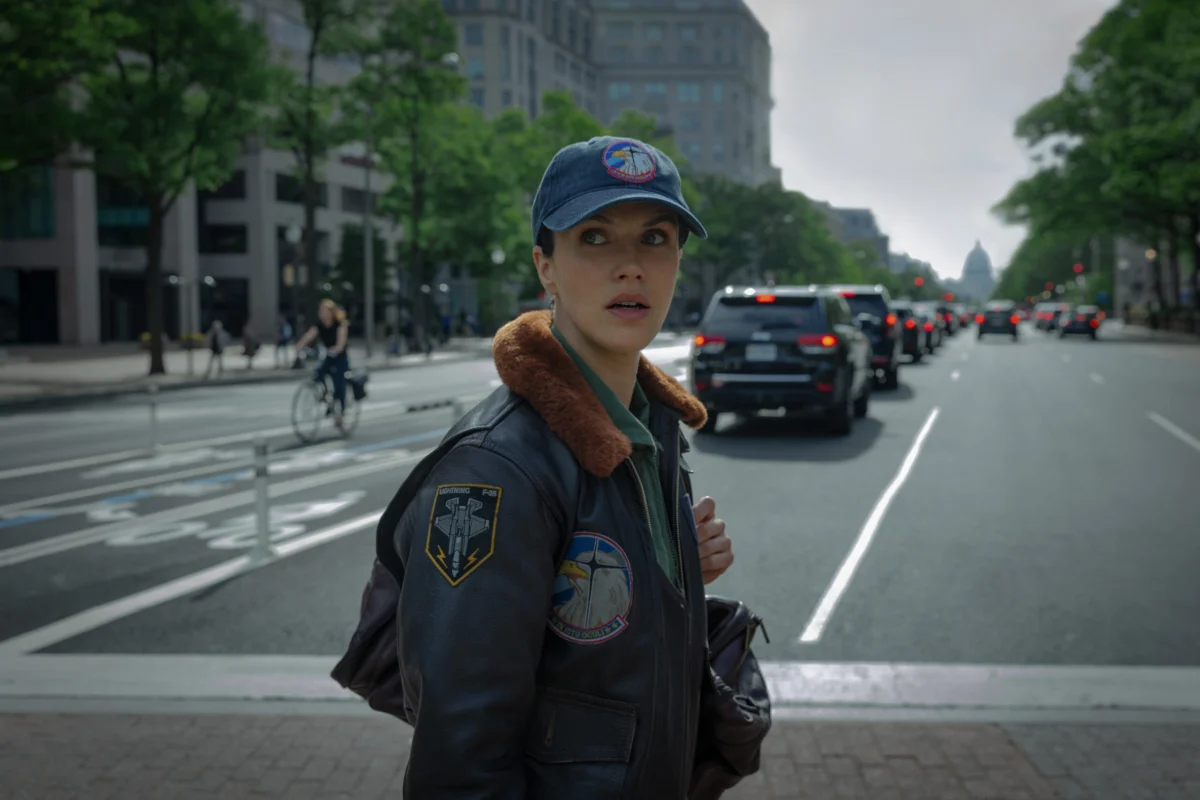
- Washington, D.C. (Present Day): In contrast, the origin story involving Congressman Daniel Keene (Ashley Zukerman) and reporter Helen Drew (Jessica Henwick) utilizes dollies and Steadicam. This smoother, more controlled movement reflects the cold, bureaucratic precision of government power and the slickness of a modern political conspiracy.
Cinematic DNA
Dinner’s work on the D.C. sequences is a love letter to the "Paranoia Trilogy" of the 1970s. He cites Alan J. Pakula (All the President’s Men, The Parallax View), Francis Ford Coppola (The Conversation), and Sydney Pollack (Three Days of the Condor) as his primary influences. Rather than copying these films shot-for-shot, Dinner allowed their "DNA" to inform his instincts. The result is a season that feels both timeless and urgently modern, utilizing shadows and long lenses to emphasize the isolation of those seeking the truth.
The Sonic Bridge
While the visuals differentiate the timelines, the music by composer Atli Örvarsson serves as the connective tissue. Dinner credits Örvarsson with finding a "sonic language" that weaves the subplots together. By utilizing recurring motifs and atmospheric textures, the score ensures that the audience feels the thematic weight of the past influencing the future, even when the settings are centuries apart.

Official Responses: Insights from the Director
In a recent interview on the IndieWire Filmmaker Toolkit podcast, Dinner opened up about the philosophy behind his directing choices and his long-term commitment to the project.
"I sometimes joke that I practice the great American pastime of reinventing myself," Dinner remarked, reflecting on his shift into sci-fi. He admitted that his initial draw to Silo was not the genre itself, but the man behind it. "I committed without even seeing or reading anything, because of Graham [Yost]."
Regarding the complexity of the Season 3 scripts, Dinner noted that he initially worried about how to mesh the two worlds. "At first I was worried—did there need to be some kind of stylized visual component where the two [storylines] were meshing together? I kind of dumped that and said to the other directors, ‘Trust the script. It will mesh together.’"
Dinner also emphasized that at its heart, Silo remains a series of intersecting detective stories. "Juliette is trying to piece together what happened to her. Billings [Chinaza Uche] is trying to figure out what happened to this woman, Orla. Both stories are detective stories." This focus on the "procedural of the soul"—characters investigating their own histories—is what Dinner believes keeps the audience grounded despite the fantastical setting.
Implications: The Future of ‘Silo’ and Prestige Sci-Fi
The success of Silo and Michael Dinner’s contribution to it have broader implications for the television industry and the sci-fi genre.
The Anchor of Apple TV+
Silo has emerged as a flagship series for Apple TV+, a platform that has increasingly positioned itself as the premier home for high-concept, adult-oriented science fiction (alongside Severance and Foundation). Dinner’s ability to bring a "grounded" directorial style to such a massive production ensures that the show remains accessible to viewers who might typically shy away from hard sci-fi.

The Longevity of the Partnership
The fact that Dinner has already wrapped Season 4 suggests that Apple is doubling down on the series. In an era where many streaming shows are canceled after two seasons, the three-year commitment Dinner made to live and work in London speaks to a rare level of production stability. It suggests that the "Yost-Dinner" partnership is one of the most reliable creative engines in modern television.
The Thematic Resonance of Memory
Thematically, Season 3’s focus on the manipulation of memory and the "origin of the lie" mirrors contemporary anxieties regarding misinformation and historical revisionism. By using the framework of a 1970s political thriller to tell a story about the future, Dinner is making a profound statement about the cyclical nature of power and the eternal struggle for transparency.
As Silo continues to unfold, Michael Dinner’s "reinvention" stands as a testament to the power of experience. By bringing forty years of genre expertise to the underground, he has helped create a world that feels as deep, complex, and enduring as the silo itself.
‘Silo’ is currently streaming on Apple TV+. The full interview with Michael Dinner on the Filmmaker Toolkit podcast will be available later this summer on Apple Podcasts, Spotify, and other major platforms.
 Nila Kartika Wati
 Lina Hope
 Asep Darmawan
