

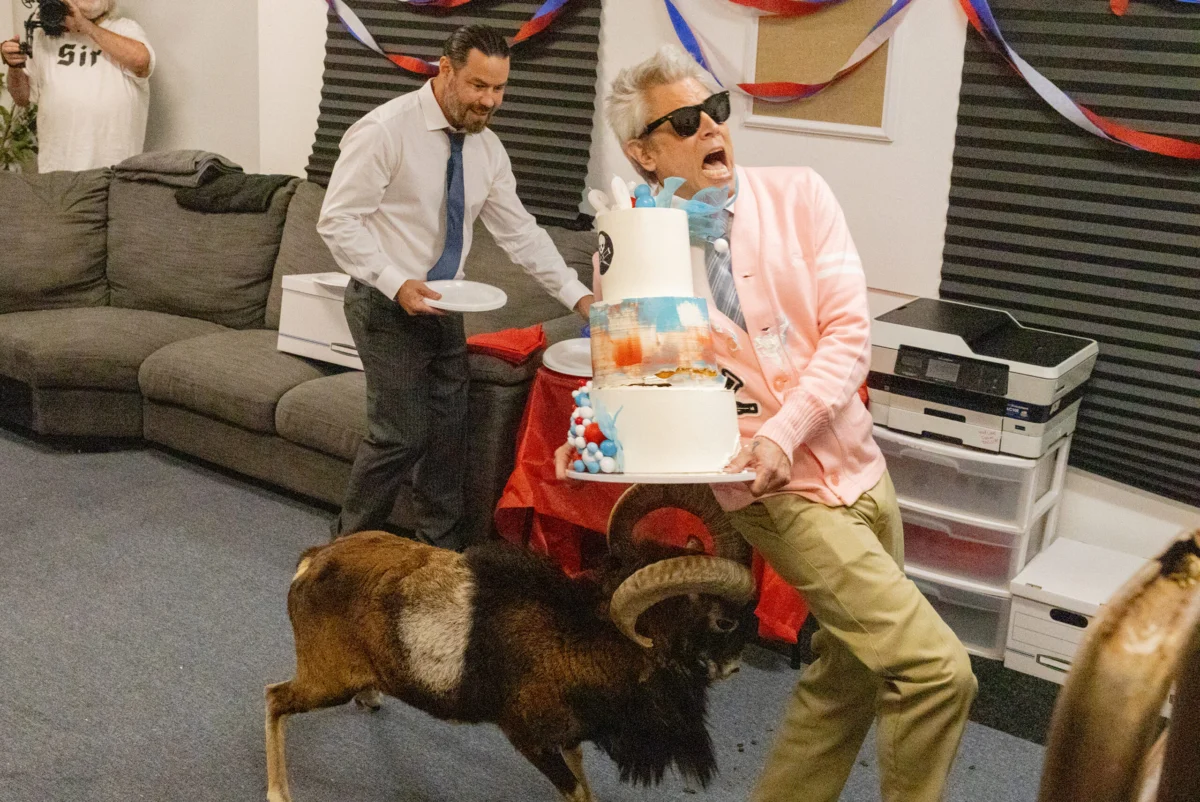
The conclusion of a cultural phenomenon often invites a mix of nostalgia and analytical reflection. As director Jeff Tremaine closes the book on the Jackass franchise with its final installment, Best and Last (alternatively known through its production cycle as Jackass Forever), he has provided a candid look back at the unlikely trajectory of a series that began as a series of reckless home movies and ended as a multi-million dollar studio powerhouse.
In a recent deep-dive on IndieWire’s Filmmaker Toolkit Podcast, Tremaine detailed the friction between the franchise’s "guerrilla" roots and the industrial machinery of Hollywood. His reflections offer a rare glimpse into how a group of self-described "idiots" navigated censorship, political pressure, and the transition from low-fidelity video to high-definition 3D spectacles without losing their creative soul.
Main Facts: The Architecture of Spontaneity
The core of the Jackass ethos, according to Tremaine, was a profound lack of professional experience that ultimately served as the group’s greatest "superpower." In the early 2000s, the crew—led by Tremaine, Johnny Knoxville, and Spike Jonze—operated with a speed and recklessness that modern legal departments would find unthinkable.
The evolution of the franchise is defined by three distinct phases:
- The Guerrilla Era (MTV Season 1-2): Minimal crew, spontaneous ideas, and a total absence of safety oversight.
- The Regulatory Transition (MTV Season 3 – Jackass: The Movie): The introduction of OSHA (Occupational Safety and Health Administration) standards and political scrutiny.
- The Professional Era (Jackass 3D – Best and Last): The strategic use of high-end special effects and stunt coordinators to amplify, rather than sanitize, the chaos.
Tremaine argues that while the scale of production grew from a single van to a 100-person crew, the "North Star" remained constant: the goal was never to please a demographic, but to make each other laugh.
Chronology: A Timeline of Controlled (and Uncontrolled) Chaos
The Early Days: "One Van and a Camera"
In the beginning, Jackass was less a television show and more a traveling circus of absurdity. Tremaine recalls a time when the cast and crew were indistinguishable, often piling into a single van to execute ideas minutes after they were conceived. There were no lawyers to consult and no scripts to follow. This era was characterized by "Night Monkey 2" and other public-disturbance pranks that relied on the genuine shock of bystanders.

The 2001 Pivot: Political Backlash and OSHA
The turning point for the franchise occurred during the production of the second and third seasons. As the show’s popularity skyrocketed, it caught the attention of Washington D.C. Senator Joe Lieberman became the face of a moral crusade against the show, citing its "reckless influence" on American youth.
This political pressure forced MTV to implement stringent safety restrictions. For the first time, the production was required to have an OSHA representative on set. This led to what Tremaine describes as the "absurdity of bureaucracy," where stunts that had previously been performed in backyards were now subject to chemical testing and height restrictions.
The Feature Film Transition (2002–2010)
Moving to the big screen with Paramount Pictures brought "Mo’ Money, Mo’ Problems." While the budgets increased, the speed decreased. Tremaine and Knoxville initially struggled with the "softness" of the first film, feeling that the professionalization of the process had sapped some of the energy. It wasn’t until Jackass 3D in 2010 that the team learned how to use the studio system to their advantage, employing advanced technology to capture their "stupid shit" in high-definition detail.
Supporting Data: Case Studies in Stunt Evolution
To understand the growth of the franchise, one must look at the technical disparity between the early TV bits and the later cinematic set pieces.
The Brad Pitt Kidnapping
During Season 1, the crew’s spontaneity was so infectious that it drew in A-list talent like Brad Pitt. The "kidnapping" bit, staged in front of Pink’s Hot Dog stand in Los Angeles, was pitched to Pitt in an office and executed almost immediately. Tremaine notes that Pitt didn’t call an agent or a lawyer; he simply got in the van. This represents the peak of the "reckless" era—a moment where a global superstar participated in a production that had zero safety protocols.
From "Poo Cocktail" to "Poo Cocktail Extreme"
Perhaps the most illustrative example of the franchise’s technical evolution is the "Poo Cocktail" stunt.

- The Original (MTV): Johnny Knoxville sat inside a porta-potty that was tipped over by a garbage truck. It was a "backyard" stunt, low-tech and gritty.
- The Sequel (Jackass 3D): The crew hired professional stunt coordinators and utilized giant cranes and bungee cords to launch Steve-O into the air inside a porta-potty.
Tremaine explains that the professional stunt coordinator suggested "bungeeing up instead of down" to allow for better camera angles and more control. The result was a more dangerous-looking, more cinematic, yet more "controlled" piece of footage that would have been impossible in the MTV days.
The Role of Special Effects: Elia Popov and Jem FX
In the final film, Best and Last, the production leaned heavily on special effects supervisor Elia Popov. Stunts like the "Escape Room from Hell" utilized sophisticated pyrotechnics that were designed to look lethal while maintaining a margin of safety. Tremaine reveals that the effects were often so convincing that they fooled the cast members themselves, such as Ehren McGhehy, who believed he was being genuinely electrocuted by a high-voltage chair.
Official Responses: The Conflict with Authority
The history of Jackass is inextricably linked to its battles with authority figures. The primary opposition came from two fronts: the United States Senate and the corporate safety departments of Viacom/MTV.
The Lieberman Critique:
Senator Joe Lieberman’s public condemnation of the show was a watershed moment. He argued that MTV was "failing in its responsibility" to protect children. In response, MTV didn’t just add disclaimers; they actively censored stunts. Tremaine recalls being told they could no longer jump off a three-step ladder because it was "unsafe," despite having previously jumped off 12-step ladders into manure.
The Production’s Stance:
Tremaine’s response to these restrictions was often one of incredulity. "We were not trying to be safe," he noted. The production’s philosophy was that the inherent danger was the point of the comedy. The tension between the creators’ desire for recklessness and the studio’s need for liability protection defined the middle years of the franchise.
Implications: The Legacy of Professionalized Recklessness
The conclusion of the Jackass franchise marks the end of a specific type of filmmaking. The "guerrilla" style that Tremaine misses—the ability to act on an idea without legal consultation—is largely a thing of the past in the modern studio environment.

The Narrative of the Stunt
One of the key takeaways from Tremaine’s reflection is the importance of narrative structure, even in a "stunt" movie. He admits that some bits, like the "Human Puppet Show" in the final film, initially failed because they lacked a "narrative arc." The bit "started off bad and stayed the same level of bad." It was only saved in the editing room by focusing on the reactions of the cast, specifically Sean "Poopsies" McInerney. This highlights that Jackass was never just about the physical pain; it was about the storytelling and the character dynamics of the group.
The "North Star" Philosophy
Tremaine’s insistence that the crew only tried to make each other laugh is perhaps the most significant implication for future creators. In an era of algorithm-driven content, Jackass remained successful because it was authentically personal. The "simplicity" of being funny, rather than the complexity of "topping" the previous film, allowed the franchise to endure for over two decades.
Conclusion
As the Jackass crew hangs up their protective gear (or lack thereof), the franchise leaves behind a paradoxical legacy. It proved that a "reckless" DIY aesthetic could be scaled into a global cinematic brand, but it also showed that the very success of such an endeavor inevitably leads to the death of the spontaneity that birthed it. Jeff Tremaine’s retrospective serves as both a celebration of the chaos and a masterclass in how to navigate the transition from the back of a van to the front of a Hollywood studio.
 Jia Lissa
 Lina Irawan
 Iffa Jayyana
