

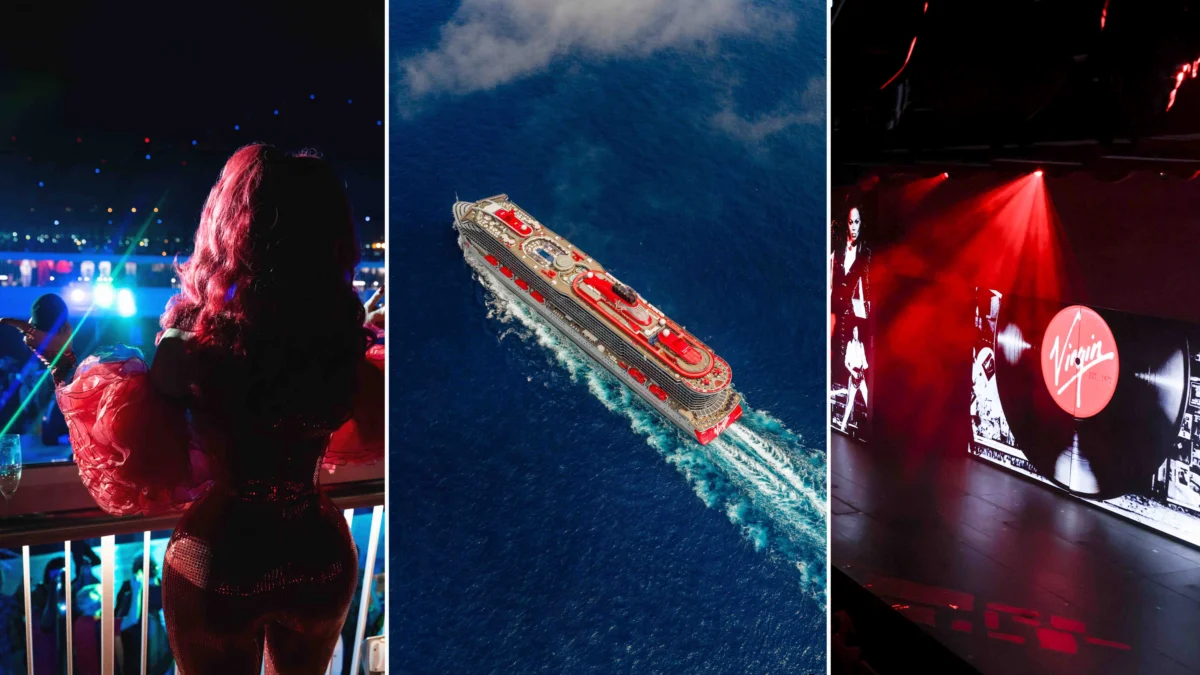
When Virgin Voyages first entered the cruise market, it didn’t just launch a ship; it launched an ideological challenge to the staid, buffet-heavy, multi-generational traditions of the high seas. By banning children, outfitting cabins with signature red hammocks, and leaning into a provocative, "adults-only" aesthetic, the brand promised a vacation experience that felt less like a floating retirement home and more like an exclusive, curated party.
However, the brand’s maiden voyage—originally scheduled for April 1, 2020—was famously derailed by the onset of the global pandemic. The Scarlet Lady sat empty, a silent monolith to a vision that had yet to find its audience. When the fleet finally hit the water in 2021, it arrived with a defiant, self-aware ethos: This Ain’t the Queen Mary 2, Bitch! It was a declaration of intent, signaling that Virgin was here to rewrite the maritime playbook.
The Quest for Connection: A Floating Social Experiment
The central question surrounding Virgin’s rapid ascent is whether the brand’s curated "cool factor" has created a genuine sanctuary for LGBTQIA+ travelers. In a landscape defined by legendary, specialized nautical excursions—ranging from the high-octane, semi-mythic "floating orgies" of the Atlantis cruises to the more infamous, capsized-but-celebrated adventures of gay notables—Virgin occupies a unique middle ground. It is not an exclusively gay charter, yet its inclusive marketing, its embrace of drag performers, and its "come as you are" atmosphere have made it a focal point for queer travelers seeking an upscale alternative to traditional cruise lines.

To investigate this, I boarded the Brilliant Lady for a five-day voyage departing from Long Beach, California. My objective was simple: to determine if Virgin’s "youthful mischief" was a genuine cultural shift or merely a clever marketing veneer designed to lure millennials into the cruise ecosystem.
Chronology of a Voyage: From "Rockstar" to "Fish"
The experience begins with a performance of branding. Upon arrival at the terminal, the security process is imbued with a sense of theatre. When a staff member asked if I was a "Rockstar," she wasn’t referring to my musical talents, but to a specific tier of luxury service. The "Rockstar" status—distinguished by a sleek black wristband—is the entry point into the upper echelons of the ship’s amenities. It is a calculated, effective piece of psychological priming: you are not just a passenger; you are a protagonist.
The Spa Ritual: Resistance and Surrender
For a writer accustomed to the "Airbnb Brain" school of travel—where the goal is an authentic, often arduous, "mystical" experience in a stranger’s basement—the cruise ship represents a fundamental loss of control. To combat my inherent resistance to luxury and leisure, I booked a three-fold "rebirth" session at the ship’s Redemption Spa.

The spa is a distinct entity within the ship, run independently and characterized by a relentless, albeit charming, upsell culture. My practitioner, a woman named Twinkle, embodied the disarming hospitality that characterizes the Virgin staff. After a series of treatments that included a mud-like application and a total-body foil wrap, I found myself immobilized, cocooned, and being told, with genuine warmth, "Now you are a fish." It was the ultimate surrender to the ship’s logic: stop thinking, stop planning, and simply exist.
Culinary Connections at Gunbae
The dining experience on Brilliant Lady is intentionally social. The highlight is Gunbae, a Korean BBQ restaurant that mandates interaction through structured drinking games. This is where the ship’s social architecture is most visible. I shared a table with a group of Gen-Z nursing school graduates and a straight couple from New Zealand. The friction of the unknown—sitting with strangers—is smoothed over by the high-quality food and the forced levity of the games. For the solo traveler, this is the ship’s greatest asset: it eliminates the awkwardness of dining alone by turning the table into a communal space.
Supporting Data: The Demographics of Disruption
While the cruise industry has historically struggled to attract travelers under the age of 50, Virgin’s data suggests that their strategy of "disrupting by removing 10% of the formality" is working. By eliminating formal nights, fixed dining times, and the pervasive presence of children, they have successfully pivoted to a demographic that views cruising with skepticism.

The brand’s reliance on figures like Michelle Visage and their highly visible LGBTQIA+ crew members is not just an aesthetic choice; it is a structural pillar of their business model. By creating an environment where the "Peter Pan Syndrome"—the denial of aging and the embrace of eternal play—is not just tolerated but encouraged, they have captured a market segment that feels alienated by the "classic" cruise experience.
Official Responses and Strategic Vision
Sir Richard Branson’s fingerprints are everywhere. The brand’s internal culture, as seen in the "Red Hot" performance—essentially a musical biography of the Virgin founder’s business career—celebrates the idea of the "disruptor." The company’s leadership maintains that their mission is not just to provide a vacation, but to provide an identity. By empowering staff to be "Rockstars" and guests to feel like part of an exclusive club, they have effectively gamified the cruise experience.
When asked about the "gay-friendly" reputation of the fleet, internal stakeholders emphasize the "all-are-welcome" philosophy. However, the organic creation of gay-heavy social circles on the ship’s decks suggests that the culture is, in fact, doing the heavy lifting for the marketing.

Implications: Facing the Passage of Time
The most profound moment of the trip occurred at a bar following the "Red Hot" show. I had been struggling with my own anxieties regarding aging, a topic I usually treat with a mix of avoidance and a stubborn refusal to engage in anti-aging rituals. I encountered two men, a married gay couple from Oklahoma City, who were also navigating the "Rockstar" experience.
Our conversation, spanning travel, family, and the realities of middle age, served as a mirror. They were roughly a decade older than me, and seeing them—composed, happy, and fully engaged in their vacation—was an unexpected balm. It wasn’t about denying that we were aging; it was about the realization that one could age while still participating in the joy of the present.
The implication for the cruise industry is clear: the modern traveler is looking for permission to stop the clock. We are all, in our own way, looking for a space where the evening has no end—not because time has stopped, but because we have finally decided to stop counting the hours.

Conclusion
Virgin Voyages has successfully sold an illusion that feels remarkably like a necessity: the permission to be off-duty. Whether or not one identifies as a "Rockstar," the ship offers a reprieve from the "authentic" exhaustion of modern life. For the traveler who has spent years chasing the "mystical" and the "hard-won," there is a deep, quiet power in allowing yourself to be ferried from one beautiful place to another.
As I disembarked, I realized that my resistance to the cruise lifestyle was a symptom of a broader need for control. Virgin’s genius lies in its ability to take that control away from you, wrap you in a foil blanket, call you a fish, and—through the simple act of letting go—remind you that you are still capable of having fun. It is not, perhaps, the "rebirth" the spa promised, but it is a much-needed reset. And in an industry that has been stagnant for decades, that, in itself, is a revolution.
 Sagoh
Sagoh
 Asro
Asro
