

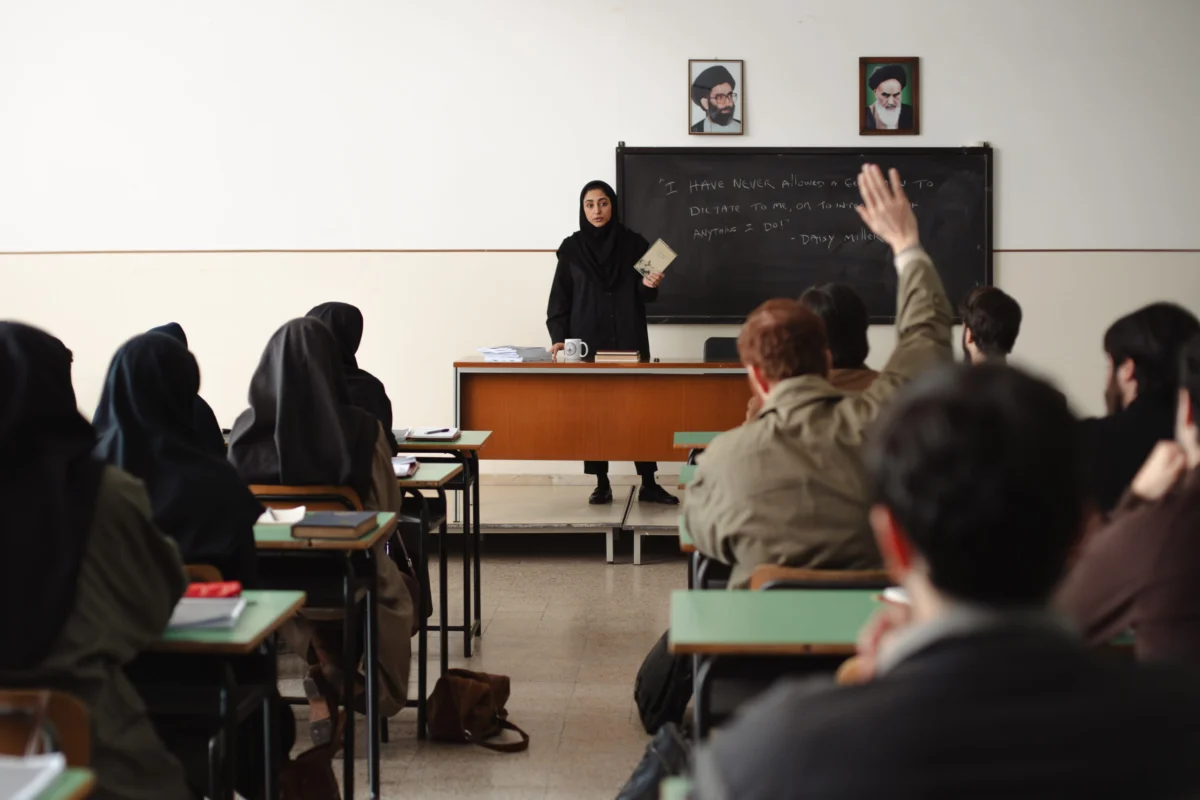
The cinematic adaptation of a seminal memoir is often a tightrope walk between honoring the source material and carving out a unique visual identity. When that source material is Azar Nafisi’s Reading Lolita in Tehran—a book that has become a global symbol of intellectual resistance—the stakes are exponentially higher. Released by Greenwich Entertainment and directed by the veteran filmmaker Eran Riklis, the film attempt to translate Nafisi’s profound exploration of literature’s power under the shadow of the Islamic Republic of Iran into a narrative feature.
However, as the film moves into select theaters, it faces a complex reception. While it is a work of undeniable noble intent, critics and audiences alike are grappling with a central paradox: can a film about the transformative, complex power of the world’s greatest literature succeed if it relies on the simplified tropes of a "feel-good" after-school special?
Main Facts: The Vision and the Version
Directed by Eran Riklis, known for his nuanced explorations of Middle Eastern identity in films like The Syrian Bride and Lemon Tree, the film stars Golshifteh Farahani as Azar Nafisi. Farahani, an exiled Iranian actress herself, brings a lived-in gravity to the role of a professor who refuses to let her mind be colonized by theocratic mandates.
The film follows the structure of the 2003 memoir, focusing on Nafisi’s experiences in post-revolutionary Iran. The narrative is anchored by two distinct periods: the late 1970s, as the revolution fundamentally alters the landscape of Iranian academia, and the mid-1990s, when Nafisi gathers a group of seven female students in her home to read and discuss forbidden Western classics.
Despite the heavy themes of gender-based oppression, state surveillance, and the loss of personal agency, the film has been noted for its surprisingly "bright" approach to the subject matter. This has led to a divisive critical response, epitomized by an "IndieWire" grade of C+, with reviewers suggesting that the film’s reliance on platitudes about the "magic of reading" occasionally undermines the very complexity of the literature it celebrates.
Chronology: From the University of Tehran to Global Bestseller
To understand the film, one must first understand the journey of Azar Nafisi. Born into a prominent Iranian family—her father was a mayor of Tehran and her mother was one of the first women in the Iranian Parliament—Nafisi was educated in the United Kingdom and the United States. She returned to Iran in 1979, just as the revolution was reaching its zenith.
1979–1981: The Closing of the Mind
Nafisi began teaching at the University of Tehran during a period of radical transition. The film depicts this era with stark tension, showing the young professor clashing with male students and colleagues who viewed Western literature as a "satanic" influence. By 1981, Nafisi was expelled from the university for her refusal to wear the mandatory hijab, an act of defiance that serves as a cornerstone of both the book and the film.
1995–1997: The Secret Book Club
After years of navigating the fringes of Iranian intellectual life, Nafisi established the private study group that would give the memoir its name. For two years, every Thursday morning, she and seven of her most dedicated female students met in her apartment to discuss works by Vladimir Nabokov, F. Scott Fitzgerald, Jane Austen, and Henry James. This period represents the "heart" of the film, where the act of reading becomes a radical gesture of reclaiming one’s identity.

2003–Present: The Memoir and its Legacy
Upon moving to the United States in 1997, Nafisi began writing her experiences. Published in 2003, Reading Lolita in Tehran spent over 100 weeks on the New York Times bestseller list and was translated into 32 languages. It became a cultural touchstone for the "liberal humanist" movement, though it also faced criticism from some scholars who argued it simplified the Iranian experience for a Western audience. The 2024 film adaptation arrives at a time of renewed global focus on Iranian women’s rights, following the "Woman, Life, Freedom" protests of 2022.
Supporting Data: The Literary Framework and Visual Language
The film’s effectiveness hinges on how it interprets the classic novels Nafisi uses to teach her students. Riklis utilizes a binary visual language to distinguish between the oppressive reality of Tehran and the sanctuary of Nafisi’s living room.
The Symbolism of the Classics
The film focuses on three primary literary pillars:
- Vladimir Nabokov’s Lolita: Rather than focusing on the sensationalist aspects of the plot, the film emphasizes Nabokov’s exploration of the "totalitarian" nature of Humbert Humbert—a man who attempts to recreate a young girl in his own image, much as the state attempts to recreate its citizens.
- F. Scott Fitzgerald’s The Great Gatsby: The film recreates a "trial" of the novel held in Nafisi’s classroom, where the book is accused of promoting immorality. Nafisi defends it as a study of the American soul and the tragic consequences of chasing an unattainable past.
- Jane Austen’s Pride and Prejudice: For the women in the secret book club, Austen’s work provides a mirror for their own social constraints. The film highlights how the "courtship rituals" and social pressures of 19th-century England resonate with the restricted lives of 20th-century Iranian women.
Cinematic Metrics
The film employs a specific color palette to guide the audience’s emotions. Scenes set in the public spaces of Tehran are often shot in "muddy, grayish hues," emphasizing the drab uniformity imposed by the state. In contrast, the book club meetings are "brightly lit and filled with color," a visual metaphor for the intellectual liberation found within the pages of the forbidden books.
While these choices are effective for a general audience, some critics argue they are "reductive." The film’s runtime of under two hours necessitates a condensation of Nafisi’s dense literary analysis, leading to what some call "cinematic shorthand" that favors emotion over intellectual depth.
Official Responses and Critical Reception
The reception of Reading Lolita in Tehran has been a mix of admiration for its performances and frustration with its execution.
The Performance of Golshifteh Farahani
Farahani’s performance has been almost universally praised. As an actress who was essentially banned from Iran after appearing in the Hollywood film Body of Lies without a headscarf, her involvement brings an extra-textual layer of authenticity. Critics have noted her ability to convey "the constant pain of a woman whose mind has so much more to offer a society that’s always telling her to do less."
The "After-School Special" Critique
The most significant criticism leveled against the film is its tendency toward sentimentality. In a review for IndieWire, the film was criticized for failing to "emulate the classic writing that inspired it." The reviewer noted that while the film’s messages are "lovely" and "correct," they often feel like platitudes.

"When your audience has likely already bought into your core message before they make it out of the concession line, you have to eventually offer them something richer," the review states. The concern is that the film "preaches to the choir," offering a surface-level celebration of literature that lacks the "endless layers of narrative depth" found in the works of Nabokov or Austen.
Directorial Intent
Eran Riklis has defended his approach, stating in various interviews that his goal was to make Nafisi’s story accessible to a global audience. For Riklis, the film is not just about literature, but about the "universal struggle for dignity and the right to imagine a different life."
Implications: Cinema as a Tool for Human Rights
The release of Reading Lolita in Tehran carries significant implications for how Western cinema handles stories of Middle Eastern oppression.
The Relevance of the "Woman, Life, Freedom" Movement
The film arrives in a post-2022 world, where the images of Iranian women burning their hijabs have become iconic. In this context, the film serves as a historical prequel to the current unrest, illustrating the decades of intellectual and personal suppression that led to the modern movement. It reinforces the idea that the "battle for the mind" preceded the battle for the streets.
The Challenge of Literary Adaptation
The film highlights the inherent difficulty in making a movie about the internal act of reading. While cinema is a visual medium, reading is a private, psychological experience. By turning the book club into a series of "cinematic moments," the film risks losing the nuance of the internal monologue that made Nafisi’s memoir so compelling.
The Future of "Mission-Driven" Filmmaking
Reading Lolita in Tehran stands as a testament to the power of "mission-driven" cinema—films made with the explicit intent of highlighting social injustice. However, its reception suggests that for such films to truly succeed as art, they must move beyond "noble intentions" and embrace the same complexity, ambiguity, and "slippery use of perspective" that defines the literature they seek to honor.
Ultimately, while the film may not reach the heights of the "universal brilliance" found in the novels it discusses, it remains a vital, if flawed, reminder of the enduring power of the written word. For bibliophiles and those invested in the struggle for Iranian human rights, it offers a poignant, if simplified, window into a world where a book is not just a story, but a lifeline.
 Nila Kartika Wati
 Lina Hope
 Asep Darmawan
