

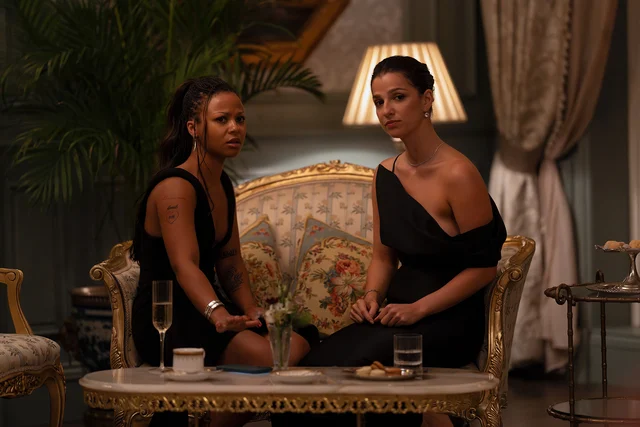
In the sprawling, hyper-competitive landscape of modern television, the annual unveiling of the Primetime Emmy nominations is often described as a "fool’s errand" for those seeking pure meritocracy. In a year where 510 scripted series were submitted for consideration across more than 100 categories, the noise is deafening. For the Television Academy’s voting body, name recognition and the machinery of effective awards positioning act as the primary lighthouse in a sea of unseen content.
On Wednesday, the results of this machinery were made manifest: HBO once again asserted its dominance, securing a staggering 122 nominations—the highest of any network or streaming service. Yet, amidst this banner morning for the "Home of Prestige TV," a glaring omission sent shockwaves through the critical community. Industry, the high-octane financial drama that evolved from a scrappy, budget-conscious upstart into a Sunday-night powerhouse, was completely shut out.
The exclusion of Industry Season 4 serves as a fascinating case study in the mechanics of Hollywood’s social hierarchy. It suggests that in the eyes of the Academy, "prestige" is not a status to be earned through growth or quality, but a title bestowed at birth.
Main Facts: The HBO Machine and the ‘Industry’ Snub
The 2026 Emmy nominations solidified HBO’s reputation as the gold standard of awards campaigning. The network’s success is a product of a "perfect storm": a sophisticated awards team, massive historical branding, and a development process notorious for its rigor. This process is designed to filter out flaws and refine storytelling until it reaches a level of high production value and non-formulaic depth that appeals specifically to the Academy’s sensibilities.
Series like The Pitt (Season 2) and Hacks (Season 5) exemplified this trajectory, racking up 25 and 24 nominations respectively. These shows entered the race with the "awards-friendly" branding already baked into their DNA.
However, Industry received zero nominations despite its fourth season possessing all the traditional ingredients for Emmy success:
- Critical Acclaim: A "Certified Fresh" status and glowing reviews from major outlets.
- The "Sunday Night" Slot: Promotion to HBO’s vaunted Sunday night lineup, the historical birthplace of The Sopranos and Succession.
- Star Power: The addition of high-profile guest stars like Kit Harington.
- Cultural Momentum: A surge in viewership and a dedicated audience that dissected the show with the same fervor once reserved for Mad Men.
Despite these factors, the show remained invisible to the voting body, proving that even the most effective awards team in the business cannot always retroactively apply a "prestige" label to a show that didn’t start with one.

Chronology: From Welsh Studios to Sunday Night Prestige
To understand why Industry failed to capture the Academy’s attention, one must look at its origins. When the series premiered in 2020, it arrived during a tumultuous period for its parent company. Warner Media’s then-owners, AT&T, were pressuring HBO Max to increase its volume of original content.
2020–2021: The "Budget" Era
In its first season, Industry was the antithesis of the "wealth porn" displayed in Succession. While the latter spared no expense to showcase the lives of the 0.1%, Industry—set in the heart of London’s financial district—was filmed primarily in Wales to save costs. It was the "cheapest show on the lineup," a fact that justified its initial low ratings.
Creators Mickey Down and Konrad Kay were young and relatively inexperienced. HBO saw them as "unpolished talent" with a sharp ear for dialogue but little knowledge of how to structure a long-form television season. The first season focused on the frenetic, drug-fueled energy of entry-level traders, marketed more as a "sexy office drama" than a prestige heavyweight.
2022–2024: The Evolution of Craft
As the series progressed into its second and third seasons, something remarkable happened: the creators grew alongside their characters. By Season 3, Down and Kay had transitioned into masterful showrunners. They began to utilize their gifted cast—led by Myha’la and Marisa Abela—to explore deeper themes of class, institutional rot, and the soul-crushing nature of late-stage capitalism.
Recognizing this growth, HBO made the strategic decision to move the show to its Sunday night "prestige" slot for Seasons 3 and 4. The move worked—at least with the public. Ratings climbed, and word-of-mouth transformed the show into a cultural touchstone.
2026: The Emmy Wall
By the time Season 4 concluded, Industry had reached its creative zenith. It had the media profiles (including a coveted New Yorker deep-dive) and the "water cooler" buzz. Yet, when the Emmy nominations were announced, the Academy remained unmoved. The show that had spent four years earning its seat at the table was told there was no room left.
Supporting Data: The Branding Barrier
The data suggests that Emmy voters are heavily influenced by "brand stickiness." Once a show is categorized as "non-awards material" in its first season, it is mathematically difficult to shift that perception in later years.

Historically, HBO shows that dominate the Emmys often debut with a high nomination count in Season 1. Succession and The White Lotus are prime examples of series that were positioned as "prestige" from the first frame. In contrast, Industry’s low-budget, "scrappy" beginnings created a branding ceiling.
Furthermore, the sheer volume of content—510 scripted shows—means that many voters rely on "short-hand" lists. If a show wasn’t on the "prestige" list in 2020, it is often automatically dismissed in 2026 as a "non-awards title." This is a self-selective game: studios decide which shows to invest campaign dollars in years in advance, and Industry simply wasn’t the "chosen one" during its formative years.
Official Responses and Pundit Analysis
The industry’s reaction to the snub was one of collective bewilderment. Critics and awards pundits have been vocal about the Academy’s failure to recognize what many consider the best writing on television.
"The Industry exclusion is the exception that proves the rule of HBO’s dominance," argued one industry analyst. "HBO is the best at awards positioning, but Industry demonstrates the limits of that power. You can’t always manufacture prestige in the fourth act if the audience—in this case, the Academy—has already decided who you are."
Mickey Down and Konrad Kay have been candid in past interviews about their early "amateur" decisions, even mocking some of the storylines from Seasons 1 and 2. While this honesty endeared them to fans and critics, some pundits suggest it may have inadvertently reinforced the "unpolished" image that the Academy seems unable to look past.
Implications: The Social Hierarchy of Awards
The "Industry" snub carries a sobering implication for the future of television: the awards community is beginning to mirror the rigid English social hierarchy that Industry itself so brilliantly satirizes. In the world of the show, high status is an inherited trait, not something that can be achieved through hard work or brilliance.
This is best captured in a Season 4 exchange between the disgraced aristocrat Sir Henry Muck (Kit Harington) and the upwardly mobile CFO Whitney Halberstram (Max Minghella). Muck tells him: "You’re a fucking peasant. I’d rather die as me than run as you."

In the context of the Emmys, Industry is the "peasant" show. It did everything right—it worked harder, it got smarter, and it eventually outshone its "noble" peers in terms of pure quality. But to the Television Academy, it lacks the "bloodline" of a prestige series.
The Future of "Slow-Burn" Success
This trend poses a risk to the television industry. If the Emmy "prestige" label can only be applied at a show’s inception, there is less incentive for networks to stick with "slow-burn" hits that take a few seasons to find their voice. In an era of quick cancellations, Industry is a rare example of a network allowing creators the time to fail, learn, and eventually thrive.
If the Academy continues to ignore shows that earn their quality over time, they risk turning the Emmys into a closed loop where only the "born-to-win" series are invited to participate. For now, Industry remains a masterpiece without a trophy—a show that, much like its protagonists, knows exactly how the game is rigged but chooses to play it better than anyone else anyway.
The lesson for creators is clear: in the modern awards landscape, it isn’t enough to be great. You have to be great from the moment the cameras start rolling, or risk being labeled a "peasant" in the kingdom of prestige TV.
 Jia Lissa
 Lina Irawan
 Iffa Jayyana
